Thursday, April 12, 2012

I heard Maria Callas in Boston, February 27, 1974


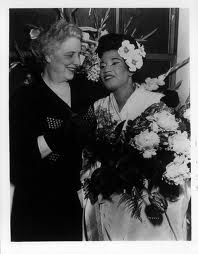
I was seventeen when I heard Maria Callas in Boston's Symphony Hall, on February 27, 1974. She appeared on the American 'leg' of a world concert tour she undertook with tenor Giuseppe DiStefano and pianist Robert Sutherland.


Callas had not sung in public for eight years when the tour began, in Germany, in the fall of 1973. She remained a potent figure in opera. Her on again off again liaison with Aristotle Onassis, begun in 1959, was fodder to the press before and after that gentleman's marriage to Jacqueline Kennedy.

Early reports of the European concerts weren't promising. Callas and DiStefano had each been in
glorious voice twenty years earlier. They sang and recorded together in Chicago, Milan, Rome, Mexico City and throughout Europe. Di Stefano was a very handsome man with an open, thrilling voice-and no discipline. Callas was highly disciplined with a voice that began to slip away early. Nerves? Weight loss? Burn out? I don't think we'll ever know. By 1965 she was acting up a storm and singing carefully (and rarely), DiStefano continued to appear, but the tone and ring of his voice were gone.

What did people expect in 1973? It must have been daunting, having to compete only with your younger self. By the time the duo came to the States, there had been months of rows, cancellations, aborted performances and cheers, cheers, cheers. The first Carnegie Hall concert was cancelled at the last minute. The crowd had jammed into the Carnegie lobby and spilled out onto 57th St.

Then came Boston.

Tickets went on sale just after Christmas. I cut school that day and took the Mass. Ave bus to Symphony Hall to be there when the box office opened at 9 a.m. I got there around 8.30. There were no mobs of eager ticket buyers. People stood outside for four days to get standing room for Callas' last Tosca at the Met in 1965. Not any more. I was probably tenth in line and I was on my way before 10 a.m. (Did I go back to school? Are you kidding?)

The top ticket price was $25.00. You won't believe it today but in 1974 that was unheard of. The best seats in Lincoln Center were $17.50. NOBODY paid $25.00 for a Boston Symphony concert, great as they were. (If you got $5 for cutting a neighbor's lawn, you were rich.)

The weeks went by with my tickets burring into my bureau. (I got a week's detention for cutting school and spent it reading George Jellinek's biography of Callas. Maria never became my friend but many years later George Jellinek did) The press said DiStefano was screaming or crooning like a pig and that Callas was terrified, unsure and had no voice.

On February 27 I got to Symphony Hall early. I told the lady next to me I had been sick to my stomach from nerves all week. She had too! And people around us were nodding in agreement! Callas was nervous and her audience was petrified in anticipation.

The announcement came that while Callas was in the Hall and would perform, DiStefano was not and would not. No one cared. ("Callas said later, 'he abandoned me in Kennedy country')

A Greek pianist called Vasso Devitzi would play some Chopin and Schumann between Maria's arias. Then the lights went down and she came out.


Okay its not Boston but you get the idea.
She began to speak to the audience, apologizing for being nervous. "I hope everything will go well." She said, 'Can you hear me?'

NO! People yelled back, but applause and shouts of encouragement went out again and again. She had a large, radiant smile that lit up her eyes. "You are a marvelous audience. Thank you."

She began with 'Suicidio' from La Gioconda, the opera of her first break in 1947. After the first four notes there was a buzz in the Hall. All of the color was there. The timbre was there. What had made Callas was still Callas. The aria had been transposed down but in this piece it didn't matter. She growled, she cried, she sang and the excitement was incredible.

She gave us 'Vissi d'arte'. Not so good. 'Voi lo sapete". Better. It became apparent that Callas had retained low notes and even some above the staff. But from I'd day the G above middle C to the D above-the fifth-there as no voice at all. The voice had separated and the middle was gone. Exactly where most of the repertoire lies.

She sang 'Tu che le vanita' from Don Carlo. She held the words on note cards. The print was so large you could read it from the cheap seats.

The final encore was O mio babbino caro


(Okay, that wasn't Boston either)

The applause longer than the concert. One man stood on his seat and yelled 'Noi t'amo!'
(We love you). She thought he had said 'Puritani' and she said, "Not this year. Next year."

I was seventeen. I didn't know you shouldn't bother the artists. I was with some friends from NEC, and we went to the stage door. It was mobbed. Cops were pushing people away. We went for pizza on Huntington Avenue, reasoning that eventually the crowds would leave and then Callas would come out.

The pizza was good. And we were right. Post-pizza, Gainsborough St. was quiet but the stage door was still open. We went up the stairs and there in front of us was Maria Callas. Thee were maids, poodles, agents and Vasso Devitizi. but there was Callas, reaching for her coat. We were kids and pushed our way in. "Hello!" she said. "Hello-we loved your concert and yadda yadda yadda". Up close she looked drained and pale, but we got a tired smile, autographs and 'God bless you.' What would you say to Maria callas? All of us were trying not to wet our pants.

And then we left and she left and went on to tour the States and Japan. DiStefano was here today not here tomorrow.

The last concert was in Sapporo in late 1974.

Then Onassis died. Callas withdrew.

Richard Dyer put it best in his respectful and honest review of the Boston concert. "She asked us for something she had never needed before. Our love."

She got it.

Maria Callas died in Paris in September 16, 1977.
I thought with gratitude of the great night she gave three years earlier.
I still think of it, gratefully and sadly, nearly forty years later.

PS. In fairness, here is Maria Callas in her prime:

Wednesday, April 11, 2012

The Columbus Symphony: Satirists,Philosophers: Donald Harris, R. Strauss...and Mozart


The Columbus Symphony presents 'The Satirist and the Philosopher', music by Mozart, Donald Harris and Richard Strauss, this weekend, 8 pm in the Ohio Theater. Jean-Marie Zeitouni conducts.

I think we are generally wired to tonality, to musical consonance. Listen to the German romantics, Schumann and Brahms-go back to Mozart (live with Mozart.) The journey is sublime. The destination is almost predictable for those steeped in this music.

Donald Harris's music is different. The process-playing the notes-is the journey. Not only because his music-alas-is not better known and many of us are hearing it for the first time. Donald used the 12 tone method early in his career. Music depending on patterns and repetition, as does all Western music, becomes more challenging through dissonances and especially since we have no way to predict where this music is going.

NEWS FLASH: I just heard this symphony in rehearsal. It is a knockout and a wow.


Wagner got there first with Tristan und Isolde. (Gesualdo and Monteverdi were writing unpredictable music four hundred years earlier.) Wagner set the sex act to music in Tristan, (yes he did) and only at the end of a four hour opera is there a tragic and magnificent....arrival. Relief.

This weekend the Columbus Symphony presents the world premiere of Donald Harris' Second Symphony. Thus I haven't heard it and neither have you. He tells me the work can be astringent, but as a composer, Harris values creativity, and a 'spark' above all else. This is a composer who "caressed every note, and he felt liberated to compose freely in a style of his own choosing after an unremarkable start with Nadia Boulanger."

Donald Harris' Second Symphony has its world premiere this weekend. Jean-Marie Zeitouni conducts the Columbus Symphony in the Ohio Theater.

The concert on Saturday April 14 is broadcast live on Classical 101 FM or www.wosu.org/classical101. 8 PM. Dr. Harris will be on hand for pre-concert talks and for intermission commentary.

Meanwhile, here's the intro to a wonderful film about Donald Harris' many journeys as a composer. The centerpiece is an early work of his, the Piano Sonata 2, as performed by David Belivasky


Donald Harris is Emeritus Professor of Music at The Ohio State University. He lived in Paris form 1954 to 1968. On return to the States he taught and and served as an administrator at the New England Conservatory and the Hartt College of Music. He remains a vigorous composer, and a beloved teacher, mentor and friend.

The Harris symphony is part of a program called 'The Satirist and the Philosopher.

Take your pick:

Mozart Overture to The Magic Flute
Harris Symphony 2 (world premiere)

R. Strauss Also sprach Zarathustra

Here's conductor Jean-Marie Zeitouni


The Strauss is best known today for its first ninety seconds, as used by Stanley Kubrick in 2001: Space Odyssey. Many of us of a certain age 'zoned out' to this opening fanfare back in the day. Did you? Do they still?


Also sprach Zarathustra was first performed on November 27,1896 in Frankfurt. Strauss conducted.

Richard Strauss was an early devotee of Wagner, to his father's chagrin. Papa Strauss was a horn player in the Munich court orchestra. He would make it a point to turn his chair around and present his back to the audience whenever Wagner was invited to conduct.

The younger Strauss was wise in his rebellion. He continued Wagner's adventuresome tonality and epic use of the orchestra in his tone poems. These are one movement orchestral works with a program. Wagner inspired the young Strauss to absorb Nietzche-the ideal of the Uebermensch and man's dependence on nothing but himself. Of his novel Thus Spake Zarathustra (Sarastro in Mozart's Magic Flute) Nietzche tells us

"Zarathustra was the first to consider the fight of god and evil as the very wheel in the machinery of things: the transposition of morality into the metaphysical realm, as a force, cause and end it itself, is his work. ..Zarathustra created this most calamitous error, morality; consequently he must also be the first to recognize it. His doctrine...posits truth as the highest virtue: this means the opposite of the idealist who flees from realty....The self-overcoming of morality, out of truth; the self-overcoming of the moralist, into his opposite--into me--that is what the name of Zarathustra means in my mouth."

PHEW!

I always thought of Strauss as a rather placid man, writing his music and counting his money. Even Strauss admitted the impossibility of expressing philosophy in music, but he did provide us with a mighty tone poem, filled with drama and variety. It has its bombastic moments, but never at the expense of the invitation to savor and exult, if not exactly ponder.

P.S., As to who is the satirist and who the philosopher....guess. Or not.

Thursday, March 29, 2012

Columbus Symphony: Spotted Snakes and Summer Nights


The Columbus Symphony performs the incidental music to a A Midsummer Night's Dream, Berlioz song cycle Les Nuits d'ete and his three choruses, Tristia March 30 and 31 at 8 and Sunday, April 1 at 3-Southern Theater.

Saturday night's performance is broadcast live over Classical 101. FM, on line www.wosu.org/classical101

Jean-Marie Zeitouni conducts the Columbus Symphony Orchestra and Chorus, with Alisa Jordheim, soprano and Michele Losier, mezzo-soprano

Hector Berlioz (1803-1869)

I first heard the Berlioz six songs for voice and orchestra, Les Nuits d'ete about 175 years ago during my college years. One fast song, four slow ones and a fast finale. Complicated French poetry. One voice. no chorus, no blood, no splash and dash. I was unimpressed.

Oh to be young and stupid! Oh to be (much) older and less stupid! The Berlioz cycle has become an obsession in recent weeks. I welcome the chance to hear it live--again.

Berlioz was in his thirties when he prepared these songs for voice and piano. The orchestration followed in 1856. Jose van Dam made a fine recording of the set with pianist Jean-Phillipe Collard. I'd like to hear these sung by Bryn Terfel or Juan Diego Florez or Jonas Kaufman. But the women have truly owned the cycle. Odd, since Berlioz initially wanted at least four different singers and voice types to share the wealth.

Theophile Gautier's poetry is rich, hedonistic, suggestive and more than a little perfumed. Literally. The second song Le spectre de la rose is a narrative by the ghost of the rose "you wore last night at the ball." Said rose so rich, so glorious, good enough only to adorn "her".

Upon the alabaster where I rest
A poet has written with a kiss:
Here lies all rose
Which kings could envy


In the final song, L'Ile inconnu, The Unknown Island-she (the eternal she?) is offered a boat with sails of pure silk, to sail to Java, or the coast of Norway, or the Baltic, or the Pacific, or to the coast of love-a coast still unknown


Berlioz liked it big. He was no minimalist, not even in his many melodies. (Zaide is practically a mad scene.) The combination of Berlioz' grandeur and Gautier's sensuality is, well...let's just say its a borderline healthy obsession I'm having with these songs, and if you think Le spectre de la rose is about a flower, think again.

We have the bonus this weekend of hearing the three choruses making up Tristia (sadness is not suggested). Berlioz published this collection in 1852. The three were written separately, between 1831 and 1844. There's a wordless song inspired by the final scene of Hamlet, a setting of Gertrude's lament for the drowned Ophelia, and the opening Meditation religeuse to poetry by Tom Moore. Why don't we hear Tristia more often? Especially the Mort Ophelie with its long melodic lines and dark harmony, this music doesn't try to be grand and operatic, but simple, direct and heartfelt.


Felix Mendelssohn (1809-1847)

Mendelssohn's name was made by his Overture to A Midsummer Night's Dream written at age 17 when the young man was well into his career as a pianist, conductor and composer. Eventually the young man landed a prestigious gig as musikdirektor of the Gewandhaus Orchestra. He came to the attention of the King of Prussia, who loved music and Shakespeare. The Bard had already infiltrated the opera house with Bellini and several lesser lights-Verdi was to come, so was the young Wagner (Die Feen) and more Berlioz. His Majesty wanted music for a production of Shakespeare's Sommernachtstraum to be staged at his palace.

Felix Mendelssohn obliged with music that almost-I said almost-eclipses Shakespeare in its humor and seductiveness. Mendelssohn added the overture he had written fifteen years earlier and his success was complete. The strings and high winds prance for Puck and his cohorts-and we all know the sumptuous march at the heart of the score:


Jean-Marie Zeitouni conducts these concerts, with the Columbus Symphony Orchestra and Chorus (Ronald Jenkins, conductor)

Monday, March 26, 2012

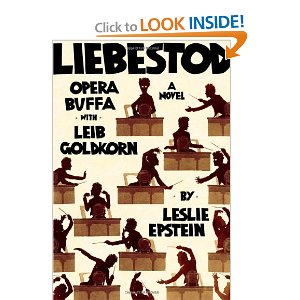
Steal this Book. BUY this Book: Liebestod, Opera Buffa with Leib Goldkorn, by Leslie Epstein


What do George W. Bush, Condoleeza Rice, Lili Lehmann, the Satmar rebbe, Carmen Miranda, and James Levine have in common? Give up? All are featured in Leslie's Epstein's new continuation of the saga of Leib Goldkorn, "Graduate, Akademie Institut der Musik, member of the Steinway Quartet, principal in the National Biscuit Company Orchestra, A. Toscanini, conductor". Und so weiter.

At 104, Leib Goldkorn is recalled to his hometown of Jihvala (Iglau) to be feted as the town's oldest holocaust survivor. Leib decides he is the abandoned son of one Gustav Mahler. Papa conducts Tristan at the Hofoper in Vienna with Lili Lehmann in blonde tresses bewitching the young Mahler Jr., along with a pasty young man in a checkered suit with pockets supplied with candy and pants with the unspeakable. (Think who said young man might be) And this is early the book.

Welcome to a zany world that makes perfect sense to the title character. We climax, if that's the word, at the Metropolitan Opera house at "A. Lincoln Center", where our Leib conducts the world premiere of Papa's abandoned opera-starring Renee Fleming. She of the intoxicating voice and presence who proves her devotion to elder Mahler-Goldkorn, along with Luciano Pavarotti as the Prince and Placido Domingo as the head turnip. Or whatever. All ends not well.
Leib's cousins turn out to be...oh, never mind.

This book is worth reading if only to imagine dubbyah the opera. Sitting down front, yet. It's even more worth reading for the plot twists and broken diction of Mr. Goldkorn and his enjoyment in his own reality, if that's the word. I read this novel in one sitting and then read it again. The more you read, the more you enjoy.

Leslie Epstein comes by his creativity honestly, as the son and nephew of Hollywood royalty-screenwriters for Casablanca-among others. Mr. Epstein has for many years chaired the program in creative witting at Boston University. There must be something great in the air on Bay State Road. Read this book, then go find Ice Fire Water, King of the Jews and San Remo Drive. Epstein gives us a magic carpet ride through one man's enviable mania.

Thursday, March 22, 2012

Yesterday was Bach's birthday


Thee I was browsing through the murder mysteries and trash novels for the gym at my local library yesterday, when an older lady in running gear, lean and not mean-approached. "It's Bach's birthday! Why didn't you play more Bach on the radio today?"

I don't know-I suspect there was plenty of Bach sent out across the Central Ohio airwaves, and worldwide on the web-but for many people one can't have too much Bach. Since recordings became widely available beginning 100 years ago-you can hear any of Bach's works sliced, diced, played by saxophones and synthesizers, or by historically informed performers attempting to recreate Bach's music as Bach they say intended,. It's all good.

I reiterate: Lucky the music loving kid growing up in Boston. You could take the streetcar to Back Bay of a Sunday morning and hear Craig Smith and his peerless choir at Emmanuel Church perform the Bach cantata appropriate fort that day. This Bach cycle went on for years. RIP: Craig Smith.

One must revere Bach. Who was more astonishing as he practically re invented the canon of Western music after my beloved Monteverdi? Revere but not always love. For me, the lack of blood and guts, poison, murder and freewheeling nookie is sometimes a problem. I like raunch in music. That said, I've heard Bach's violin partitas described as 'pure music'. I can only agree:


My own introduction to Bach was the 4th cantata, appropriate for this time of year, Christ lag in Todesbanden


A good high school choir. No xylophones here. I think Bach attracts wide re instrumentation because as a composer he offers everything-including spirituality and challenges hard to resist.

I love the fact of 2 wives and all those children-and the fact that JS himself spent a weekend in the hoosegow fro drunken brawling-then went home to write the St. Matthew Passion. What's not to love?

Friday, March 02, 2012

Latonia Moore


A high profile opportunity for a fine young American singer is always good news.

Latonia Moore makes her Metropolitan Opera debut tomorrow at 1 PM, as Verdi's Aida. The performance is broadcast internationally. It's my understanding this debut comes at short notice.

Latonia Moore is hardly unknown. She's appeared throughout Europe: Hamburg, Trieste, London, and in the States--Philadelphia, New York, Dallas, etc. Still, a Met debut on a broadcast in Verdi's most arduous role is a Very Big Deal. Ms. Moore is barely thirty. The voice is the real deal, big, rich, gleaming. This girl is ready:


I'll be listening tomorrow and so will anyone who loves great opera. Ms. Moore's colleagues for Aida are Stephanie Blythe and Marcello Giordani, conducted by Marco Armiliato.
The singing will be great and the applause loud and long.

Be there!

Thursday, March 01, 2012

Davy Jones


I readily admit to being a big fan of the Monkees when I was ten years old.


Rest in Peace, Davy Jones.

Nicholas McGegan Invites Composers to Dinner


Nicholas McGegan is in town this weekend to conduct music by Rameau, Mozart, Haydn and J.C. Bach with the Columbus Symphony.

Beverly Sills used to say, "I don't share praise, I don't share blame and I don't share deserts."
I don't often share my pre-concert talks. BUT McGegan is irresistible. When he was here a few years ago, he took over, and loud was the laughter! So this weekend he'll be joining me, one hour before concert time.

Come early. Seriously.

During an interview yesterday, McGegan offered these bon mots:

"
Were I to invite a group of composers to dinner at the same time, there would be guests you absolutely do not want. Wagner would have been awful. He'd have only talked about himself. Bruckner would have prayed a lot, no harm in that, but not great dinner conversation. Mozart would have been nice. He probably would have thrown bread rolls at pretty girls, but that would have been okay. Mendelssohn would have been wonderful, he would have answered your questions in any language. But Haydn would be the ultimate guest. Handel of course
would have eaten your food as well as his own, and Bach would have wanted more beer."

See what I mean?


Wednesday, February 29, 2012

Rossini the Leap Year Baby


Gioacchinno Antonio Rossini was born on February 29, 1792. If anyone deserves to be a leap year baby, it's the composer of The Barber of Seville, La Cenerentola, Semiramide, William Tell, La gazza ladra and on and on.

Rossini wrote his first opera La cambiale di matrimonio (The Fake Marriage) as a teenager. His last, William Tell, was twenty years later.


Beethoven was jealous of Rossini, and the Italian had the admiration of Schubert, Verdi and lived long enough to hear the early works of Wagner. During his twenty year opera career he worked throughout Italy, and his operas traveled across Europe and into the United States. Great singers were devoted to him: Maria Malibran, her sister Pauline Viardot, Gilbert Duprez and Luigi Lablache among them. Rossini's first wife was the Spanish mezzo-soprano Isabella Colbran (1785-1845). Many of his greatest operas were created for her. The couple separated ten years before Isabella's death.

Rossini was a sharp business man, nasty to librettists and impresarios and known for his wit. Yes, he admired the tenor Duprez but said that gentleman's high C sounded "like a chicken having its throat cut". William Tell was dropped by the Paris Opera for being too long. When years later Rossini was informed that his Act II was to be performed at a gala he sniffed, "Not all of it, surely."

And here's my favorite quote from a musician. Rossini said of Mozart

"He was roused my admiration when I was young. He was the despair of my maturity and he is the comfort of my old age."

There's a lot more to Rossini than The Barber of Seville. Semiramide is the Queen of Babylon who almost marries her son who is played by a woman and I suggest you listen to the music and forget everything else.

And then, there's Figaro:


Rossini died in Paris in 1868, in the arms of his second wife, Olympe Pellisier. In his later years he composed a Messe solenelle and a collection of piano music he called Sins of My Old Age. He convened a salon and sponsored early readings of Wagner's Tannhauser. He enjoyed his brandy, women and the great music he had written years before.

Di tanti palpiti
from Tancredi the hit tune of 19th century Italian opera:

Tuesday, February 21, 2012

Steve Reich at Ohio State


I'm interviewing composer Steve Reich from the stage of Weigel Hall Auditorium this Thursday, February 23rd at 12:30, as part of the College of the Arts Winter Convocation. Come one and all!

Over twenty-five eyars ago I was having lunch with the late Robert Jacobson, editor of Opera News. The minimalist school of music and its composers were then echt-cool. It was becoming easier to fill a hall for Tehillim than for Puccini. Bob, God bless him, railed over his cobb salad. I sat and nodded and seemed to agree because I was afraid not to. But I was envious of those full houses at BAM, Cooper Union and Avery Fisher Hall. As time went on I was convinced that organizing sounds in a different way-different sounds-would not make the world unsafe for La boheme.

My first live performance of miniamlist (like all labels a partial misnomer) music was Steve Reich's Tehillim. I scored a ticket from a buddy of mine who was among the singers. This telling of the hebrew pslams is scored for singers, vibes, electronic sounds and hand clapping. You get the idea. I loved it then ans I love it now.


John Adams Grand Pianola Music was on the same program. The last two minutes of this work featured a tune-a real melody. The audience was incensed:the booing was as long as the performance.

Phillip Glass is probably the most commercial of the Reich-Adams-Glass triumverate. His work has embraced many different media-his delivery can have broader appeael. He and Adams have worked a lot in the theater in recent years. Twenty years after Bob Jacobson died, the august Met got on the bus with Dr. Atomic and Nixon in China, the latter approaching Puccini status in number of performances.

Steve Reich to me is the true experimenter. He seems afraid of nothing. He continues regardless of public approbation or disapproval. I was interested in meeting him that far from being stuffy he wore his now older downtown persona with charm


Wednesday, February 15, 2012

Charles Anthony Died


I was so sorry to hear earlier today of the death of Metropolitan Opera tenor Charles Anthony, at age 82. He holds the record at the Met: 2928 performances. He made his debut in 1954 and gave his last performance on January 28, 2010. His final role was the 10,000 year old Emperor Altoum in Turandot


He was born in New Orleans as Charles Anthony Caruso. Advisedly, he shortened his name before embarking on an opera career.

Charles Anthony sang in Maria Callas's Met debut in 1956 (Norma) He held Leontyne Price's hand the night she made her double debut with Franco Corelli in Il trovatore, and he sang often with "My dear Luciano". He sang often with every great singer of the past sixty years, and he was no slouch himself.

Years ago at the Texaco Opera Quiz (late lamented) we were played a recording of a fresh voiced young tenor. He was singing Ernesto's Serenade from Don Pasquale. The voice was beautiful and the style impeccable. Who was this young find? It was Charles Anthony, on a recording made for the Met in the late 1950s.

It must have been his choice to concentrate on the character roles that bought him fame, fortune and longevity. He was a superb technician and at 80 his singing needed no apology. It was said that James Levine "would not hear" of Charles Anthony retiring from the Met. Time told, but we are all the richer.

Monday, February 13, 2012

JAY HUNTER MORRIS (and remembering a late, great Brunnhilde)

Somebody needs to explain to me why heldentenor Jay Hunter Morris, one of maybe three guys who can sing Siegfried has languished so long. A lot of opera companies put him on stand by. My God, who was he replacing? Based on the Gotterdammerung HD showing this past Saturday, JHM is sensational. The tone can be open and white, but he has the guts and stamina to really sing the thing-no breaks at the final Brunnhilde, heilige braut!

From the earlierr Siegfried that ball buster, here's Jay Hunter Morris at the Met, 'newly discovered'


And while we're talking Wagner singers, soprano Hildegard Behrens, who was the Brunnhilde of my youth, died a few years back. She could destroy you with a glance.


and I'm a sucker for the curtain calls. Back in 1987 I may have been there!


Wagner's past has been splendid. Jay Hunter Morris is the future.

Tuesday, February 07, 2012

MAHLER MAHLER MAHLER


THE COLUMBUS SYMPHONY PERFORMS MAHLER'S SYMPHONY no. 6 FRI/SAT FEBRUARY 11 and 12 in the OHIO THEATER. THE SATURDAY NIGHT PERFORMANCE IS BROADCAST LIVE ON CLASSICAL 101 AND MAY BE HEARD ON THE WEB: www.wosu.org. JOIN ME EACH NIGHT AT 7 IN THE OHIO THEATER FOR PRE- CONCERT TALKS.

I repeat the composer's name, having laughed for years at those for whom Mahler is an obsession, now having joined their ranks. At present I'm immersed in the Symphony no. 6. Karajan called this "the bleakest of all music". Norman Lebrecht called the finale of this symphony "irredeemably grim" and Wilhelm Furtwangler called in "nihilistic". Nobody but nobody claims that Mahler's Symphony 6 is a barrel of laughs.


This to me is a symphony of high drama and-in the Andante-almost unbearable beauty. The opening march is described as "menacing", "frightening" "horrible". I wonder what the audience in 1907 thought-a few years before WWI and 25 years prior to the Third Reich. Did they find this relentless tramping horrifying, predicting the future in a militaristic society, or merely irritating.

There's also the question of movement order. Nobody knows for certain if its Scherzo-Andante or the other way around. Most recordings I know do Scherzo-Andante which some think at odds with the composer's last word. I don't know and neither do you. Do I care? Not a lot.
(Jean Marie Zeitouni and the Columbus Symphony will play Andante-Scherzo)

If you read Mahler's letters to his wife Alma, you find that a composer writing "bleak" music is often cute, corny, endearing and wildly in love. As work on the 6th progressed Mahler was finessing the Kindertotenlieder-the collecting of five songs on the death of children. Alma was terrified and not a little angry. They had two young daughters: Maria (Putzi) and Anna (Gucki). What a bad omen to bring such music into the house. And then Anna died, aged five in 1907. Mahler loses his long time position as boss of the Vienna Opera-the world's most prestigious. He is diagnosed with the heart condition that leads to his death at 51.

Alma was right. Did she ever forgive her husband? It was around this time that Alma began affairs, notably with Walter Gropius who she would later marry. Gustav went to New York, first to conduct at the Metropolitan Opera, then the New York Phiharmonic. Mahler's tenure at the Met ended with a clash with Toscanini. But the New York critics were quick to get on the Mahler bus:

"The score was revealed in all its complex beauty and allurement, of grave
dignity, with its strands of interwoven melody always clearly disposed and united with exquisite sense of proportion and an unerring sense of the larger values. Delicacy and clearness where the characteristics of many passages, yet the climaxes were superbly effectual. Through it all went the sense of dramatic passion and sensual beauty...The audience was very large. It greeted Mr. Mahler upon his entrance into the orchestra with several rounds of applause...After the first act he was called out again and again, and received a token of approval that this audience is slow to bestow on any newcomer..." (New York Globe, Jan. 2, 1908)

Calling Mahler, the dominant musician of Europe a "newcomer" was a bit much, but clearly his Met debut, conducting Tristan und Isolde on New Year's Day, 1908 was a triumph. He stayed two seasons, directed the New York Philharmonic and sailed home to Vienna, thin and ill in the spring of 1911 where he shortly died.

The sixth symphony begins and ends in a minor ("the key of resignation") I'd say battle more than resignation and in this music he is either trying to keep Alma or get her back.
Indeed the huge theme a few minutes into the first movement, after the first menacing tramping, is called 'Alma'. The composer reportedly said to his wife, "This is for you, you may as well get used to it". Not a smooth talker he, but Mahler's love for Alma must have been passionate and overwhelming.

Don't miss the irony in Mahler's music. It's all over the place. The sixth is filled with a military type drama and foreboding-but 'Alma' is gorgeous and the Andante movement is of unspeakable beauty. Wherever its played.


Yet through all this angst you also hear distant cowbells, and Mahler's love, no, need for the countryside is evident.

The long fourth movement is famous for the three hammer blows-crushing, destroying -life ending (as for me the adagio is life affirming) It was suggested that these three blows also predicted the trio of blows later to attack the composer: the death of his daughter, the loss of position and the diagnosis of a fatal heart condition. But it it significant that Mahler later deleted the final hammer blow.

Don't think this a minor symphony ends in triumph-as some of them do-or a sigh of a minor "resignation". The 6th packs up at the very end. It just runs out of steam and goes away. Leaving you to think what is the future? Military marches, chaos, war or passion?


There's Bernstein near the end of his own life. I think what makes the 6th bleak to many is the lack of recovery from the hammer blows. They aren't followed by any rollicking or soaring major key triumph. It's the end.

Until the 7th symphony.
But that's another story.

Tuesday, January 31, 2012

MET broadcasts go legit via SONY Classical


Click on the above and listen to the finale of Pagliacci from the Metropolitan Opera, broadcast live April 11, 1964.
Franco Corelli, Lucine Amara, Anselmo Colzani, Franco Ghitti and Calvin Marsh. Nello Santi conducts

Want more?
You should.

The good news is that SONY Classical has begun releasing Met broadcasts commercially with sound cleaned up a bit. The above Pagliacci is paired with of course Cavalleria rusticana, with Richard Tucker and Eileen Farrell. On my own copy of this broadcast I always found Farrell a wonderful singer but dramatically removed. Either I've changed or the sound has because SONY has our Eileen in great voice and dramatically compelling.

Corelli is back in Don Carlo with Rysanek and Tozzi, and a wonderful Rodrgio from the Romanian baritone Nicolae Herlea. Franco's in Tosca from 1962 with Leontyne Price (was any voice more beautiful?) and Cornell MacNeil, whose Scarpia always scared the ginger outta me. Price and MacNeil are featured as well in Verdi's Ernani from 1962, with my favorite tenor Carlo Bergonzi. This is a great performance of a dumb opera. Once past Price's 1st act aria the score doesn't do much, though MacNeil has Act 3 to himself and he's worth the price of admission and then some. Bergonzi's line and sweetness of tone are marvels. God bless him.
And do yourself a big favor: Il trovatore with Leontyne Price and Franco Corelli, one week past their sensational "double debut" in 1961.

Roberta Peters's commercial recordings of Rigoletto and Nozze di Figaro are hard to find, but here she is live from the stage in broadcasts from 1955 and 1961 with Giorgio Tozzi, Robert Merrill, Richard Tucker, Lucine Amara, Cesare Siepi and Mildred Miller. A lot of this is mouth watering. These were the standard casts back then.

The most famous broadcast in the set thus far is undoubtedly the 1947 Romeo et Juliette with Bidu Sayao and Jussi Bjoerling. I can't imagine these two roles sung more beautifully. It shows why this opera was such a hit in those days.

We hear Birgit Nilsson in Die Walkure with a dream cast of Rysanek, Vickers and George London. The great Swedish soprano and Jon Vickers are also featured in a 1960 Fidelio that will rattle your socks. Richard Tucker is heard as Don Jose in Carmen with Rise Stevens, who owned the role (alive and glamorous today at 99) and especially as Hoffman from 1955, conducted by Pierre Monteux, with Marrtial Singher, Roberta Peters, Lucine Amara and Rise Stevens as the sexy Giulietta.

Ok. You and I both now that anyone who really wanted recordings of Met broadcast going back 70 years could get them. I have a wall filled with nothing but. Legalities and royalties be damned. But for the many, and for the business of opera and recording to have these broadcasts commercially available-and inexpensive, about $15 a pop, is a great treat. Indulge yourself. And phooey on the critics who damned Marian Anderson with faint praise at her 1955 Met debut. She's 58 and not in fresh voice, but she is tremendous in her own way as Ulrica in Un ballo in maschera with Jan Peerce, Robert Merrill and Zinka Milanov.

Start clicking and order it. Order 'em all.

Monday, January 30, 2012

I should stop reading the obituaries


Really.
Irishman I am , I seem to be addicted.
I note the passing of Kevin H. White, Mayor of Boston in my youth-and a little after/

And we've had several losses in music in the past week:

RITA GORR the great Belgian mezzo soprano. She's Amneris on Leontyne Price's first recording of Aida-said recording the first such I ever heard, in third grade (1964? 1965?)

MARTIN ISEPP musical staff at Glyndebourne, pianist, accompanist, conductor , coach-often worked with Dame Janet Baker.

PATRICIA NEWAY died at 92. She put Gian Carlo Menotti's The Consul on the map. She was also the first Mother Abbess in The Sound of Music. She was Tosca in Paris and Italy-and recorded Gluck's Iphigenia with Giulini. She did it all. Wonderful.

CAMILLA WILLIAMS One of the first African American artists allowed to make a big career in opera. Her Madame Butterfly was greatly admired by Geraldine Farrar, who created the opera at the Met in 1907!

And late in 2011:

SALVATORE LICITRA 43 Italian tenor died of injuries sustained in a motorbike accident

SENA JURINAC Soprano had a huge career in Vienna and London-and was a regular in San Franciso. Butterfly, Tosca, Ariadne-she was the first I ever heard do the Komponist. Marschallin, Jenufa.

CORNELL MCNEIL The great American baritone-a big man with a big voice-Rigoletto, Ernani--all the big Verdi roles-and frightening as Scarpia.

MARGARET PRICE-Welsh soprano-gorgeous, rich voiced with plenty of 'gleam'. I head her in recital at Carnegie where she pissed some people off by singing the whole program with scores. Not me. Her voice was sensational. Also saw her as Desdemona w. Domingo

..and The New York City Opera has been beaten all out of recognition, and Paul Plishka retired, and.....

Monday, January 09, 2012

A Lament for the New York City Opera


With today's report in the New York Times of a lockout at the New York City Opera, I suspect this wonderful company really has come into its final days. Management squandered hundreds of thousands on a general manager who left before producing one opera for the company; they have left Lincoln Center (it's no longer the New York State Theater but the David I Koch Theater but it's going to be the State Theater to me) and is roaming around sites in Brooklyn the Bronx and Manhattan (who are these people? Cole Porter?) with no permanent home. The chorus and orchestra, back bones of the company-what made the City Opera a company has been decimated. THEY are the ones locked out of rehearsal (I do have to ask locked out from where?) today.

I haven't seen a City Opera performance since Nic Muni's modern dress AIDS ward Traviata in 1990. The show was sold out. People cheered and people booed but everyone in the State Theater (thank you very much) was involved. That to me was the point of the many City Opera performances I did see: even in a theater too large with crummy acoustics, the mission of the artists on stage and the unseen personnel was to communicate-I never saw a City Opera artist walk through a performance. The company meant a great deal to me when I arrived in New York in 1979. I put down my bags and ran to see Faust with Diana Soviero and Samuel Ramey; Tosca with Marilyn Zschau and Brent Ellis, Gianna Rolandi and Barry McCauley in Lucia. I had cheap seats, but they were seats, and cost $2!

I've posted a youtube clip of the Lucia telecast because it represented to me, without Sills, Treigle, Domingo or Ramey, a good night at City Opera- a good night for any opera company-minus the great high voltage stars. This to me was City Opera at its best-back in the day. I admire the stagecraft of Steven Wadsworth, Nic Muni and the Alden brothers-I haven't seen their City Opera productions, but I imagine they didn't look like this Lucia. And that's fine. This was 30+ years ago. City Opera moved with the times. It refreshed the repertoire, brought in -out of the box' production teams and kept its devotion to American singers.

That past? I never heard the great Cosi fan Tutte cast with Phyllis Curtin, John Alexander, John Reardon, Judith Raskin and and Frances Bible. I would have loved to have heard Curtin in Salome andSusannah. Brenda Lewis in Mark Blitzstein's Regina. I was too late-barely, dammit!-for Norman Treigle in anything and I would have loved to have experienced his Olin Blitch or Mefistofele.

Beverly Sills was in Boston a lot-where her Violetta was unforgettable. I was lucky to hear her t at the City Opera, sublime in I Puritani, Anna Bolena, Barber of Seville and Manon. She gave you the reason for all the shouting and press accolades.

To me City Opera was about Tito Capobianco and his stagings-how sad I missed Sills's Lucia and how I loved Rolandi!-I saw Frank Corsaro's Butterfly years after it was new and I still remember Patricia Craig taking the crucifix off the wall after Sharpless read her Pinkerton's
kiss off letter. Patrica Brooks! Who was more beautiful? I did see Patricia Brooks, in Puritani-but I missed her in Corsaro's Traviata. But I did see the staging late in the day with Diana Soviero and Rico Serbo-both of them young and gorgeous making you forget everyone else. Catherine Malfitano and Samuel Ramey made you horny as Susannah and Figaro-and I saw my first Ariadne at City Opera: with Johanna Meier, John Alexander, Patrica Wise and Marilyn Niska....

Get the point?

American opera had a nurturing laboratory at City Center and later at Lincoln Center. The City Opera imprimatur told the world that American opera thrived with by Hoiby, Flloyd, Menotti, Douglas Moore, Robert Ward. So many more. This at a time when Rudolf Bing at the Met said, "We cannot produce American opera because people will not come." Maybe Douglas Ward's Wings of the Dove wasn't a sell out, but the fact that it was produced at all meant that new opera mattered.

I grew up at the City Opera at a time in my life when I needed to grow up. I treasure this great company and its legacy. Nobody who has ever seen a New York City Opera performance would allow its chorus and orchestra to be locked out.


Wednesday, January 04, 2012

Books Friends Read in 2011


I asked a number of people to name some of their favorite books read in 2011
(see previous post)
What great responses!
Thanks to all.

If you have other titles please add them to this blog
What were your favorite reads of 2011?

BILL

Fierce
Invalids Home From Hot Climes Tom Robbins
The Moor's Tale Salmon Rushdie
Nobody's Fool Richard Russo
The Crossing Cormac MCarthy
The Portable Atheist Christopher Hitchens

BARBARA

Just Kids Patti Smith
At Home Bill Bryson
Guernsey Literary and Potato Peel Society Mary Ann Shaffer, Annie Barrows
Cutting for Stone Abraham Verghese

KEVIN

The Pale King David Foster Wallace
The Man in the Rockefeller Suit Mark Seal
Kentucky Derby Andrea Cohen
Saint Louis Armstrong Beach Brenda Woods

PAULA

A Testament of Devotion Thomas Kelly

DENNY

Empire of the Summer Moon: Quanah Parker and the Rise and Fall of the Comanches, the Most Powerful Indian Tribe in the World S.C. Gwynne

The Big Short: Inside the Doomsday Machine Michael Lewis
The Paris Wife Paula McLain
Purple Jesus Ron Cooper
Wizards First Rule Terry Goodkind

BRENT

Masters of Atlantis Charles Portis

CASEY

Samuel Ramey: American Bass Jane Scovell

SCOTT

Last Call: The Rise and Fall of Prohibition Daniel Okrent
And So it Goes: Kurt Vonnegut, A Life Charles J. Shields
The Invention of Hugo Cabret Brian Selznick
Lisa's Story Tom Batiuk

DEBORAH

11-22-63 Steven King
Mornings on Horseback David MCullough
The Autobiography of Mark Twain

KATHERINE

The Hare With the Amber Eyes Edmond de Waal
Binary Vision Collected Stories of Edith Perlman
When We Were Strangers P. Schoenwalt
Major Pettigrew's Last Stand H. Simonson
The Gift or Rain T.T. Eng

SEBASTIAN

The Memory Chalet Tony Judt
The Hare with Amber Eyes Edmund de Waal
The Thou and Autumns of Jacoib de Zoet David Mitchell
The Gate of Angels Penelope Fitzgerald

BRENT

The Masters of Atlantis Charles Portis

JANET

Swamplandia Karen Russell
Emily, Alone Stewart O'Nan


MATTHEW

The Frontiersman Alan Eckert
Star Island Carl Hiasen
Skinny Dip Carl Hiasen
Steve Jobs Walter Isaacson


LIST YOUR OWN FAVORITES IN THE COMMENT SECTION!
THANKS!
KEEP READING FOR 2012.


Tuesday, January 03, 2012

Books Read in 2011


These are the books I read in 2011. * indicates a book I especially enjoyed. My favorites are listed at the end of this post. WHAT ARE YOUR FAVORITE BOOKS READ IN 2011?
NOTE: Don't miss Kevin Griffith's picks: www.kevingriffith.tk

Kevin is Professor of Creative Writing and Poetry at Capital University and is a regular panelist on All Sides Weekend/Books.

MY LIST:


Trespass Rose Tremain
Extraordinary Renditions Andrew Ervin
Body and Soul Frank Conroy
Half in Love Linda Sexton

*George Washington Ron Chernow
Catherine of Aragon Gilles Tromblett
Little Girl Blue: Karen Carpenter Randy Schmidt

*Just Kids Patti Smith
Twins Allen Shawn
Another Way Home John Thorndike

By Nightfall Michael Cunningham

The Big Show

The Memory Palace Mira Bartok
My Father at 100 Ron Reagan

Franklin and Eleanor Hazel Rowley
*Home Land Sam Lipsyte
House Arrest Ellen Meeropol
The War for Late Night Bill Carter

Ghost Light Joseph O'Connor
Sarah (Bernhardt) Robert Gottlieb

Life Keith Richards
*Listen to This Alex Ross

Paris Wife Paula McLain
The Metropolis Case Michael Galkey
Rawhide Down DelQuentin Wilber

Townie Andre Dubus III
Franny and Zooey J.D. Salinger

Apollo's Angels Jennifer Homans (history of ballet)

An Improvised Life Alan Arkin
Politics and Pasta Buddy Cianci
Bringing Adam Home Les Standiford
Untied Meredith Baxter

I Was a Dancer Jacques d'Amboise
J.D. Salinger Kenneth Slawenski
9 Stories J.D. Salinger


Wait for Me Deborah Duchess of Devonshire
A Covert Affair (Julia and Paul Child) Janet Conant

And We All Fall Down Nic Schiff

Against All Odds Scott Brown
The Rooms Tom Sholes
*Emily, Alone Stewart O'Nan
Hitman Howie Carr


Cleopatra Stacey Schiff
Henry's Demons : Living with Schizophrenia Patrick and Henry Cockburn

The Tragedy of Arthur Arthur Phillips

Sing You Home Jodi Picoult
A Box of Darkness Sally Ryder Brady

*From Splendor to Revolution Julia Girardi
Half a Life Darin Strauss

The Boy in the Moon Ian Brown
Blind Allegiance to Sarah Palin Frank Bailey

*Purple Jesus Ron Cooper

This Side of Paradise F. Scott Fitzgerald
The Romantic child Priscilla Gilman

A Walk on the Wild Side Earl Wild
Save Me Lisa Scottoline

Lady Blue Eyes Barbara Sinatra
*A Singular Woman Janny Scott (Stanley Ann Dunham, mother of Barack Obama)
*The Greatest Journey David McCullough
In the Garden of Beasts Erik Larson

*The Devil All the Time Donald Ray Pollock
The Convert Deborah Baker
Forbidden Childhood Ruth Slenczynska
The Untold Story Monica Ali (what if Diana lived?)

*Green Hills of Africa Ernest Hemingway
Violette Noiziere Sarah Maza
Reading My Father Alexandra Styron

The Last Tycoon F. Scott Fitzgerald

A Bold and Reckless Life: Barak Obama, Sr. Sally Jacobs

And Furthermore! Judi Dench
My Luck Life Dick Van Dyke

The Unnamed Joshua Ferris
Transition Chaz Bono
*Bed David Whitehouse

*This Beautiful Life Helen Shulman (boy e mails photo to classmates)
George Szell Michael Charry

*The Man in the Rockefeller Suit Mark Seals
Tabloid City Pete Hamill
*Long Drive Home Will Alison (an auto accident on purpose)
The Price of Malice Archer Pryor

Every Last One Anna Quindlen
Paco's Story Larry Heineman

The Bell Iris Murdoch
Heart of a Soldier James B. Stewart

You Can't Be Neutral on a Moving Train Howard Zinn
Fall of Giants Ken Follett

Wendy and the Lost Boys Julia Salomon (bio of Wendy Wasserstein)


Disaster was My God Bruce Duffy (novel of Arthur Rimbaud and Paul Verlaine)

Here Comes Trouble Michael Moore

*We the Animals Justin Torres
Rules for Civility Amor Towles
Emperor of Lies Sam Sten Sandberg (novel of the Warsaw ghetto)

On Canaan's Side Sebastian Barry (Ireland 89 year old Lily in the States)

Elements of style Wendy Wasserstein
Hatred at Home Andrew Welsh Huggins
Riccardo Muti: A Memoir

The First Queen of England (Mary Tudor) Linda Porter

Chango Beads and Two Two Tone Shoes Ken Follett

Growing Up Amish Ira Wagler
*Lost Memory of Skin Russell Banks (abandoned kid sex offender)

Jane Fonda Patricia Bosworth
The End of Normal Stefanie Madoff Mack
*Destiny of the Republic Candice Williams

Truth and Consequences Life Inside the Madoff Clan Laurie Sandell

The Final Verdict Walter Schnier
The Rogue: Sarah Palin Joe McGinnis

Behind Closed Doors: The Duchess of Windsor Hugo Vickers
Lucking Out James Wolcott

Anne of Cleves Retha Warnicke

JFK in Ireland Ronan Tubridy
Elizabeth I Margaret George
(sic) Joshua Cody
My Week with Marilyn Colin Clark

Eva Braun Life with Hitler Heike B. Gortermaker
Last Man in the Tower Aravind Adiga
Boston Noir stories ed. Dennis Lehane

Gabby Mark Kelly

The Night Stranger Chris Bohjalian
Mary Boleyn Alison Weir

Hedy's Folly Richard Rhoads (Hedy Lamar and Geo. Antheil inventors)

Slaughterhouse Five Kurt Vonnegut
*The Outlaw Album Daniel Woodrell
*The Sense of an Ending Julian Barnes

Catherine the Great Robert K. Massie

Favorites for 2011:

The Sense of an Ending, Julian Barnes
George Washington, Ron Chernow
Destiny of the Republic, Candice Williams
Purple Jesus, Ron Cooper
Just Kids, Patti Smith
We the Animals, Justin Torres
Long Drive Home, Will Alison
The Man in the Rockefeller Suit Mark Seals