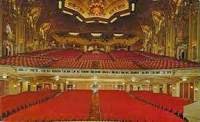
Showing posts with label Columbus Symphony. Show all posts

Thursday, May 19, 2016

Columbus Symphony May 20, 21 2016: Latin America! Piazzolla, Golijov, Ginastera

Rossen Milanov conducts the Columbus Symphony in two concerts of music by composers born in Argentina, Golijov, Ginastera and Piazzolla in the Southern Theater, Friday May 20 and Saturday May 21 at 8 PM. Violinist Bella Hristova joins the Orchestra in Piazzolla's Four Seasons of Buenos Aires.

Pre-concert talks one hour before each concert. This is the 2015-2016 season finale.


Osvaldo Golijov
Tango! The duple meter dance craze that European and african traditions sent to Argentina in the mid 19th century! I've had more than one friend born in Latin American tell me that all music made south of he border is intended to be danced. Latins don't sit and gaze into space in concert hall.Their music came from Africa, from Spain and from Italy. Rhythm and color are more important that tunes or contemplation.This weekend's Columbus Symphony concerts feature music by the master of the nuevo tango, Astor Piazzolla (1921-1992), by his teacher Alberto Ginastera (1916-1982) and by Osvaldo Golijov (b. 1960)

Of the three,  Piazzolla became a Latin American wide sensation, a popular star. He was the true successor of Carlo Gardel, whose sexy tango singing made him a heart throb on three continents before his untimely death in a place crash in 1935. Indeed, the young Piazzolla was encouraged by Carlo Gardel, who went so far as to invite the boy to tour, and its a very good thing Astor didn't get on that plane.

Piazzolla was born in Argentina but spent his formative years in New York.  He was known as a brawler, a ladies man and as an exemplary musician. Not wishing to by typed as a popular entertainer, Piazzolla studied with Ginastera and later went to Paris to work with Nadia Boulanger. That auguste lady, mentor to Stravinsky and Copland, was unimpressed until he played her some original tangos. The lady sent him packing. There is your future. Go and pursue it. He did.


Piazzola wasn't afraid to incorporate the rhythms and the sounds of the waterfront dives of New York and Buenos Aires into his music. Estancios Portenas The Four Seasons of Buenos Aires,  was written between 1966 and 1970. The composer did not intend the works to be played together. He enjoyed performing and riffing on these pieces with his own ensemble, with guitar, piano, rhythm, sometimes flute and always Pazzolla on the bandoneon.

The four seasons were knitted together into one piece after Piazzolla's death by Leonid Desnyatikov.   You'll hear delightful references to Vivaldi's Four Seasons buried in Piazzolla's fire and smolder. I'll bet Astor Piazzolla, who wanted to study counterpoint with Boulanger, would have been delighted.

Osvaldo Golijov, of Argentine, Jewish and Arab background, wrote Last Rounds  for string ensemble in 1991. He had just heard of Astor Piazzolla's debilitating stroke, leading to his death the following year. Piazzolla was a known pugilist, hence the title 'Last Rounds' in his honor. For Golijov, Piazzolla had been a national hero, and his death marked an ending point,  a "we'll never see the likes of him again" in Argentina's music. The second section of Last Rounds, lentissimo,  subtly quotes Carlos Gardel's Mi Buenos Aires Querido.


Alberto Ginastera
Alberto Ginastera (1916-1983) became an international figure. His opera Don Rodrigo opened the New York State Theatre at Lincoln Center in 1966, starring a chubby Spanish tenor called Placido Domingo. Ginastera came to the U.S. in 1945 to study with Aaron Copland at Tanglewood. He was always very good at 'netwroking' and wasn't shy about self promotion. Ginastera often used the dance rhythms of Latin America in the most modern musical forms. His music is often astringent but grabs the listener with its vitality. He is never dull. Of our three composers, Ginastera was probably the most sophisticated and sometimes the least audience friendly.


Variaciones Concertanes comes from 1953. This is similar to the orchestral suites of Bach and Haydn. We are presented with  a theme that is later explored by small orchestral ensembles featuring a solo instrument. We begin with Harp and cello, and later feature the flute, clarinet, trumpet and horn. Finally, there's a wild 'perpetual motion' for violin' and a concluding rondo for orchestra. This is the popular Ginastera, leading into a period where he favored the twelve tone method and looked toward ultra-modern music. But that's another story.

Tuesday, March 15, 2016

Columbus Symphony: Haydn, Dvorak and Theofanidis

Robert Moody


Christopher Theofanidis

The Columbus Symphony performs Dvorak's Symphony 7 in D minor, op. 70; Haydn's Cello Concerto in C, HobVIIb No 1, and Muse by Christopher Theofanidis. March 18-19 in the Ohio Theater. Guest conductor is Robert Moody, with Mark Kosower, cello.

Pre-concert talks one hour before each performance.

MUSE by Christopher Theofanidis is a 12 minute piece for strings and harpsichord. It was written for The Brandenburg Project, sponsored by the Orpheus Chamber Orchestras. Six composers were selected to write pieces based on each of Bach's Brandenburg Concerti, with the idea of creating a catalog of concerti for the 21st century. Theonfanidis (b. 1967-) was told to use the 3rd Brandenburg. Muse uses an especially lovely pulse in the second movement (below @ 3:00)


Antonin Dvorak's Seventh Symphony, considered by many his greatest works,  owes its existence to a 'perfect storm'. Dvorak by the 1880s had become a well regarded musician and composer whose career was confined to the Slavic countries. His use of Czech folk music, the titles given some of his works (Slavonic Dances) isolated his career from the mainstream: the German-Austro world of Schumann, Brahms and Wagner.

It was Brahms who became a mentor to Dvorak and recommended him to the Viennese publisher Fritz Simrock. Herr Simrock was a businessman first. He expected a more worldly composer than Dvorak but was happy to publish the Slavic spiced short pieces which were good sellers for home music making. Added to this was the encouragement of music's mightiest music journalist of the time, Eduard Hanslick, who wrote Dvorak,

It would be advantageous for your works to become known outside of your narrow Czech fatherland, which in any case does not do much for you.

But you don't become a world famous composer by writing Slavic Dances.

Antonin Dvorak (1840-1901)
Dvorak's Stabat Mater had made a big hit at several of the large British choral festivals, and by 1884 the composer had been invited to write a new work for the London Philharmonic Society. Here at last was the big time. He was also trying to complete an opera for Vienna, but when that project stalled he went to work on his Symphony. The first performance of the 7th, conducted by the composer in London was a smash. The Vienna premiere conducted by Hans Richter put Dvorak on the intentional map.

The Seventh Symphony is pure music. It was inspired by Brahms Symphony 3, and Brahms was adamant that none of his symphonic music had a program. It wasn't supposed to be about anything. He had encouraged Dvorak to eschew the folk music style that had guaranteed his career to date. Outside of the Czech countries Dvorak had seemed provincial. Not with the 7th in London and in Vienna.

The work is in four movements and is scored for large orchestra. The theme of the first movement came not in a dream or in a lightning flash of inspiration, but at the railway station. Dvorak loved trains almost as much as he loved music. It was the arrival of a band of Hungarian artists at  Prague that Dvorak said gave him the Symphony's principal theme. Brooding, expectant, dramatic.


The second movement in particular is the source of lovely melody. It is only in the third, with the use of the furiant, a dance rhythm in 3 subdivided with in 2-3 or 3-3 that he nods more toward Prague than Vienna


Dvorak fell out with Simrock over billing. He insisted that his name be spelled in the Czech way, Antonin. Simrock said the German Anton was better business. I just wanted to tell you that a composer has a homeland which he must serve with faith and which he must love. 

It wasn't easy to give up a nationalistic style, and Dvorak often returned to the dance rhythms and colors of Czech speakers. Ironically, Dvorak later made a career in America, where he was considered the most cosmopolitan of composers. But that's another story.

If Dvorak's Seventh Symphony owes trains, Brahms, Hanslick and Simrock for its inspiration, Haydn's Cello Concerto in C wasn't known to exist at all until 1961  (Haydn died in 1809) .  The score was found among musical detritus in the Prague National Museum by musicologist Oldrich Plunkert.
Mark Kosower


How to authenticate the work unknown for so long? The first movement, not in Haydn's hand had been listed in the composer's own catalog of his works. The pages found had initials and a dedication to Joseph Weigl, who we can authenticate served as cellist of the Esterhazy Orchestra during the 1760s.

We have a three movement work enhanced by the use of ritornelli, a principal theme that keeps 'returning' usually for full orchestra. The cello is not an easy instrument for which to write a concerto. The instrument's low, mellow tone was not designed to cut through an orchestra. By giving the tutti-the entire band its own opportunities to shine,  Haydn can give pride of place to the cello,  either in the long lines favored in the second movement, or the intricate filigree of the first, and the finale. Whether discovered in 1760 or 1961, Haydn's Cc Major Concerto for Cello is another work loaded with that composer's skill and wit. And remember, Haydn was writing as composer in residence of a wealthy, noble family. The greater the music, the greater their prestige.

Thursday, November 19, 2015

Columbus Symphony: Britten, Mozart and Beethoven w. Milanov and Morales! Nov. 20 and 21 2015


REMINDER: David Thomas and his CSO colleagues play Mozart's Clarinet Quintet K. 581 immediately following the Saturday night program, so stick around!
___________

Rossen Milanov conducts The Columbus Symphony this weekend in the Southern Theatre. Ricardo Morales is the soloist for Mozart's Clarinet Concerto, K. 622. Also on the program are Benjamin Britten's Simple symphony, and Beethoven's Symphony 4 in B flat, Op.60 Friday and Saturday 8 pm, November 20, 21.

Ricardo Morales
YOU ALREADY KNOW HOW GLORIOUS THE COLUMBUS SYMPHONY IS SOUNDING AND YOU ALREADY KNOW THAT ROSSEN IS A PHENOMENAL MUSICIAN, BUT IF YOU HAVEN'T YET HEARD RICARDO MORALES GO TO THESE CONCERTS!! AND YES, I KNOW I AM SHOUTING.

We're in the Southern Theatre this weekend for a program of nothing but beautiful music.

What are you talking about? Of course its beautiful music.Last week we had a great ride with film scores by Max Steiner, Maurice Jarre , Bernard Hermann, Elmer Bernstein. The evening culminated in a performance of Prokofiev's cantata Alexander Nevsky, fire and ice and one of the finest performances I have e'er heard in the Ohio Theater, if not any where. And I've been around.

If you want to be comforted and soothed and cuddled (musically) Benjamin Britten's Simple Symphony, Mozart's Clarinet Concerto and Beethoven's 4th Symphony are for you.

First of all, clarinetist Ricard Morales is our soloist this weekend. No kidding, this guy is the real deal. He was practically a kid when named first chair clarinet to the Metropolitan Opera Orchestra. He moved 90 miles south to the same first chair, this with the Philadelphia Orchestra. I've never met him but some facebook correspondence an my inane questions about what the hell is a basset clarinet have been answered with friendliness and humor. You need to hear this guy float a Mozart adagio. Like butta:


Mozart's Clarinet Concerto k. 622 was his final completed orchestral work. Its inspiration was the composer's friendship with fellow Mason Anton Stadler.Biographer Wolfgang Hildesheimer-has descirbed Stadler as a leech and a hanger on. Indeed Mozart loaned Stadler significant amounts of money-. But Stadler's gifts both as a clarinetist and his development of the instrument itself made him a perfect match for Amadeus's sole concerto for the clarinet.  Stadler had worked on La clemenza di Tito, Mozart's 1791 opera for Prague. He had done a great deal to popularize the clarinet and without his concerts and virtuosity we may have waited longer for the instrument to take its important place in the orchestra.

As for beautiful music, what can be more beautiful then the second movement of Mozart's Clarinet concerto. At the time it was written Mozart was still writing exuberant letters to his wife, following the progress of  Tito, and watching his latest-and last opera The Magic Flute attain hit status Vienna. He had two months to live.

Not so cheery are the letters of Beethoven twenty years later! In 1806 he was working on his opera Fidelio.  "This opera business is the most tiresome affair in the world" thundered the composer. Plus ca change.


Later in that year Beethoven wrote the fourth piano concerto, the three quartets Razumovsky, the Fourth Symphony, the Violin Concerto, the Coriolan Overture, the C Major Piano Variations, the Fifth Symphony, the A major Cello Sonata and the Ghost Trio*

The Fourth Symphony has been called Beethoven's Cinderella, or lyrical, calm, lovely, endearing. It doesn't storm the heavens, and might be an emotional antidote to the Eroica. That said it lacks nothing of Beethoven's flair for drama:


The principal key is B flat Major, described by Nicolas Slonimsky in Lectionary of Music as

"...the key of the universe...Most machines of modern industry, electric motors, fans and washing machines-buzz, whir and hum on the 60 cycle B flat, corresponding to the lowest note of the bassoon....and then there is that glorious uninhibited sweep of the clarinet-in b flat of course, that opens Gershwin's Rhapsody in Blue...Can there be a special psychological reason in Mahler's exclusion of B flat...in any of his symphonies...Was he inhibited by its aggressive character?"

Prince Karl Linchowsky didn't hold a grudge
The Fourth Symphony was commissioned by the fabulously wealthy Count Franz von Oppersdorf. Beethoven and Oppersdorf had met at the home of Prince Karl Lichnowsky, the composer's patron. The visit did not end well: His worship kept asking the composer to play something and Beethoven kept refusing, finally driven to yell, "There are many princes but only one Beethoven!" before stomping out into the dark and stormy night. Prince Lichnowsky did not hold a grudge. Oppersdorf got his symphony, Beethoven got just  about US$ 10,000 and so we have the Symphony number 4. Lovely and lyrical indeed!


Benjamin Britten (1913-1976) completed his Simple Symphony in 1932, at the age of 19. Already at that young age he had a store house of tunes he recycled into a delicious four movement work for strings. Songs and piano sonatas by the lad Britten were retooled into the 18th century dance movements favored by Bach and Haydn:  A boisterous bouree and the slow sentimental sarabande. But you'll be especially grabbed by the playful pizzicato of the second movement:


*As listed in Jonathan D. Kramer's Listen to the Music, A Self Guided Tour Through the Orchestral Repertoire.

Wednesday, October 28, 2015

Columbus Symphony: Beethoven, Brahms and Bermel

The Columbus Symphony presents Beethoven's Piano Concerto 1 in C, Op. 15, Brahms Symphony no. 2 in D, Op. 73 and Derek Bermel's A Shout, A Whisper, A Trace in The Southern Theater, Friday October 30 and Saturday, October 31 at 8 p.m. Columbus Symphony Music Director Rossen Milanov conducts, with Shai Wosner, piano

Derek Bermel (b. New York, 1967) was unknown to me until this week. That only proves my Bermel ignorance. Bermel is a composer, impresario, clarinetist and musician who produces concerts and writer in an  idiom embracing funk and world music. Bermel trained at Yale as an ethnomusicologist. He follows composers like Bartok-a model for A Shout, A Whisper, A Trace who went about the Carpathian mountains ninety years ago writing down the songs he heard wherever he stopped. Taverns, churches, cat houses with no cats, Bartok had an ear for music hungry to get back to the earth.Mr. Bermel's travels have taken him throughout Central Europe and South America,. His interests and influences (dare I say) include the Brazilian caixxi, the Thracian folk style of Bulgaria, and even the uilean pipes from my people in Dublin.
Derek Bermel
advanced age. I need to get out more.

A Shout, A Whisper, A Trace was written in 2009 for the American Composer's Orchestra and the ProMusica Chamber Orchestra. The scoring is for 2 flutes, 2 horns, 2 oboes, 2 bassoons, 2 clarinets, strings and percussion.The rhythmic propulsion make this an accessible piece. The use of layering, of laying one sound atop on another keeps our attention.


Beethoven (1770-1827) moved to Vienna in 1892. Mozart had just died, not long after encouraging he younger man,  telling the doubting Papa Beethoven, "Your son will make a great noise in the world." The elderly Haydn, newly freed from his elegant indenture in Esterhazy was accepting pupils in Vienna. They young Beethoven made his way to Haydn's influence, where he was no doubt reminded to revere Mozart as well.

Young Beethoven
If in 1792 the young Beethoven was untried as a composer, nobody doubted his sublime gifts as a pianist. One assumes he was not the unkempt and unwashed angry man of his later years. He would have gotten nowhere fast among the Viennese nobility.  It was a pianist that Beethoven introduced himself to Vienna.. His gifts at the keyboard aroused enough interest for him to play his own C Major Piano Concerto, first in Prague (Boston to Vienna's New York) then in Vienna in 1798.

I suppose its necessary to tell you that this concerto, labelled number 1, was the third the composer wrote. Number two was first and there was one more, a piece of juvenilia not published. Never mind. Beethoven thought very highly of this work.. He kept it from being published until 1801. He wanted it for his own concerts, a calling card useful in announcing his strong new talent to new audiences.

The C Major concerto owes a lot to Haydn's tight sense of structure and Mozart's grace. Still, original touches begin with the solo entrance, two and a half minutes into the first movement, playing a theme unrelated to the orchestral introduction. Nevertheless, Beethoven at this point wasn't afraid to use a Mozartian delicacy in his writing, even if he couldn't always match that master's subtlety. The second movement is understated compared to later Beethoven, but offers a loveliness that would have kept the public from going off the rails


As for Brahms, always remember to take your summer vacation! Brahms would repair lakeside in the mountains outside Vienna-as Mahler did a generation later-using his down time away from teaching, conducting and performing to create new work. In 1876 he wrote the felicitous Symphony number 2. The tortured fifteen years it took to get a first symphony out of the composer are here nowhere evident. This is the work of a mature man who is happy to be set in his ways. He knows his craft, and he knows how to please an audience. Not for nothing has this 2nd symphony been compared to Beethoven's 6th, the Pastorale.There's a serenity in Brahms's, D Major Symphony. Shafts of light bleed through the sometimes thick orchestration. Brahms loved his doubled and tripled brass and winds. He liked a thick texture where a lot was going on. Here, the writing is more grateful to the ear, with an immediacy that says "go ahead, enjoy!"

Thursday, October 22, 2015

Columbus Symphony: Tchaikovsky and Richard Strauss


The Columbus Symphony conducted by Rossen Milanov performs Richard Strauss's Don Juan, Tchaikovsky's Symphony 4 in f minor, and Prokofiev's Piano Concerto 2 in the Ohio Theater on October 23 and 24.   Haochen Zhang is the piano soloist. I give pre-concert talks one hour before each performance.

I'm doing some pre- concert listening for the Columbus Symphony programs this coming weekend. I'm struck initially by Richard Strauss's sounded effortlessly, almost nonchalant music making, and the torture and uncertainty that stalked Tchaikovsky.

Tchaikovsky's Fourth symphony,from 1876-1877 would be a mixed emotional bag for the composer. Would the memory of it sicken him, or fill him with relief?

Nadezhda von Meck (1831-1894)
Work on the Fourth coincided with admiring letters from one Nadzheda von Meck, a fabulously wealthy widow and mother of 18 children. The lady was probably bored to distraction counting her money and her kids. Tchaikovsky's music became an  obsession. Not so the man himself, who she never met. Rather, Meck found herself a reason to live as long as Piotr Ilyitch continued to produce the music she deeply craved. Tchaikovsky dedicated the Fourth symphony to her, and by the time work was proceeding he was receiving 500 ruble a month stipend from the lady. This allowance would last, along with a voluminous correspondence until 1890. In those fourteen years the two never met. There's a lovely story that once out riding they recognized one another-how?-
from a distance. The composer tipped his hat and rode on.

Tchaikovsky met another lady at nearly the same time, with disastrous results.This was Anotnina Ivanova Milyukhova. She had been a pupil of his at the Moscow conservatory-probably one of a spate of young girls taking his classes, of which he complained mightily for their communal silliness. Antonina too, fancied herself mad-almost literally-for Tchaikovsky. He was foolish enough to believe that marrying her would cause her crazy attentions to desist. This marriage was an unmitigated disaster. Tchaikovsky literally fled the city.


It was to Mme Meck he turned, in gratitude for her money and approbation, as he began to recover
Tchaikovsky and his wife Antonina Ivanova Milyukhova
from his ridiculous marriage. "Our symphony" he described the Fourth to her. She agreed to accept the dedication, asking only that her name not be mentioned publicly.

The sinister brass figure beginning the work Tchaikovsky has described as fate-with a sword of Damocles hanging over one's heard. He didn't need to be a disastrous marriage to feel pessimistic. Except there's an exuberant dance like theme for the winds glowing early out of the fire.
The fourth symphony develops the fate motive gradually and incompletely...there's a second movement of almost deep sadness and a wild, almost militaristic finale. Tchaikovsky liked to deny that his music had any "program' "Just listen to it." To colleagues he agreed that fate, exhaustion, despair and exuberance were to be heard in this music. I like the finale, where he said "Go out among the people and learn from their joy!"

Richard Strauss (1864-1949)
Richard Strauss would have had little use for Tchaikovsky's emotionalism . He wrote his music like a businessman, from nine to five in his study five days a week, with a generous lunch break. He was delightedly henpecked by his wife Pauline, and nothing in Strauss's correspondence betrayed any angst in what he regarded as his profession and a way to get on, writing music. The closest to exasperating would be parts of his correspondence with his librettist Hugo von Hofmannsthal, who admired Strauss's music and considered him rather low rent socially. A laid back temperament didn't keep Strauss from writing orchestral music on a heroic scale.

The tone poem Don Juan comes from 1888. The composer at 24 was already conducting in Weimar and led the Don Juan premiere in that city.  He was expanding the tone poem work-the one movement symphony telling a story that had been popularized by Liszt.  The opening moments of Don Juan is not the music of either a beginner or a neurotic


Tchaikovsky's moodiness and Strauss equanimity each produced sensational music One emotion driven, the other filled with color. What would have happened has the situations been reversed. Would we listen as intently to a mellow Tchaikovsky or a neurotic Richard Strauss? Happily, we can only imagine.

Tuesday, September 29, 2015

Columbus Symphony: What do we do about Carl Orff?

The Columbus symphony Orchestra, Columbus Symphony Chorus and Columbus Children's Choir present Carl Orff's Carmina Burana as season opener this weekend in the Ohio Theater.

Rossen Milanov will conduct with his usual skill, charisma and energy. Bring towels. These will be hot nights in Columbus.


This humble writer (!) gives pre-concert talks one hour before every CSO Classical season performance.Come in early and (hopefully) enjoy.

__________________________________________________________________
Carl Orff (1895-1982)


In 1944 Josef Goebbels, the Nazi's Minister of Propaganda, discovered Carl Orff's Carmina Burana.

   "In the case of Carl Orff we are not at all dealing with an atonal talent.  On the contrary, his Carmina Burana exhibits exquisite beauty, and if we could get him to do something about his lyrics, his music would certainly be very promising. I shall send for him at the next possible opportunity."

Goebbels was late getting on the Carmina bus. The cantata was seven years old by then. It had a sensational series of performances in 1940 conducted by Karl Bohm, and a triumph at La Scala, Milan in 1942. Carmina Burana was a hit from its very first performance, and remains so today.


In fact, Carmina Burana was hardly admired following the s1937 premiere in Frankfurt. Volkische Beobachter, the Nazi newspaper-soon to be the only newspaper-called the work "Bavarian niggermusik. Even the Third Reich couldn't stop the wild popularity of Orff's new cantata, based on the satirical writings of 12th century students rebelling against the church. 

Orff's name is not often added to the top artists who remained in Nazi Germany: Elisabeth Schwarzkopf, soprano,  not only benefited but dismissed charges of collaboration as "Nothing, like being in a labor union." She acted as an informant on her colleagues at the Deutch Oper Berlin. Herbert von Karajan also had Goebbels as a fan, who crowned him, "Das wunder Karajan", the miracle Karajan. Wilhelm Furtwaengler didn't need the Nazis to promote his fame. He was older, well established and a conductor of the finest order.  Richard  Strauss stayed in Nazi Germany, and accepted a post from the Third Reich.Wags like to say he was protecting his copyright. He also had a daughter in law with Jewish relatives, and did keep her safe.

In preparing talk on Carmina Burana for the Columbus symphony, I'm at a loss of how much time I should spend on Carl Orff in Nazi Germany. The composer was born in Munich in 1895, By 1944 he was hardly a dilettante.  Earlier he had distinguished himself by raiding long forgotten cupboards of Italian and German music from the 15th and 126th century, often re-working them to suit 20th century audiences. It's largely because of Orff that we know the music of Monteverdi today.

In addition to CarminaBurana, he had prepared a follow-up work, Cartulli Carmina ad  would go on to produce Trionfo d'Afrodite.


Schulwerk, Orff's comprehensive study on music education was published in 1949. Its tenants are in use today. His work inmusic educaiton, and his founding of a new school in Berlin in 1924 may be Orff's most important legacy.

Orff never approached the success he had with Carmina Burana. This hour long cantata, originally intended to be staged, uses 12 th century manuscripts to depict a riotous countryside of horny peasants, lots of wine and song, lots of dancing, a swan who sings beautifully while being roasted, and a chugging, persistent rhythm that is irresistible. Who doesn't like a little debauchery?

What's surprising was getting this work past the Nazi censors. One imagines they were too stupid to recognize the alt deutch Orff was using, not to mention Latin and lapses into the Provencal of the troubadours.  These are the people who thought jazz was entarete musik (degenerate music) What did they make of Orff's driving rhythms and  texts leaving little to the imagination:


So successful was Carmina Burana with the public that the Nazi propaganda machinery decided an all out battle wasn't worth it. There was fear that people would seek out broadcast performances from elsewhere.

Orff never left Nazi Germany. His career thrived. His work in music education has taught generations of children all over the world. It seems as if Carmina Burana is being performed somewhere every five minutes. Not so the rest of Orff's oeuvre. These indulged his romantic attachment to ancient music, and lack the gut level appeal of Carmina Burana. The closest parallel might be Wagner's Tristan und Isolde, but Carmina is more fun. Orff may have been too clever for the regime.

Orff quaked during the de Nazificaiton tribunals immediately post war. He made much out of an acquaintanceship  with Kurt Huber, executed by the Nazis in 1943 as a member of the White Rose resistance. In fact, Frau Huber maintained for decades that Orff did nothing to help her husband once he had been arrested. "I would be ruined!".

Indeed he would have. Those of us lucky to have never experienced a criminal regime can't judge others for their behavior. Orff's place in music is guaranteed by Carmina Burana.The same work alienates many, among them conductor Edo  de Waart. In a lecture years ago, I  remember de Waart telling us that O Fortuna was the sign on/sign-off music for Radio Amsterdam during the Nazi occupation. He dismissed the work as "that Nazi music."

Still, Orff knew what he was doing. The combination of rhythm,volume and debauchery makes Carmina Burana irresistible wherever its performed.

Wednesday, February 18, 2015

Good Porgy and Bess or Bad Porgy and Bess


The Columbus Symphony is performing selections from Gershwin's Porgy and Bess this weekend. John DeMain conducts. He was in (superb) charge of the Sherwin M Goldman-Houston Grand Opera
production that ran on Broadway thirty years ago. As I recall, this production took the work very seriously as an opera. In New York, Porgy and Bess played in a large theater : the Gershwin, albeit named the Uris in those days, God bless us and spare us.

As I further recall, this massive revival was the first time many people had seen Porgy and Bess. I get the sense that the work was neglected since the early 1950s-when the Breen/Blevins production played Broadway (with Leontyne Price) and toured the world. The troupe's 1953 sojourn to the Soviet Union has been immortalized in Truman Capote's The Muses are Heard Worth reading.

George Gershwin, Ira Gershwin, Dubose Hayward
The Met waited until 1986. The Gershwin Estate demands an all black act. The Met complied.  Most of these Met debutantes were not heard again once Porgy and Bess closed. Simon Estes and Grace Bumbry introduced Porgy and Bess to the Met. Miss Bumbry said, "I don't really like the piece, but they were going to do it anyway, with or without me." Mr. Estes's take shows a resistance to (racial typecast) "I told them I could not come there unless I was given a different opera first."

And So I Sing:African American Divas in Opera and Concert by Rosalyn M. Story, goes into the trap Porgy and Bess can be for the African American artist.

A more recent Broadway revival featured the sublime Audra MacDonald, in a production reportedly heavily cut. No less that Stephen Sondheim wrote the to New York Times claiming desecration. I wasn't there.

Whats the problem? I can't imagine anyone arguing with the dramaturgy or the music. Nobody needed to tell George Gershwin how to write a tune. He may have been new to writing for the unamplified voice. That's a criteria I use to shuttle between opera and musical. Opera does not use mikes (I know, I know.) If you can't project over an orchestra into a big hall, you don't belong in opera. To my knowledge, the operatic experience of the original casts was limited, because they were black. Opportunities were not matching talent.,


Todd Duncan, the first Porgy,  and Anne Brown, who created Bess were classically trained singers. The world should have heard Duncan's Figaro, Escamillo and Rigoletto. He did have a berth at the New York City Opera, God bless them, but not approaching his talents. Ms. Brown settled in Norway, hoping Scandinavia would prove less restrictive to the career she deserved. Plus ca change. Marian Anderson was kept out of opera until the end of her career. It was impossible for anyone to ignore Leontyne Price's gifts, and soon the black artist was admired for voice, personality and presence, color be damned.

That was far from true when Porgy and Bess opened on Broadway in 1935. Would you believe it was a flop? No one knew what to do with the Gullah people of South Carolina and the drugs,sex and violence depicted to Gershwin's music. Dubose Hayward's novel Porgy had been widely admired. But that was a book and you could put it down. The stage was up close and personal,and Gershwin's tunes were haunting and a tad disturbing:


After all, George Gershwin on Broadway meant dancing, sophisticated melodies, gorgeous girls, dapper fellas and stories that got in nobody's way. What they got was drugs and violence, and the only booty on view was the title character's, described as a "no good liquor guzzling slut"

Then  there's the cast problem.  I know many fine singers who make a good living going from Porgy and Bess company to Porgy and Bess tour and back again. They sing in the chorus, they sing the leads. They sing all the time. And the more they stay, the firmer the doors to opera houses remain closed to them. They are typed as Broadway singers. Nobody thinks to ask them for Handel or Verdi. Other singers stay in just long enough. Some like the great Shirley Verrett stayed away. "I don't like what it says to my people" said Verrett.

Porgy and Bess has in the 21st century found a home in the opera house. The Goldman Houston production showed the way. A staging from Glyndebourne was filmed and widely admired. San Francisco and Chicago have staged Porgy and Bess, and the Met did two revivals.
The one great work in music about a black culture shows some spirit but a lot of decadence and suffering. It's a long show is Porgy and Bess.  It can clock in at four hours. And why is it always described as an American folk opera? So the music theater patrons are scared away? Because black artists don't sing opera? I hope all of these views are waaaaaay dated today.Go out and sing Porgy and Bess. It's a magnificent piece, worthy of the best talents. Just like Mozart, Verdi, Handel.....

Wednesday, September 24, 2014

TWISTED REHEARSAL DIARY # 6


Final dress rehearsal tonight.
God bless the Columbus symphony Chorus...to hear them sing the Mefistofele prologue is worth the price of admission. Kudos to them and Ronald Jenkins.

 (This video is dated but gives a few notes of the splendid CSO chorus)


This is going to be a hit.

I don't want to give the rest away.

I DO hope you will come to pre-performance talks with Edwaard Liang, Peggy Kriha Dye and Peter Stafford Wilson (and me!) one hour before each curtain on the 4th floor mezzanine of the Ohio Theater. I was asked to put these together several weeks ago. I'm delighted to comply, since these folks separately and together are the local taste makers and as you will see after each show, they are doing a superb job.

And there seems to be no promotion for these talks (ahem!) which is a shame. My guests always have interesting views and are smart and articulate in expressing them.

Me, I just try not to upset the horses.

In the middle of the night I got up to watch Janacek's From the House of the Dead. I told you I was off my meds! This opera based on Dostoevsky is something I have always wanted to direct. Janacek's searing opera is light years away from Twisted in style and in tone, but not in beauty.

I was told emphatically "Use the cards!" I wrote the narration for Twisted and will be delivering it from the stage. The occasional riff last night would, if I do say so prove a joy to the audience but "interrupts the flow". I'm not convinced but will cheerfully un riff. Nobody'ds fault that I need glasses to read the cards and find them cumbersome. My attempts at memorization have not been very successful. That I am urged to use cards is actually quite generous on the part of the producers. I will say on the record that I could be the Grampa of many of the artists on stage, and I once had great eyesight and a steel trap memory.

Them days are gone.
I love the staging of the Carmen Habanera, the Cenerentola, and he lovely treatment of Mozart's Cosi fan Tutte. (The perfect opera, what else to say about a title that translates, "That's what they all do")
There
s a swing on stage. Years ago I saw a great soprano of some girth on a swing duringaAct I of something, and of course one night down on her fanny she went. (She's in heaven now) Never missed a note. THAT is a diva, boys and girls!

Tuesday, September 23, 2014

TWISTED REHEARSAL DIARY #5

Great Gold Curtain
There I was this morning, up early for a doctor appointment-serves me right for running low on the zoloft-then to the gym, then home looking forward to a free morning til the orchestra sitzprobe at 3.30. Frantic were the messages, somebody, not me misread the rehearsal schedule and I was called for 11 a.m. At 11.45 I arrived, thanking God the parking meters take plastic. It was a piano tech rehearsal and "we need your cues." that was nice.

Withal many of the artists on stage were in costume. Muted earth tones and they all look wonderful under the lights. Word is the show is selling like hotcakes. If this show were to be a bust I would tell Columbus to throw in the towel for the arts. As it its, I suspect Columbus will be making huge bath towels for decades. Twisted will be that good.

I don't think the Columbus Symphony is being celebrated enough. With no disrespect to the superb
singers and dancers -I still walk around asking How do you DO that?!?-the Columbus symphony has fought the good fight for sixty years. I intend to lead the cheers during the performances. Peter Stafford Wilson conducts three orchestras and the Tulsa ballet because he knows what he is doing.
The Columbus symphony chorus is a local treasure. Buy tickets for Twisted and find out why.


Something grand
I despair of opera productions today featuring a few pretty people is modern dress--raincoats and shades for God's sake with the occasional I-phone--for Aida, Carmen La traviata you name it. The "great gold curtain: the house curtain no where to be seen, robbing the evening of the nth degree of magic. I'm happy to report that the Ohio theater curtain will be raised (by me!!) and lowered in all its glory. It is so good to be involved in making music-dance-theater complete with a curtain and the ambiance of something grand.


Jimmy Orrante does a splendid job of staging the Act 2 ensemble form Rossini's La cenerentola (Cinderella)-with a few chairs for pros. The staging of the Villa-Lobos Bachianas Brasileiras 5 is likewise beautiful...sexy and sad.he Carmen sequences is beautifully sung by Katherine Rhoerer, and you will not soon forget the red fan.


I'm in dressing room 4, fitted to within an inch of my life into simple black and white. I mentioned wearing a small undershirt, cheap spanx and the wardrobe people were unimpressed. I'll  wear it any way. It's better than holding my breath all night.

Piano Tech tonight. 

Monday, September 22, 2014

TWISTED REHEARSAL DIARY #4


Production week begins today. If things are going to become harrowing, this is the week. Tech rehearsals tomorrow historically involve a lot of standing around while lights and levels are set. I learned from the wonderful Steven Anderson at CATCO. "Do not piss and moan. People are working hard to make you look good." Steven was more elegant but no less emphatic.

Some very good local news coverage. I got a PS as a broadcaster. Jeez.

I've been plagued by allergies, sneezing, nasal nastiness, bitch of an itch for months. It's all back with a vengeance the past few days. This radio guy who rejoices in crummy thrift shop clothes and pepperoni pizza is entering the week preparing to be seen feeling overfed, sneezy and unlovely.

The dancers will be great to look at though. Their discipline in people so young is intimidating. People may leave the theater raving about the dancers and no one else. That would be a mistake. (I love the dancers) The singers give the evening soul and the orchestra is the beautiful and sometimes ferocious engine. The Columbus Symphony, battered and beaten in recent years through no fault of the players-quality was never an issue-sounds fantastic.
It would have been great to hear the CSO play La mer and maybe have some pantomime behind a scrim, something sensual reflecting the music. Next year. Twisted II.

This is the irst music the audience will her. I don't have the Columbus symphony conducted by Peter Stafford Wilson. You will when you buy tickets. Meanwhile, Bayreuth will have to do:


Meanwhile I've been told to own the stage more (!) I think my detachment is troubling the producers. I'm no good trouncing about with no audience. Come the first night I'm confident no one will be disappointed. Pissed maybe, but not disappointed.
One of my favorite parts of Twised is the lovely Bachianas Brasilieras 5 5 by Villa Lobos . The music is simple seeming and erotic:


To see the choregraphy you have to come to the show!

The very kind stage manager has had the script printed up on small sheets with enter/exit directions
just for me. Last Saturday while hosting the Columbus Dance Theater at Columbus Commons, Tim Veach and I found we had matching $2 readers...ain't no point in my trying to read anything without them. I HAD tried all last week...and wasted a lot of time. Cardinal sin in the theater.

Stay tuned.

Thursday, September 18, 2014

TWISTED REHEARSAL DIARY #3

My script for Twisted began with thumbnail stories of the operas and kudos to each organization: Ballet, Symphony, Opera...and their Artistic consciences: Peggy, Edwaard, Peter. I thought, what could be better and how in the hell is this going to work with these scenes sung, played and danced. I was gently told my script was no good. Then some rehearsal footage-pardon the pun-was made available to me. I saw beautiful people dancing beautifully but did not know how to connect this with what Mozart, Puccini, Bizet et al and their librettists wrote.

There is no way. That's the point! Three art forms have coalesced to make something...else. Something new and beautiful. Audience may be not get it at first but stick around. Mozart will always work his magic, but Mozart danced and sung will create an extra dimension of beauty. So it will be for the entire program. Trust me. I want people to leave the theater with full hearts saying "Only in Columbus..."


Yesterday I was asked to walk the entrances and exits and continue a bit of work with our Don Giovanni. This shouldn't be complicated on the nights (!) What worries me is the need for memorization. I had despaired of being expected to read the script from a music stand, $2 readers firmly clasped on. We all know that wouldn't work-and I'm not going to be in one place all the time. So memorizing the new script (they like this one) it will be. I get to escort a lady from the audience, chat up a singer I love and flirt with two Carmens (not one but two Carmens!)

There's a young woman among the singers, striking looking with a luscious voice. I told her does anyone tell you you look like Maria Ewing...She said you're the fifth one today! She has more voice than Maria Ewing did, talented as she was.

Edwaard told the singers, in your movements on stage show us what is going on with you. With YOU. Become yourself. And don't be afraid to change every performance. Nobody feels the same all  the time. Why should the audience?


I told Edwaard that thirty years ago a buddy and I crashed Balanchine's funeral, at the Russian Cathedral on E. 93 St. in New York. Edwaard told of a dancer he knew who kept a piece of lasagna in her freezer. Balanchine had eaten a bit of it. So every year this dancer would shave off a touch of this lasagna and eat it. Balanchine's lasagna. You gotta love the arts.

Wednesday, September 17, 2014

TWISTED REHEARSAL DIARY # 2

Ballet Met Guys Dancing
Yesterday was my first rehearsal for Twisted.

The first thing you notice is that everyone in this show is nineteen and buff.
I hope to God the costume department at Ballet Met has a full set of spanx or man girdles handy
I expect they'll have to order out for some of us whose best dancing years were in the Carter administration.


Edwaard Liang in rehearsal
I was one of those people who said Huh? when the idea of Twisted was first explained to me. Silently I was railing. These people are negating the stories of the operas and the wishes of the composers. What is this ignoring the story just because skinny pretty people can skip around. And what about the Columbus symphony? Are they just the back up band.

No no and no. Stagecraft is the only area in my life where I am conservative. I'm learning a lot from this rehearsal process. All composers have the flexibility built in form their talent so there music and words and dramaturgy can be adapted, or not.

The trio from Mozart's Cosi fan tutte is so sublime, what's to ad? A swing, dancers and singers and the image of a Fragonard painting. Beauty added on beauty. Beautiful it certainly is, and Mozart front and center. Everything I've seen so far enhances the CSO and the music by Mozart, Puccini, Delibes, etc. The ballerinas are Mozart, lovely like flowers.


I spent time yesterday working on the bit leading up to Don Giovanni;'s Serenade as he invites a lovely to come to the window. Deh, vieni al la finestra. You listen to this music and you remember that Mozart was known to pinch his sopranos on the fanny during rehearsals.


I learned as a stage director that when else fails, get a hunky tenor to go out into the house, find an old lady and sit in her lap and sing his big aria. Never fails. We'll be selecting a lady from the audience to come on stage to be seduced. I even get to say, "Not you sir! Put your hand down!"

Then the finale to Mefistofele was rehearsed by Edwaard Liang, with  what looked like the full corps. And the singers. The music is apocalyptic. The angles wrestling Satan to the floor and winning:

From the eternal music of the spheres, in cerulean space immersed/emanates a paean to love supreme, that rises to the thee, through great and sweet harmony. Hail! Hail!


Edwaard Liang's choreography is sexy and reflects a very human chaos, movement and stillness, touching and not touching-the uncertainty of salvation delighting the bodies of the dancers. Remember there will be a large orchestra in the sections on stage and the splendid 100 voice Columbus Symphony Chorus.


Monday, September 15, 2014

TWISTED: COLUMBUS OPERA SYMPHONY AND BALLET DIARY PT 1

TWISTED is  a show. I could get all snooty, but Twisted is a show. Three of our premiere arts ensembles, the Columbus Symphony, Ballet Met and Opera Columbus will take the stage of the Ohio Theater together September 25-28. You need to be there.

Here's why. Each of the above named organizations have earned positive press nationally in the past several years. Through social media and certainly through the press. Ballet Met knocked 'em in aisles at the Joyce Theater in New York. Opera Columbus's rebirth has been celebrated in print. The Columbus symphony long ago proved they can play anything, anytime no matter who is music director. Conductor Peter Stafford Wilson leads three orchestras in two states but will home in Columbus to domin--er, conduct.  

Locally, there is  A LOT to celebrate. Twisted gives us the opportunity, while having a blast. Let's get over this prophet without honor nonsense. Three elements will be twisted together, at points of agreement and more excitingly at conflicting points.

I have some involvement with this. I'm going to be keeping a blog-diary here as the process develops. First up, what happens when you get the leaders of three different arts organization in the same room?  Wars, strikes or at least a fair amount of hissy fits. That has not happened in Columbus, yet. As rehearsals begin this week,  we are at the exciting phase. Nobody is exhausted yet. They will be, but it will a good exhaustion.

I was asked to write the script. I think they're afraid of my going "off book". No problem. Finally, weeks into this after several drafts, I was given an outline, an exact play by play. That was helpful. I just filled in the blanks. They don't want me to say "Look at these gorgeous dancers. You wanna yell EAT SOMETHING"

And you know my great line, As St Peter said to God when Joan Rivers arrived: The bitch is back! is gonna go.

Now, I could do detailed talks about the dramatury of  Figaro, Carmen and Lakme, and demonstrate some dalcroze eurythmics (that'd have them in the aisles) but you don't want a snooze-fest from the audience.

 Here's Peter Stafford Wilson:


At a meeting yesterday Ballet Met's Artistic Director Edwaard Liang explained in detail his vision for Twisted. There will be favorite arias sung by wonderful local singers. Carmen, La boheme, The Barber of Seville yadda yadda yadda. The singers will be integrated with the dancers of Ballet Met in several of the pieces. If you're familiar with these pieces you'll get a new perspective and a sexy spectacle. If not, you'll be especially enthralled. As an old hand, I 'm eager for Edwaard's take on Carmen!
The only alarming news from yesterday is the need for me to report to Ballet Met to be measured for a costume! No Snickers bars can pass these lips until then.

Look at Ballet Met in Edwaard Liang's 


The stage set up will be nothing like you've seen before. The Columbus Symphony plays the entire evening. Music from Wagner's Lohengrin and Britten's Peter Grimes will add passion to the evening. 

Peggy Kriha Dye


...has chosen the vocal selections and the singers. The 'farewell trio" from Mozart's Cosi fan Tutte is one of those moments you will remember from first hearing.


Come September the arts in Columbus will have an unprecedented extravaganza on one stage, the Ohio Theater. Chorus, orchestra, ballet and opera and me, somewhere. Look for the fat guy.
More later. Save the dates.

Tuesday, July 08, 2014

TWISTED!! NOT TO BE MISSED: CSO/BALLET MET/OPERA COLUMBUS


TWISTED  is a show.

I could get all snooty, but Twisted is a show. Three of our premiere arts ensembles, the COLUMBUS SYMPHONY, BALLET MET and OPERA COLUMBUS will take the stage of the Ohio Theater September 25-28. 


You need to be there.


Here's why. Each of the above named organizations have earned positive press nationally in the past several years. Through social media and certainly through the press. Ballet Met knocked 'em in aisles at the Joyce Theater in New York. Opera Columbus's rebirth has been celebrated in print. The Columbus symphony long ago proved they can play anything, anytime no matter who is music director. Conductor Peter Stafford Wilson leads three orchestras in two states but will home in Columbus to domin--er, conduct.  

Locally, there is  A LOT to celebrate. Twisted gives us the opportunity, while having a blast. Let's get over this prophet without honor nonsense. Three elements will be twisted together, at points of agreement and more excitingly at conflicting points. Peggy Kriha Dye runs the new Opera Columbus.  Some of us would pay good money just to look at her, (she sings, too) but I digress.


Edwaard Liang
Peggy Kriha Dye. Be still my heart

I have some involvement with this. I'm going to be keeping a blog-diary here as the process develops. First up, what happens when you get the leaders of three different arts organization in the same room?  Wars, strikes or at least a fair amount of hissy fits. That has not happened in Columbus, yet. Here in July we are at the exciting phase. Nobody is exhausted yet. They will be, but it will a good exhaustion.
These clips are samples from previous productions to get you salivating. Here's Peter Stafford Wilson:


At a meeting yesterday Ballet Met's Artistic Director Edwaard Liang explained in detail his vision for Carmen, La boheme, The Barber of Seville yadda yadda yadda. The singers will be integrated with the dancers of Ballet Met in several of the pieces. If you're familiar with these pieces you'll get a new perspective and a sexy spectacle. If not, you'll be especially enthralled. As an old hand, I 'm eager for Edwaard's take on Carmen!

Twisted. There will be favorite arias sung by wonderful local singers.
The only alarming news from yesterday is the need for me to report to Ballet Met to be measured for a costume! No Snickers bars can pass these lips until then.


The stage set up will be nothing like you've seen before. The Columbus Symphony plays the entire evening. Music from Wagner's Lohengrin and Britten's Peter Grimes will add passion to the evening. Peggy Kriha Dye has chosen the vocal selections and the singers. The 'farewell trio" from Mozart's Cosi fan Tutte is one of those moments you will remember from first hearing.
Come September the arts in Columbus will have an unprecedented extravaganza on one stage, the Ohio Theater. Chorus, orchestra, ballet and opera and me, somewhere. Look for the fat guy.

NEXT: Introducing our guest choreographers