Wednesday, February 15, 2012

Charles Anthony Died


I was so sorry to hear earlier today of the death of Metropolitan Opera tenor Charles Anthony, at age 82. He holds the record at the Met: 2928 performances. He made his debut in 1954 and gave his last performance on January 28, 2010. His final role was the 10,000 year old Emperor Altoum in Turandot


He was born in New Orleans as Charles Anthony Caruso. Advisedly, he shortened his name before embarking on an opera career.

Charles Anthony sang in Maria Callas's Met debut in 1956 (Norma) He held Leontyne Price's hand the night she made her double debut with Franco Corelli in Il trovatore, and he sang often with "My dear Luciano". He sang often with every great singer of the past sixty years, and he was no slouch himself.

Years ago at the Texaco Opera Quiz (late lamented) we were played a recording of a fresh voiced young tenor. He was singing Ernesto's Serenade from Don Pasquale. The voice was beautiful and the style impeccable. Who was this young find? It was Charles Anthony, on a recording made for the Met in the late 1950s.

It must have been his choice to concentrate on the character roles that bought him fame, fortune and longevity. He was a superb technician and at 80 his singing needed no apology. It was said that James Levine "would not hear" of Charles Anthony retiring from the Met. Time told, but we are all the richer.

Monday, February 13, 2012

JAY HUNTER MORRIS (and remembering a late, great Brunnhilde)

Somebody needs to explain to me why heldentenor Jay Hunter Morris, one of maybe three guys who can sing Siegfried has languished so long. A lot of opera companies put him on stand by. My God, who was he replacing? Based on the Gotterdammerung HD showing this past Saturday, JHM is sensational. The tone can be open and white, but he has the guts and stamina to really sing the thing-no breaks at the final Brunnhilde, heilige braut!

From the earlierr Siegfried that ball buster, here's Jay Hunter Morris at the Met, 'newly discovered'


And while we're talking Wagner singers, soprano Hildegard Behrens, who was the Brunnhilde of my youth, died a few years back. She could destroy you with a glance.


and I'm a sucker for the curtain calls. Back in 1987 I may have been there!


Wagner's past has been splendid. Jay Hunter Morris is the future.

Tuesday, February 07, 2012

MAHLER MAHLER MAHLER


THE COLUMBUS SYMPHONY PERFORMS MAHLER'S SYMPHONY no. 6 FRI/SAT FEBRUARY 11 and 12 in the OHIO THEATER. THE SATURDAY NIGHT PERFORMANCE IS BROADCAST LIVE ON CLASSICAL 101 AND MAY BE HEARD ON THE WEB: www.wosu.org. JOIN ME EACH NIGHT AT 7 IN THE OHIO THEATER FOR PRE- CONCERT TALKS.

I repeat the composer's name, having laughed for years at those for whom Mahler is an obsession, now having joined their ranks. At present I'm immersed in the Symphony no. 6. Karajan called this "the bleakest of all music". Norman Lebrecht called the finale of this symphony "irredeemably grim" and Wilhelm Furtwangler called in "nihilistic". Nobody but nobody claims that Mahler's Symphony 6 is a barrel of laughs.


This to me is a symphony of high drama and-in the Andante-almost unbearable beauty. The opening march is described as "menacing", "frightening" "horrible". I wonder what the audience in 1907 thought-a few years before WWI and 25 years prior to the Third Reich. Did they find this relentless tramping horrifying, predicting the future in a militaristic society, or merely irritating.

There's also the question of movement order. Nobody knows for certain if its Scherzo-Andante or the other way around. Most recordings I know do Scherzo-Andante which some think at odds with the composer's last word. I don't know and neither do you. Do I care? Not a lot.
(Jean Marie Zeitouni and the Columbus Symphony will play Andante-Scherzo)

If you read Mahler's letters to his wife Alma, you find that a composer writing "bleak" music is often cute, corny, endearing and wildly in love. As work on the 6th progressed Mahler was finessing the Kindertotenlieder-the collecting of five songs on the death of children. Alma was terrified and not a little angry. They had two young daughters: Maria (Putzi) and Anna (Gucki). What a bad omen to bring such music into the house. And then Anna died, aged five in 1907. Mahler loses his long time position as boss of the Vienna Opera-the world's most prestigious. He is diagnosed with the heart condition that leads to his death at 51.

Alma was right. Did she ever forgive her husband? It was around this time that Alma began affairs, notably with Walter Gropius who she would later marry. Gustav went to New York, first to conduct at the Metropolitan Opera, then the New York Phiharmonic. Mahler's tenure at the Met ended with a clash with Toscanini. But the New York critics were quick to get on the Mahler bus:

"The score was revealed in all its complex beauty and allurement, of grave
dignity, with its strands of interwoven melody always clearly disposed and united with exquisite sense of proportion and an unerring sense of the larger values. Delicacy and clearness where the characteristics of many passages, yet the climaxes were superbly effectual. Through it all went the sense of dramatic passion and sensual beauty...The audience was very large. It greeted Mr. Mahler upon his entrance into the orchestra with several rounds of applause...After the first act he was called out again and again, and received a token of approval that this audience is slow to bestow on any newcomer..." (New York Globe, Jan. 2, 1908)

Calling Mahler, the dominant musician of Europe a "newcomer" was a bit much, but clearly his Met debut, conducting Tristan und Isolde on New Year's Day, 1908 was a triumph. He stayed two seasons, directed the New York Philharmonic and sailed home to Vienna, thin and ill in the spring of 1911 where he shortly died.

The sixth symphony begins and ends in a minor ("the key of resignation") I'd say battle more than resignation and in this music he is either trying to keep Alma or get her back.
Indeed the huge theme a few minutes into the first movement, after the first menacing tramping, is called 'Alma'. The composer reportedly said to his wife, "This is for you, you may as well get used to it". Not a smooth talker he, but Mahler's love for Alma must have been passionate and overwhelming.

Don't miss the irony in Mahler's music. It's all over the place. The sixth is filled with a military type drama and foreboding-but 'Alma' is gorgeous and the Andante movement is of unspeakable beauty. Wherever its played.


Yet through all this angst you also hear distant cowbells, and Mahler's love, no, need for the countryside is evident.

The long fourth movement is famous for the three hammer blows-crushing, destroying -life ending (as for me the adagio is life affirming) It was suggested that these three blows also predicted the trio of blows later to attack the composer: the death of his daughter, the loss of position and the diagnosis of a fatal heart condition. But it it significant that Mahler later deleted the final hammer blow.

Don't think this a minor symphony ends in triumph-as some of them do-or a sigh of a minor "resignation". The 6th packs up at the very end. It just runs out of steam and goes away. Leaving you to think what is the future? Military marches, chaos, war or passion?


There's Bernstein near the end of his own life. I think what makes the 6th bleak to many is the lack of recovery from the hammer blows. They aren't followed by any rollicking or soaring major key triumph. It's the end.

Until the 7th symphony.
But that's another story.

Tuesday, January 31, 2012

MET broadcasts go legit via SONY Classical


Click on the above and listen to the finale of Pagliacci from the Metropolitan Opera, broadcast live April 11, 1964.
Franco Corelli, Lucine Amara, Anselmo Colzani, Franco Ghitti and Calvin Marsh. Nello Santi conducts

Want more?
You should.

The good news is that SONY Classical has begun releasing Met broadcasts commercially with sound cleaned up a bit. The above Pagliacci is paired with of course Cavalleria rusticana, with Richard Tucker and Eileen Farrell. On my own copy of this broadcast I always found Farrell a wonderful singer but dramatically removed. Either I've changed or the sound has because SONY has our Eileen in great voice and dramatically compelling.

Corelli is back in Don Carlo with Rysanek and Tozzi, and a wonderful Rodrgio from the Romanian baritone Nicolae Herlea. Franco's in Tosca from 1962 with Leontyne Price (was any voice more beautiful?) and Cornell MacNeil, whose Scarpia always scared the ginger outta me. Price and MacNeil are featured as well in Verdi's Ernani from 1962, with my favorite tenor Carlo Bergonzi. This is a great performance of a dumb opera. Once past Price's 1st act aria the score doesn't do much, though MacNeil has Act 3 to himself and he's worth the price of admission and then some. Bergonzi's line and sweetness of tone are marvels. God bless him.
And do yourself a big favor: Il trovatore with Leontyne Price and Franco Corelli, one week past their sensational "double debut" in 1961.

Roberta Peters's commercial recordings of Rigoletto and Nozze di Figaro are hard to find, but here she is live from the stage in broadcasts from 1955 and 1961 with Giorgio Tozzi, Robert Merrill, Richard Tucker, Lucine Amara, Cesare Siepi and Mildred Miller. A lot of this is mouth watering. These were the standard casts back then.

The most famous broadcast in the set thus far is undoubtedly the 1947 Romeo et Juliette with Bidu Sayao and Jussi Bjoerling. I can't imagine these two roles sung more beautifully. It shows why this opera was such a hit in those days.

We hear Birgit Nilsson in Die Walkure with a dream cast of Rysanek, Vickers and George London. The great Swedish soprano and Jon Vickers are also featured in a 1960 Fidelio that will rattle your socks. Richard Tucker is heard as Don Jose in Carmen with Rise Stevens, who owned the role (alive and glamorous today at 99) and especially as Hoffman from 1955, conducted by Pierre Monteux, with Marrtial Singher, Roberta Peters, Lucine Amara and Rise Stevens as the sexy Giulietta.

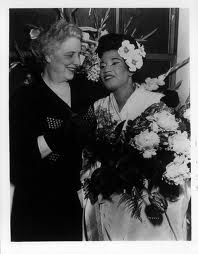
Ok. You and I both now that anyone who really wanted recordings of Met broadcast going back 70 years could get them. I have a wall filled with nothing but. Legalities and royalties be damned. But for the many, and for the business of opera and recording to have these broadcasts commercially available-and inexpensive, about $15 a pop, is a great treat. Indulge yourself. And phooey on the critics who damned Marian Anderson with faint praise at her 1955 Met debut. She's 58 and not in fresh voice, but she is tremendous in her own way as Ulrica in Un ballo in maschera with Jan Peerce, Robert Merrill and Zinka Milanov.

Start clicking and order it. Order 'em all.

Monday, January 30, 2012

I should stop reading the obituaries


Really.
Irishman I am , I seem to be addicted.
I note the passing of Kevin H. White, Mayor of Boston in my youth-and a little after/

And we've had several losses in music in the past week:

RITA GORR the great Belgian mezzo soprano. She's Amneris on Leontyne Price's first recording of Aida-said recording the first such I ever heard, in third grade (1964? 1965?)

MARTIN ISEPP musical staff at Glyndebourne, pianist, accompanist, conductor , coach-often worked with Dame Janet Baker.

PATRICIA NEWAY died at 92. She put Gian Carlo Menotti's The Consul on the map. She was also the first Mother Abbess in The Sound of Music. She was Tosca in Paris and Italy-and recorded Gluck's Iphigenia with Giulini. She did it all. Wonderful.

CAMILLA WILLIAMS One of the first African American artists allowed to make a big career in opera. Her Madame Butterfly was greatly admired by Geraldine Farrar, who created the opera at the Met in 1907!

And late in 2011:

SALVATORE LICITRA 43 Italian tenor died of injuries sustained in a motorbike accident

SENA JURINAC Soprano had a huge career in Vienna and London-and was a regular in San Franciso. Butterfly, Tosca, Ariadne-she was the first I ever heard do the Komponist. Marschallin, Jenufa.

CORNELL MCNEIL The great American baritone-a big man with a big voice-Rigoletto, Ernani--all the big Verdi roles-and frightening as Scarpia.

MARGARET PRICE-Welsh soprano-gorgeous, rich voiced with plenty of 'gleam'. I head her in recital at Carnegie where she pissed some people off by singing the whole program with scores. Not me. Her voice was sensational. Also saw her as Desdemona w. Domingo

..and The New York City Opera has been beaten all out of recognition, and Paul Plishka retired, and.....

Monday, January 09, 2012

A Lament for the New York City Opera


With today's report in the New York Times of a lockout at the New York City Opera, I suspect this wonderful company really has come into its final days. Management squandered hundreds of thousands on a general manager who left before producing one opera for the company; they have left Lincoln Center (it's no longer the New York State Theater but the David I Koch Theater but it's going to be the State Theater to me) and is roaming around sites in Brooklyn the Bronx and Manhattan (who are these people? Cole Porter?) with no permanent home. The chorus and orchestra, back bones of the company-what made the City Opera a company has been decimated. THEY are the ones locked out of rehearsal (I do have to ask locked out from where?) today.

I haven't seen a City Opera performance since Nic Muni's modern dress AIDS ward Traviata in 1990. The show was sold out. People cheered and people booed but everyone in the State Theater (thank you very much) was involved. That to me was the point of the many City Opera performances I did see: even in a theater too large with crummy acoustics, the mission of the artists on stage and the unseen personnel was to communicate-I never saw a City Opera artist walk through a performance. The company meant a great deal to me when I arrived in New York in 1979. I put down my bags and ran to see Faust with Diana Soviero and Samuel Ramey; Tosca with Marilyn Zschau and Brent Ellis, Gianna Rolandi and Barry McCauley in Lucia. I had cheap seats, but they were seats, and cost $2!

I've posted a youtube clip of the Lucia telecast because it represented to me, without Sills, Treigle, Domingo or Ramey, a good night at City Opera- a good night for any opera company-minus the great high voltage stars. This to me was City Opera at its best-back in the day. I admire the stagecraft of Steven Wadsworth, Nic Muni and the Alden brothers-I haven't seen their City Opera productions, but I imagine they didn't look like this Lucia. And that's fine. This was 30+ years ago. City Opera moved with the times. It refreshed the repertoire, brought in -out of the box' production teams and kept its devotion to American singers.

That past? I never heard the great Cosi fan Tutte cast with Phyllis Curtin, John Alexander, John Reardon, Judith Raskin and and Frances Bible. I would have loved to have heard Curtin in Salome andSusannah. Brenda Lewis in Mark Blitzstein's Regina. I was too late-barely, dammit!-for Norman Treigle in anything and I would have loved to have experienced his Olin Blitch or Mefistofele.

Beverly Sills was in Boston a lot-where her Violetta was unforgettable. I was lucky to hear her t at the City Opera, sublime in I Puritani, Anna Bolena, Barber of Seville and Manon. She gave you the reason for all the shouting and press accolades.

To me City Opera was about Tito Capobianco and his stagings-how sad I missed Sills's Lucia and how I loved Rolandi!-I saw Frank Corsaro's Butterfly years after it was new and I still remember Patricia Craig taking the crucifix off the wall after Sharpless read her Pinkerton's
kiss off letter. Patrica Brooks! Who was more beautiful? I did see Patricia Brooks, in Puritani-but I missed her in Corsaro's Traviata. But I did see the staging late in the day with Diana Soviero and Rico Serbo-both of them young and gorgeous making you forget everyone else. Catherine Malfitano and Samuel Ramey made you horny as Susannah and Figaro-and I saw my first Ariadne at City Opera: with Johanna Meier, John Alexander, Patrica Wise and Marilyn Niska....

Get the point?

American opera had a nurturing laboratory at City Center and later at Lincoln Center. The City Opera imprimatur told the world that American opera thrived with by Hoiby, Flloyd, Menotti, Douglas Moore, Robert Ward. So many more. This at a time when Rudolf Bing at the Met said, "We cannot produce American opera because people will not come." Maybe Douglas Ward's Wings of the Dove wasn't a sell out, but the fact that it was produced at all meant that new opera mattered.

I grew up at the City Opera at a time in my life when I needed to grow up. I treasure this great company and its legacy. Nobody who has ever seen a New York City Opera performance would allow its chorus and orchestra to be locked out.


Wednesday, January 04, 2012

Books Friends Read in 2011


I asked a number of people to name some of their favorite books read in 2011
(see previous post)
What great responses!
Thanks to all.

If you have other titles please add them to this blog
What were your favorite reads of 2011?

BILL

Fierce
Invalids Home From Hot Climes Tom Robbins
The Moor's Tale Salmon Rushdie
Nobody's Fool Richard Russo
The Crossing Cormac MCarthy
The Portable Atheist Christopher Hitchens

BARBARA

Just Kids Patti Smith
At Home Bill Bryson
Guernsey Literary and Potato Peel Society Mary Ann Shaffer, Annie Barrows
Cutting for Stone Abraham Verghese

KEVIN

The Pale King David Foster Wallace
The Man in the Rockefeller Suit Mark Seal
Kentucky Derby Andrea Cohen
Saint Louis Armstrong Beach Brenda Woods

PAULA

A Testament of Devotion Thomas Kelly

DENNY

Empire of the Summer Moon: Quanah Parker and the Rise and Fall of the Comanches, the Most Powerful Indian Tribe in the World S.C. Gwynne

The Big Short: Inside the Doomsday Machine Michael Lewis
The Paris Wife Paula McLain
Purple Jesus Ron Cooper
Wizards First Rule Terry Goodkind

BRENT

Masters of Atlantis Charles Portis

CASEY

Samuel Ramey: American Bass Jane Scovell

SCOTT

Last Call: The Rise and Fall of Prohibition Daniel Okrent
And So it Goes: Kurt Vonnegut, A Life Charles J. Shields
The Invention of Hugo Cabret Brian Selznick
Lisa's Story Tom Batiuk

DEBORAH

11-22-63 Steven King
Mornings on Horseback David MCullough
The Autobiography of Mark Twain

KATHERINE

The Hare With the Amber Eyes Edmond de Waal
Binary Vision Collected Stories of Edith Perlman
When We Were Strangers P. Schoenwalt
Major Pettigrew's Last Stand H. Simonson
The Gift or Rain T.T. Eng

SEBASTIAN

The Memory Chalet Tony Judt
The Hare with Amber Eyes Edmund de Waal
The Thou and Autumns of Jacoib de Zoet David Mitchell
The Gate of Angels Penelope Fitzgerald

BRENT

The Masters of Atlantis Charles Portis

JANET

Swamplandia Karen Russell
Emily, Alone Stewart O'Nan


MATTHEW

The Frontiersman Alan Eckert
Star Island Carl Hiasen
Skinny Dip Carl Hiasen
Steve Jobs Walter Isaacson


LIST YOUR OWN FAVORITES IN THE COMMENT SECTION!
THANKS!
KEEP READING FOR 2012.


Tuesday, January 03, 2012

Books Read in 2011


These are the books I read in 2011. * indicates a book I especially enjoyed. My favorites are listed at the end of this post. WHAT ARE YOUR FAVORITE BOOKS READ IN 2011?
NOTE: Don't miss Kevin Griffith's picks: www.kevingriffith.tk

Kevin is Professor of Creative Writing and Poetry at Capital University and is a regular panelist on All Sides Weekend/Books.

MY LIST:


Trespass Rose Tremain
Extraordinary Renditions Andrew Ervin
Body and Soul Frank Conroy
Half in Love Linda Sexton

*George Washington Ron Chernow
Catherine of Aragon Gilles Tromblett
Little Girl Blue: Karen Carpenter Randy Schmidt

*Just Kids Patti Smith
Twins Allen Shawn
Another Way Home John Thorndike

By Nightfall Michael Cunningham

The Big Show

The Memory Palace Mira Bartok
My Father at 100 Ron Reagan

Franklin and Eleanor Hazel Rowley
*Home Land Sam Lipsyte
House Arrest Ellen Meeropol
The War for Late Night Bill Carter

Ghost Light Joseph O'Connor
Sarah (Bernhardt) Robert Gottlieb

Life Keith Richards
*Listen to This Alex Ross

Paris Wife Paula McLain
The Metropolis Case Michael Galkey
Rawhide Down DelQuentin Wilber

Townie Andre Dubus III
Franny and Zooey J.D. Salinger

Apollo's Angels Jennifer Homans (history of ballet)

An Improvised Life Alan Arkin
Politics and Pasta Buddy Cianci
Bringing Adam Home Les Standiford
Untied Meredith Baxter

I Was a Dancer Jacques d'Amboise
J.D. Salinger Kenneth Slawenski
9 Stories J.D. Salinger


Wait for Me Deborah Duchess of Devonshire
A Covert Affair (Julia and Paul Child) Janet Conant

And We All Fall Down Nic Schiff

Against All Odds Scott Brown
The Rooms Tom Sholes
*Emily, Alone Stewart O'Nan
Hitman Howie Carr


Cleopatra Stacey Schiff
Henry's Demons : Living with Schizophrenia Patrick and Henry Cockburn

The Tragedy of Arthur Arthur Phillips

Sing You Home Jodi Picoult
A Box of Darkness Sally Ryder Brady

*From Splendor to Revolution Julia Girardi
Half a Life Darin Strauss

The Boy in the Moon Ian Brown
Blind Allegiance to Sarah Palin Frank Bailey

*Purple Jesus Ron Cooper

This Side of Paradise F. Scott Fitzgerald
The Romantic child Priscilla Gilman

A Walk on the Wild Side Earl Wild
Save Me Lisa Scottoline

Lady Blue Eyes Barbara Sinatra
*A Singular Woman Janny Scott (Stanley Ann Dunham, mother of Barack Obama)
*The Greatest Journey David McCullough
In the Garden of Beasts Erik Larson

*The Devil All the Time Donald Ray Pollock
The Convert Deborah Baker
Forbidden Childhood Ruth Slenczynska
The Untold Story Monica Ali (what if Diana lived?)

*Green Hills of Africa Ernest Hemingway
Violette Noiziere Sarah Maza
Reading My Father Alexandra Styron

The Last Tycoon F. Scott Fitzgerald

A Bold and Reckless Life: Barak Obama, Sr. Sally Jacobs

And Furthermore! Judi Dench
My Luck Life Dick Van Dyke

The Unnamed Joshua Ferris
Transition Chaz Bono
*Bed David Whitehouse

*This Beautiful Life Helen Shulman (boy e mails photo to classmates)
George Szell Michael Charry

*The Man in the Rockefeller Suit Mark Seals
Tabloid City Pete Hamill
*Long Drive Home Will Alison (an auto accident on purpose)
The Price of Malice Archer Pryor

Every Last One Anna Quindlen
Paco's Story Larry Heineman

The Bell Iris Murdoch
Heart of a Soldier James B. Stewart

You Can't Be Neutral on a Moving Train Howard Zinn
Fall of Giants Ken Follett

Wendy and the Lost Boys Julia Salomon (bio of Wendy Wasserstein)


Disaster was My God Bruce Duffy (novel of Arthur Rimbaud and Paul Verlaine)

Here Comes Trouble Michael Moore

*We the Animals Justin Torres
Rules for Civility Amor Towles
Emperor of Lies Sam Sten Sandberg (novel of the Warsaw ghetto)

On Canaan's Side Sebastian Barry (Ireland 89 year old Lily in the States)

Elements of style Wendy Wasserstein
Hatred at Home Andrew Welsh Huggins
Riccardo Muti: A Memoir

The First Queen of England (Mary Tudor) Linda Porter

Chango Beads and Two Two Tone Shoes Ken Follett

Growing Up Amish Ira Wagler
*Lost Memory of Skin Russell Banks (abandoned kid sex offender)

Jane Fonda Patricia Bosworth
The End of Normal Stefanie Madoff Mack
*Destiny of the Republic Candice Williams

Truth and Consequences Life Inside the Madoff Clan Laurie Sandell

The Final Verdict Walter Schnier
The Rogue: Sarah Palin Joe McGinnis

Behind Closed Doors: The Duchess of Windsor Hugo Vickers
Lucking Out James Wolcott

Anne of Cleves Retha Warnicke

JFK in Ireland Ronan Tubridy
Elizabeth I Margaret George
(sic) Joshua Cody
My Week with Marilyn Colin Clark

Eva Braun Life with Hitler Heike B. Gortermaker
Last Man in the Tower Aravind Adiga
Boston Noir stories ed. Dennis Lehane

Gabby Mark Kelly

The Night Stranger Chris Bohjalian
Mary Boleyn Alison Weir

Hedy's Folly Richard Rhoads (Hedy Lamar and Geo. Antheil inventors)

Slaughterhouse Five Kurt Vonnegut
*The Outlaw Album Daniel Woodrell
*The Sense of an Ending Julian Barnes

Catherine the Great Robert K. Massie

Favorites for 2011:

The Sense of an Ending, Julian Barnes
George Washington, Ron Chernow
Destiny of the Republic, Candice Williams
Purple Jesus, Ron Cooper
Just Kids, Patti Smith
We the Animals, Justin Torres
Long Drive Home, Will Alison
The Man in the Rockefeller Suit Mark Seals


Thursday, December 29, 2011


These are program notes I've written for CATCO/PHOENIX's production of James Phillipp's play The Rubenstein Kiss-based on the trial and execution of Julius an d Ethel Rosenberg. See www.catcophoenix.com


JULIUS AND ETHEL ROSENBERG

UNQUIET DEATHS?

By Christopher Purdy

“I was with Ethel in the women’s house of detention. When the van came to take us to court, Ethel and Julius would be in there. It was pitch black. One time a prisoner lit a cigarette, from the flare we could see Ethel and Julie trying to kiss between the gate.”—Miriam Moskowitz

At first glance, there was nothing remarkable about Julius and Ethel Rosenberg. They married in 1939, and lived a lower middle-class existence not far from where they each grew up on New York’s lower east side. Both sets of parents were immigrants from the pale of Eastern Europe. Families grew up in unheated tenements with toilets down the hall. It was a crowded life, and a poor life.

Julius Rosenberg disappointed his parents who hoped he’d be a rabbi. He graduated City College in electrical engineering, near the bottom of his class. Morton Sobell, a classmate and later a co defendant with the Rosenbergs, said, “As an engineer, Julius would have made a very good rabbi”.

The high point of Julius’s life was his first meeting with Ethel Greenglass in early 1936. Ethel worked as a secretary in a Manhattan shipping firm. But the stage was her passion. She dreamed of a career in opera-and her heart was not with shipping but with the amateur dramatic societies she joined, and with New York’s prestigious Schola Cantorum, to which she aspired. There no encouragement at home. “There’s no room in life for arty people”, sniffed her mother.

But there was Ethel, pacing a corridor before going on at an amateur night to sing ‘Ciribiribin”. And there was Julius, introducing himself and talking quietly to encourage her. The two were an item from that night. They married in 1939. There were two children, Michael born in 1943, and Robert in 1947. The young family eventually moved to a three room apartment at 10 Monroe St. Ethel’s dreams of the stage receded (she never stopped trying). Julius went to work in the U.S. Army Civilian Signal Corps.

In 1942, Julius was fired. It was discovered he had been a member of the Young Communist League at City College. Ethel had joined before their marriage. Julius for years told everyone how proud he was that Ethel, then 18, had led a strike at her job, which left her unemployed.

If Julius and Ethel were penalized for membership in the YCL, so most of half the lower east side must have been indicted. Julius went further, and the couple moved from the hum drum to the dangerous. Julius was recruited by a Soviet agent early in the 1940s. He was chosen as a “friend of the party” and because he had one important recourse, Ethel’s kid brother, David Greenglass.

“Doovey” was adored by his older sister and was the pet of the family. He married Ruth Prinz in 1942. The army sent David to the machine shops at the nuclear testing facilities in Los Alamos. There he made sketches of fission lenses which were passed to Julius who presumably passed them on. Julius was arrested by the FBI on June 17, 1950; Ethel was arrested seven weeks later. They never left prison.

The charges were “Conspiracy to commit espionage”. Over the years it’s been argued that the Russians received from Julius nothing they didn’t already have. David Greenglass was told by the authorities, confess or you and your wife both will be prosecuted-1950 was not a time to be a political radical in the United Sates. A deal was made. David testified of Julius’s involvement and went on to say that Ethel was present and typed his notes. This testimony was crucial to the government’s case. The Rosenbergs were convicted and sentenced to death in the electric chair. David Greenglass got ten years and served seven. Ruth was never prosecuted. Appeals for the Rosenbergs ran out in the summer of 1953. Pablo Picasso and the Pope were among those who asked for clemency. Pro Rosenberg rallies were held all over the world. There was a vigil in New York’s Foley Square on the night of June 19, 1953. It was the Rosenberg’s 14th wedding anniversary. At Sing-Sing there was a last mintue appeal. The executions had been scheduled for 11 PM. But it was Friday. Honor the Jewish Sabbath and give them one more day. Instead the executions were moved forward to 8 PM. Julius and Ethel were allowed to spend thirty minutes together, with a heavy mesh screen between them. The guards came for Julius and he touched Ethel’s finger through the mesh-until they both bled. Thirty minutes later the couple was dead. Their sons had been sent to live with a kindly foster family. Michael was playing outside on that terrible night. He knew about the 8 PM deadline. “I stayed outside until it was two dark to see the ball. Went I went in I was told the television stations all said the same thing.”

Debate over the couple's guilt never stopped. In 1995 the VENONA report was released. These were encrypted cables between the U.S, and the Soviet Union. From these we learn that Julius Rosenberg was indeed a spy for the Russians and had involved David and Ruth Greenglass. Ethel’s role was considered minimal. She may have been put to death for typing.

Not surprisingly, the Rosenberg case has long encouraged writers, composers, film makers and dramatists. Ethel comes back to haunt Roy Cohn on his deathbed in Tony Kushner’s Angels in America. E.L. Doctorow’s 1971 novel The Book of Daniel tells the story from the point of view of the Rosenberg children. Sidney Lumet directed the 1983 film Daniel, with Timothy Hutton, Mandy Patinkin and Lindsay Crouse. Donald Freed’s play Inquest starred George Grizzard and Anne Jackson on Broadway in 1970. Billy Joel references the case his song, We Didn’t Start the Fire. The Rubinstein Kiss by James Phillips was first performed in London, in 2005.

David Greenglass has lived under an assumed name since 1960. He surfaced briefly in 2001 on 60 Minutes II, (disguised) where he contradicted his trial testimony against his sister, but expressed no remorse to her fate. Sam Roberts’s book The Brother tells the tale form David’s perspective. Ruth Greenglass died in 2008. Neither had any contact with the Rosenberg sons, Michael and Robert Meeropol. The brothers co-authored We Are Your Sons in 1975; Robert’s memoir An Execution in the Family was published in 2003. That same year a video indispensible to anyone wishing to know more about the Rosenberg case, Heir to an Execution, was produced by Michael’s daughter, Ivy Meeropol.

Most recently, Walter Schneir has updated Invitation to an Inquest, co- authored with his wife Miriam in 1965, with Final Verdict, What Really Happened in the Rosenberg Case, published shortly after Walter’s death in 2009. This book discusses the Venona cables at length, and admits to Julius’s role as a spy-but makes clear that Ethel’s involvement was minimal, and argues that in neither case did the terrible punishment fit the crime.

The Love Goddess and The Piano Player


Question: What movie siren tamed up with a piano player to develop a new radio controlled device used to guide torpedoes? Mae West and Paderewski? Marilyn Monroe and Horowitz? Nope. The answer is Hedy Lamar and George Antheil. And okay, the youtube clip probably gave it away.

The Lamar Antheil partnership and the resulting patents are discussed in a fascinating new book, Hedy's Folly by Richard Rhodes. Mr. Rhodes has written extensively on nuclear warfare. Even so, a discussion of the love goddess and an esoteric composer must have been a departure for him. His is a fascinating blend of high science and show business.

Hedy Lamar was born Hedy Kiesler in Vienna. She began in the theater and in 1931 appeared in a film produced in Czechoslovakia, Ecstasy. You bet. The film became infamous for Hedy's limbs and considerable charms and attributes. It was banned in the States. Rhodes goes so far as to quote Louis B Mayer, who on his first meeting with the actress told her, "You'd never get away with that stuff in Hollywood. Never. A women's ass is for her husband, not theatergoers. You're lovely, but I have the family point of view. I don't like what people would think about a girl who flits bare-assed around a sixteen."

Nice. God got him. Hedy was rechristened and went to MGM and was a name in pictures for 20 years. She was not a star of the first rank, but she was good enough for Clark Gable and Charles Boyer.

Meanwhile, composer George Antheil and his wife Boski were living in Paris upstairs from Sylvia Beach's bookstore. His Ballet mechanique required sixteen synchronized player pianos-and when he couldn't get them to run properly the performance of this , well, different work became infamous. There's no such thing a bad publicity. Antheil too arrived in Hollywood to write film music-but the studios were slim pickings for him. He composed, he taught and he wrote-about the effects a man's glands have on his sex drive-and he wrote a book which accurately predicted World War II.

Hedy had been married to an Austrian weapons baron called Friederich Mandl. She was the trophy wife and the marriage was a gilded prison. Nevertheless, she listening carefully to the dinner table conversations as the munitions big wigs were helping birth Nazi Germany. She got away, but between takes at MGM-plus five more marriages and two kids-Hedy remembered everything. She had a penchant for invention. A cube morphing into soda pop with a little water was an early flop.

George Antheil was at loose ends in Hollywood but he knew his way around mechanics and physics. Hedy Lamar was bored. The two got together. It is suggested that Antheil,while quite the horndog, was never romantically involved with Hedy Lamar. They spent their time together drawing and designing a device to guide torpedoes-there was 60% failure rate, and this along with the wartime death of Antheil's beloved kid brother, motivated the two towards invention. Patents were awarded to Hedy Kiesler Markey (a quickie marriage) and George Antheil in 1942. And the patents were buried, though the navy held on to them. Hedy's film career continued. George's music began to attract a lot of notice. Patents ran out in 1959, a year after George Antheil's death.

Hedy retired and lived on to 2000-she died at 85. Toward the end of her life the story of her invention was reintroduced by scientist/army colonel Dave Hughes. Hedy was awarded a medal from the Electronic Frontier Foundation. Great movie beauties do not parade around in their 80s. She sent a recording to the awards banquet, "I hope you feel good as well as I feel good about it, and it was not done in vain. Thank you."

But there was more. "Never a letter. Never a thank you. Never money. I don't know. I guess they just take and forget about a person."

Wednesday, December 28, 2011

Who's Woody Hayes or How I Learned to Spell TBDBITL


BROADCAST TRIBUTE TO Dr. JON WOODS AND THE OHIO STATE UNIVERSITY MARCHING BAND, SUNDAY, JANUARY 1 @ 3 PM on CLASSICAL 101 or on line at www.wosu.org


This is Script Ohio, originated in 1936 at The Ohio State University. The precision is killing and the effect sensational, for those lucky enough to score OSU tickets and their friends in TV land.

When I first came to Columbus twenty years ago I recall driving around The Ohio State University campus. I work on campus now, I'm an OSU alumnus-in my dotage, taking classes with my 'grandchildren'-and I live two miles from the 'Shoe.' I can hear the band warming up from my front yard. That's today. In 1991 when I crossed Woody Hayes Boulevard I thought, Oh yes, I can live here. They must love music. They've named a street after a big-band leader.

(A digression: I've worn a beard since I was 17. My beloved Grandmother, when she first saw more than peach fuzz-an orchard, a dirty one!- on my face, said, "Oh no. You look like Gabby Hayes." So that name remained iconic for me even though I didn't know who the ---- was Gabby Hayes. He was a character actor in Westerns, much loved. He died in 1969 and never led a band in his life.)

Woody Hayes was the sainted coach of The Ohio State University football team. You loved him or hated him. You can have all the block Os and scarlet and gray you like but Woody Hayes was and is the "brand" of The Ohio State University. He was forced to resign in 1976 for striking a player. May not have been the first time. He died in 1987. If there is a God, at least in college football, his name is Woody Hayes. And I'm confusing him with Gabby Hayes, who was never a big-band leader. Sheesh.

Al ll the more reason then for me to try and make it right. Dr. Jon Woods, the beloved Director of The Ohio State University Marching Band, is retiring in April.

I've produced a broadcast special in his honor-to air on New Year's Day at 3 p.m. I don't know if Woody Hayes goes second to The Best Damned Band in the Land (hence TBDBITL) but its really, really close. The band is sensational. Woody or Gabby, the band is great. Dr. Woods is an inspiring leader and music educator. Mrs. Woods came on the show to add some pepper. There are tributes from a few (very) high profilers in the community-and Dave Carwile, The Voice of TBDBITL, provides insight and continuity. I enjoyed meeting Dr. woods and I really enjoyed, after 20 years, immersing myself in the band, on CD and on Youtube. Script Ohio is nothing if not operatic. But that's another story.

BROADCAST TRIBUTE TO DR. JON WOODS AND THE OHIO STATE UNIVERSITY MARCHING BAND....SUNDAY JANUARY 1 @ 3 PM on Classical 101 or on line at www.wosu.org


GO BUCKS!

Thursday, December 15, 2011

O Holy Night - Leontyne Price


This is my idea of Christmas! Enjoy. God bless.

MUSIC THERAPY: In memoriam: Clive Robbins 1927-2011 - Nordoff Robbins - Music Transforming Lives

I'm placing the obit here because I had not known of Mr Robbins-I'm way late to the party, having become fascinated by his work on the basis of his obituary! I want to learn more. Music therapy study is a goal for me.


In memoriam: Clive Robbins 1927-2011 - Nordoff Robbins - Music Transforming Lives

Tuesday, December 13, 2011

RIP Tony Amato and Amato Opera


RIP TONY AMATO
The wonderful Amato opera went on for sixty years on the Bowery in New York. The tiny theater held maybe 80 people, 100 if you don't mind laps-and few did. Tony Amato was the founder and artistic director. He staged and all the operas-and he knew them cold: Handel, Mozart, Bizet, Puccini and of course Verdi..Donizetti, Rossini-he could sing all the parts in all the operas and often he did!

People who came to laugh got over themselves quickly. People pay good money today to hear many artists who began at Amato Opera. Mrs. Sally Amato was the business person..Maestro Tony did the rest. It was not always so. Sally met her husband in the 1940s when she was singing Madame Butterfly on the Lower East Side Side. New York is so great!

I saw many Amatro productions, including rarities like Alzira (Verdi) Poliuto (Donizetti) and L'arlesiana (Cilea). Backstage and upstairs there were trunks, scores, notes and meatballs and probably several singers long deceased who couldn't bear to leave.

You know the song 'What I did for love?' Go sing it (try to sing well) and think of Amato Opera.

Tuesday, December 06, 2011

NORMA: A VERY SPECIAL BROADCAST


The Metropolitan Opera will present an archival broadcast on January 14: The April 4, 1970 performance of Bellini's Norma with Joan Sutherland, Marilyn Horne, Carlo Bergonzi and Cesare Siepi. The above clip comes from December of that year, but gives a good idea of what is to be heard in January, 42 years after the event.

I remember hearing this broadcast-live, on that 1970 date-on a transistor radio. (Go look it up or ask your grandparents.) I had a battery operated reel to reel tape recorded from Radio Shack ($29.95. A fortune! Unheard of!) By holding the little plastic mic up to the hand- held radio I got a complete recording of this broadcast. What did I know from audio quality and who cared? It was good enough for me-and when, after repeated playings...and playings..and playings..the tape (go look it up or ask your grandparents) began to disintegrate I resorted to duct tape and when the tape joins would stick in the machine I'd just get up and shove it damned well through.

The tapes were good at least until 1974 when I went to college. They lingered in my Uncle's basement for nearly forty years until I recovered them after his death in 2010. And yes,I since acquired this performance of clear sounding CDs. I listen to it seldom, but I'm listening to it now-seldom because it remains special to me: I vaguely knew what this was in 1970 and who these people were but nothing prepared me for the sheer beauty of the music and singing that afternoon.

The Met brought Norma to Boston on tour a few weeks later. I got to meet Joan Sutherland. She was very gracious and sweet, even after a long tough sing. I was 13 and I came up to her, well, I got quite the look down the front of her low cut dress (she had make up on 'em). "They" were extraordinary. so was the singing.

Carlo Bergonzi and Cesare Siepi didn't come on this tour. Bergonzi was and is my favourite tenor. The sweetness of tone and above all his impeccable line are ravishing-then and still. I suspect Pollione was a bit of luxury casting for Bergonzi. He was a stand there and sing guy, but my God sing and sing he did! I saw him later during my New York years. The bloom was long gone but he went for every note and spared himself nothing: in Ballo, Trovatore and Pagliaccii. Remember when he came onstage during the Met -Levine tribute in 96? He was an old man but who was to touch him singing Verdi, even with half the voice that had been.

Good for the Met for bringing this Norma back to the public. Thank you for giving me back one glorious afternoon over forty years ago!

Joan Sutherland died last year. Cesare Siepi died a few months before Dame Joan. Carlo Bergonzi is 87 and has been ill. Miss Horne has had cancer treatment but is active as a -fantastic-teacher and advocate for young artists.