Wednesday, February 27, 2013

Queen Victoria Gets Chummy with Mendelssohn

The Columbus Symphony presents Mendelssohn's Symphony no. 3 "Scottish" this weekend, along with Beethoven's Piano concerto no. 4 and Kenneth Frazelle's Elegy for Strings-this weekend at the Ohio Theater. Jeffrey Kahane is the pianist and conductor.

Composer Kenneth Frazelle promises me a phone conversation later today.  I'll report back tomorrow.
In listening to and researching the Mendelssohn Symphony, I came across some delightful references to Queen Victoria and Prince Albert's fascnianton with this young German melodist.


Victoria and Albert bonded over music and her sexual passion for the dashing German princeling. Let's stay with music for now. The Queen loved her Bellini and Meyerbeer. She thrilled to Norma and I Puritani. No doubt she too sighed over Bellini, a lovely young man, most fetching and dead at 34. The Queen did love her dead friends. Albert was a respectable pianist and organist. He and the royal Mrs. were known to play piano four hands and Her Majesty was often most graciously pleased to sign. Withal, both Queen and Prince loved music, showed some gifts in performance. Aside from Albert and music, the Queen also adored Scotland. "Home of oatcakes and sulphur" Disraeli was heard to moan. As The Queen spent more and more time in seclusion at Balmoral, all of her ministers were forced to make the chilly trek north to conduct business.

Felix Mendelssohn (1809-1847) became a star at 17 with his overture to A Midsummer Night's Dream. His Songs Without Words were all the rage. The early string symphonies were considered decorative and good fun. Mendelssohn's four Symphonies lack the drama and passion of Beethoven or Schumann, but they have a grace and melodic perfection all their own.

During a visit to Scotland in 1829, the young was impressed by the ruins of the chapel at Holyrood House-once the home of Mary, Queen of Scots. The sight of that unhappy lady's home in the moonlight led Mendelssohn to jot down a tune. Over years this blossomed into his third symphony. And why not call it 'Scottish'. "I have come up with the theme for my Scotch Symphony", wrote Mendelssohn. Indeed he had, even though thirteen years passed until the Symphony was ready. But it begins with that haunting tune, inspired by ruins in the moonlight:


So here we have Mendelssohn: handsome, German and purportedly in love with Scotland. How could Victoria resist? She didn't. During one of his many trips to Britain, the composer was invited to Buckingham Palace. Many an eyebrow raised as court, since Mendelssohn was Jewish and a composer. Not exactly respectable, since composers were known to run with fast women and have a predilection for drink

Mendelssohn's first visit to the Royal couple was on June 15, 1842. The Queen and the Prince were "quite fluttery" anticipating Mendelssohn's arrival.  The Queen reported that Mendelssohn "was very pleasing and modest...At one moment he played the Austrian national anthem with one hand and Rule Britannia with the other. We were all filled with the greatest admiration. Poor Mendelssohn was quite exhausted when he was done playing."

Mendelssohn came back a month later. The queen decided to sing for the composer "She will sing you something by Gluck. Meanwhile, . the Princess of Gotha had come in and we all proceeded through the various rooms and corridors to the Queen's boudoir. There stood a piano and two enormous bird cages. The Duchess of Kent came in, and while they were all talking I rummaged through the music and found two songs of my own, which I asked her to sing in place of the Gluck.":

 Mendelssohn and Queen Victoria reckoned without on of the Queen's favored pets:

"Just as we were about to begin, the Queen said 'But first we must get rid of the parrot, or he will scream louder than I can sing! Prince Albert rang the bell and the Prince of Gotha said 'I will take him out,'.  I came forward and said "Please allow me?' and lifted up the big cage and carried it to the astonished servants. "

Mendelssohn grit his teeth when Victoria chose to sing "Schoner und schoner schmuckt dich".  Mendelssohn could overlook the Queen singing D instead of D sharp but he pouted when admitting that this song was written not by himself but by another Mendelssohn, his sister Fanny.

 "I gave him a little ring in remembrance" wrote the Queen. They met twice more, in 1844 and 1847. Albert heard the composer conduct Elijah in London and sent a signed copy of the program with a windy but admiring inscription. The one favor Mendelssohn asked, to visit the Royal children, further endeared him to the couple.

Felix Mendelssohn died on November 4, 1847. The Queen was "horrified, astounded and distressed" at this news. "We liked and esteemed the excellent man & looked up to & amp; esteemed the wonderful genius and the great mind, which I feel were too much for the frail and delicate body."

For all his vigor in fathering nine children, Albert himself was frail. He did in 1861. Victoria was prostrate and claimed she would soon join him, so weak and heartsick was she. Forty years later-she did!

Tuesday, February 12, 2013

The Biographer's Art: A Visit with Margot Peters


Margot Peters

Margot Peters has had a distinguished career, both in academia and as a biographer.

 Her subjects have included George Bernard Shaw, Mrs. Patrick Campbell, Alfred Lunt and Lynn Fontanne, and poet/icon May Sarton.  Her latest book is a biography of poet Lorine Niedecker, Lorine Niedecker, A Poet's Life, available now from University of Rochester Press.

I was interested in how a biographer begins her work, and whether of not views of the subject change over time.

Margot Peters spoke to me on the phone from her home in Wisconsin

CP: What does it take to be a biographer?

MP: An organized mind. And the ability out of the million facts that you get, to see patterns.
And you have to have a narrative sense, to carry the reader. But if you can see patters out of all your research, that's when it begins to become a biography.

CP: How long does it take to find those patterns?

MP: I know that I have it when I tell myself, even if I discover things about his person, they won't surprise me. They will fit in.

CP: Many of your books deal with the theater
MP: Yes!
CP:  I know the theater is a passion of yours. The first book of yours that I read was your book on Mrs. Patrick Campbell. I had heard then name but didn't really know much about her. What inspired you to go to her?

MP:  I had written a biography of George Bernard Shaw. It's called Bernard Shaw and the Actresses-bad title!-it should have been called Shaw and the New Woman.  He wrote wonderful roles for women. He was very involved with Mrs. Patrick Campbell. He was in love with her. After I was finished with Shaw and the Actresses, which dealt with many actresses I thought, Oh-there's not a good biography of Stella Campbell. I think there should be. She's witty. A Wonderful snob, She was a great-some people say-actress, and she had a colorful life.

CP:  Could you tell strictly from your research what kind of actress she was?

MP:  I think so. There were lengthy theater reviews in those days. We're talking the 1890s--1910-1920s, Theater reviews went on and on. They'd describe the tone of voice, timbre, action, how she turned her back at crucial moments in a play. They really described very thoroughly. I think I think I have a sense of how she would have acted. The films did not help me very much. She was older, she had let herself go, she was unused to film as a medium. It was good to see her on film, but I think I grasped her acting as a young actress.

CP: When you're researching a subject do you start with one mindset about them,  then through your research change your mind?

Stella Patrick Campbell 1865-1940
MP: I think all biographers-or many of them-change their minds.  Shaw was an absolute hero to me. For his socialism, for his feminism, for his brilliance. But he was not very nice with women. He was a philanderer when he was young. He could be cruel. I had to make all kinds of adjustments in writing that book. I had to reconcile this true feminist who wrote great roles for women, with a sometimes  nastily behaving man towards women. That was a problem. He tore some actors apart. He was out for Sir Henry Irving. He felt Irving was behind times, he wasn't current with the new drama. He just ripped him apart. Later Irving said, "I'd be glad to pay for this man's funeral!"

CP:  You have reintroduced Alfred Lunt and Lynn Fontanne to the public. Tell me who they were in context of their own times

MP: Lunt and Fontanne are a genius, as one critic said. Together-and the seldom performed separately-they created absolute magic. Their timing was perfect. Their sense of humor, their comedy. Alfred I think was the far better actor. But after he hitched up with Lynn, Lynn had to have wonderful women's roles. I  think he would be the greater actor.


CP:  Some of the plays they did were not very good. Without them they would not be performed. Was that deliberate on their part?

MP:  Noel Coward was their closest friend. One of the plays he wrote for them, Quadrille, is not good. I suspect it was one of these friendships, you did it to be all involved together. Yes, they were in some bad plays, but they had good roles--for them.

CP: Why do you think they so seldom worked separately?
MP: They started separately. The acted together after they got married. Then, I think, as this sounds really petty, I think that she was horribly jealous of his leading ladies.Helen ?Hayes was in love with him. Lynn didn't want anyone with Alfred except herself.


CP: As far as I know, only one of your subjects was living at the time you were working with them, and that was May Sarton.
MP: How true! Never work with a living subject!
CP: Will you ever do it again, after that?
MP: Never
CP: What's the difference between a subject living or not living.
MP: I did the living subject because I was interested in her, and her feminism and I thought it would be interesting to talk with a live person. But there quickly grew a battle between us. She wanted to talk to me, and yet she wanted to control her own life. She wanted to read and then control what I said.  She fired me twice!

I told my husband, "She's going to bury me!" She was so difficult, I really thought I could never do this. I was able to publish the book after she died.  It's a very blunt biography, but she told me most of it....all of her affairs, all of her philandering was incredible. And her temper. She was fascinating, but I would never work with anybody alive again.

CP: It a blunt biography and I know you've had some criticism
MP:  I got death threats!
CP: But people were so attracted to her. If you're into her you're really into her, you're really into her. Like Wagner.

MP: She had fans. She didn't have readers, she had fans.


CP:  Why were people attracted to her?
MP:  The vitality. I used to show a film of her to my students, called A World of Light. I taught a class called Women's Voices Women's Lives, and in that film she is incandescent. She is so vital, so alive, I thought what a wonderful woman! And it turned out she was almost empty. No, she couldn't be empty, but she had so little self.

CP: She was an actress


May Sarton (1912-1995)
MP: She was.  She overwhelmed these audiences with her beautiful voice and her poetry. She was a huge success.
CP: I  think the bluntness of the book reflects her very well. She should not have been surprised .
MP: No! She told me all of this

CP: If she read the book herself she may not have liked it but he could not have been surprised. I don't appreciate her work any less. I don't think she was a great writer

MP: I don't either

CP;  That's why I was really curious why she had such a fan base

MP: Some of her novels are good. Some of them are quite good, but that's the most you can say. Some of them are very bad. Her poetry has appeal, especially when she would read it aloud. I was interested in her because of her journals.  I said to myself, it doesn't matter that she's a lesbian, well it certainly did!

CP: In what way?

MP: Not being lesbian myself should I be writing this person?  But no, it doesn't matter. She's a human being. But she was so lesbian, she was so involved with so many women. Her promiscuity bothered me.
But it would bother me in a heterosexual.
CP: She seemed predatory about it

MP: Yes, she was predatory. Yes.
Lorine Niedecker

CP: Finally I'm intrigued by your latest book about a poet I didn't know .

MP: Lorine Niedecker. A wonderful poet. A hard, hard life. Poverty. Living alone on Blackhawk island that flooded frequently. There was loneliness. Then she makes a connection with a poet in New York and that gives her energy to publish. She had only four books published in her lifetime.  She is a wonderful poet. She's a wonderful human being.

CP: A little different than May Sarton.
When you speak of poets working alone Emily Dickinson always comes up. but if you've been to
Amherst you know there's a difference between splendid isolation and really living alone .

CP: Any final thoughts for a would be biographer? Make sure they're dead.

MP: Make sure they're dead. Number one. Don't write about anyone living. Don't choose a living celebrity. you have to split fifty-fifty with them. You can't say what you want. If the person's living, you don't gt an honest biography. Very few subjects would allow that. Do lots of research. Looks for the pattern always. I use psychology but I don't broadcast it. I don't go in to long psychological  analyses. Write well!


:   

Thursday, January 31, 2013

My Daughter Kerry Advocates for the Disabled, Pt. 3

Kerry has been asked to give a speech to a support group for those with disabilities.
Here it is:

My name Kerry Purdy. I am here to speak on people with disabilities entering challenging careers, such as first responders and the military.  I have wanted to enlist in the military or become a police officer since I was fourteen, and I feel like I have been put down and ridiculed for having such goals-which, in the log run has simply made me more determined.

I feel like I would be a very good candidate for the military or a career along the lines of a police officer or firefighter for several reasons.  I have the desire to serve, make sacrifices, and protect others.  I am a serious outdoors woman.  I have hiked and camped in numerous locations: the Appalachian Trail, in sand in Florida and Georgia, and in ice in Alaska.  I have carried fifty-pound packs over mountains.  I often helped lead hikes, and set up camp.  I am also a cross country runner. I was one of the first on my school's team.   I enjoy working out and lifting weights, and will usually push myself.  I understand that many with disabilities do not have these interests, and I am set apart in many ways.  I no longer want to be seen as a "disabled" person, but someone who has her own goals and dreams, and wants to accomplish those.  It is frustrating and discouraging for me to have these honorable goals, and not be taken seriously for them.

In conclusion, I would like to say that society needs to be more educated to our needs and desires.  We are human beings with human needs and feelings, just like everyone else.  I have grown quite a backbone in the last several years, and I certainly hope that is paying off.  Society needs to start "thinking outside the box."  I do not romanticize about these careers. I have done extensive research and know they are nothing to take lightly, please understand that.

Thank you everyone for listening.  It's time to start thinking outside the box.

Friday, January 25, 2013

Verdi's Rigoletto: A New Way

Zelko Lucic as Rigoletto in Vegas
The Metropolitan Opera is about to open a new production of Giuseppe Verdi's Rigoletto. The court of Mantua circa 1600 has been changed to Las Vegas, circa 1960. The Duke of Manuta becomes Sinatra-esque. Rigoletto himself possible as Don Rickles. I like it. I'm looking forward to seeing it.


I like the singers involved and I admire the commitment I see in the above clip. This by way of assuring those who care that I'm not mired in nostalgia.

Aldo Protti 1955
This morning I stumbled upon a 1955 RAI telecast of Rigoletto. There is not one outstanding voice here-except Virgina Zeani. The technical quality is sixty years old. But I want you to look at the performance below and notice the superb diction. You could take dictation. All of them singing in their own language but these singers regard the language as crucial. Note also the posture. Even in a TV studio everyone carries him/self with wonderful posture, standing a straight line from the belly button on down. The movements are fluid and easy on the eye. Opera was important to these artists. The staging is uncluttered and clear. If you don't need to move you don't move. No flailing around "all about the  place"

I've heard outstanding voices in this opera: Pavarotti, Milnes, Peters,Sutherland, Mac Neil I loved them.


The over all performance in this ancient TV film I find both gripping and strangely moving. I couldn't watching it. The singers weren't working to become the characters. They were the characters. Notice too that in three minutes Countess Ceprano becomes a major role. Look at Aldo Protti's face at Monterone's curse. Sparafucile is no cloaked bandit but a king in his own realm.Watch for the elegance and clarity-as the story is told through music, words, gesture and attitude. I won't say those were the days because I wasn't there. I will say that this Rigoletto, in fuzzy black and white, with no "names" is wonderful. Do you agree:


Opera is a rich world. Unlike many, I believe the new and the not so new can co-exist. When treated with respect, intelligence and love, opera will thrive in Mantua and in Vegas.

Thursday, January 24, 2013

Les Troyens: Dancing the Trojan War

Last night I attended the encore showing of the Metropolitan Opera's live performance of Berlioz's opera Les Troyens. This is a five hour French grand opera based on Virgil's Aeneid.

Conductor Fabio Luisi. My hero!


(The above clip is from 1982-not the current production)

The Trojan war is a big deal for an opera. you think Aida is a big show? Gotterdammerung? You've never seen Les Troyens. Not only is it long, a huge orchestra and chorus are front and center. And there is no tenor alive who can truly sing Aeneas.


Bryan Hymel as Aeneas
Until now. BRYAN HYMEL. Who knew? Nice young guy from New Orleans. He came late to the production, with "two hours of rehearsal." This is a well focused, tight voice with a touch of metal and no breaks way up to D above High C. No part of this grueling role seemed difficult for Hymel. I haven't heard such an ovation-well deserved-since the prime of Dame Joan Sutherland.


.

Who is more beautiful than Susan Graham? In her fifties, she's just now at the peak of her loveliness. Hers is a warm, beautiful mezzo soprano. Tomato soup with Ritz crackers on a cold night. One of those melted chocolate voices where you can just wallow.


 I don't think Cassandra is Deborah Voigt's best role. The music gives her little opportunity to soar. I kept waiting for her flash of silver voice to really peal forth.She said later she was ready to get back on her horse (Brunhilde!) Dwayne Croft-who I think is undervalued-brought a beautiful voice to a thankless role. Karen Cargill sang Anna with a voice you want to marry. What a deep, luscious sound More!

But folks. The dancing! It was long! I know its French opera where a ballet is de rigeur (am I cute or what?) This is a long opera. I don't think there's a wasted note. There's a great scene in part two where Dido and Aeneas celebrate their love. And in the midst the loving couple is on a satin settee..NOT ALONE! Aeneas' son Ascanius is cuddled up, along with  the sage Iopas (Tenor Eric Cutler-superb) and dancing dancing dancing.

Don't be mad. I like T&A as well as the next guy.  The white costumes were flattering or at least enticing. A lovely tush is always a treat. But to me this was extended coitus interruptus-the only longueurs of a long evening. The dances were great. And hot. But it did seem to go on and on and on. What I want to know is what were Dido, Aeneas, Ascanius, Anna and Iopas thinking cuddled up in satin with nothing to sing.

Never mind. Perhaps had I attended the live-live showing at 12 noon I would have been fresher and more able to appreciate the dancers skill over booty.

Monday, January 14, 2013

Nice Photos: They Deserve Their Rest, pt. 2


The previous post on this topic is the most viewed item on this blog.
Who knew?
Acknowledging my forebears and the Irish Sports Page, I continue with more grave sites of departed musicians.

Marian Anderson (1897-1993) Great American contralto. Broke every racial barrier in classical music. She was the first African American to sing at the Metropolitan opera (1955)

Eden Cemetery, Collingdale, PA


Bruno Walter (1876-1962) Conductor, protege of Gustav Mahler. Gave the first performance of Mahler's Das Lied von der Erde

S. Abbondio Church Cemetery, Montagnola Ticino, Switzerland

Pablo Casals (1876-1973) Cellist, conductor, humanitarian

Cemeteri De El Vendrell, Tarraguna, Cataluna, Spain


Emma Eames (1863-1952) soprano-a beauty noted for her voice and temperament. Retired young. "I would rather be a beautiful memory than a curiosity."


 Robert Merill (1917-2004) baritone, beloved by Toscanini and the New York Yankees 


Sharon Gardens Cemetery, Valhalla, NY


Vladimir Horowitz (1903-1989) The most acclaimed pianist of the 20th century


 Cimiterio Monumentale, Milan. In the Toscanini family tomb. Horowitz was Toscanini's son-in-law


Igor Stravinsky (1882-1971) Re-invented music for the 20th century


Cimitero di San Michele, Venice

Thursday, January 10, 2013

RIP Rex Trailer

BOOM TOWN may have been a John Wayne or Howard Hawks movie in the 40s, but in my Boston childhood of the 1960s, BOOM TOWN was a morning kids show starring Cowboy Rex Trailer and his sidekick, Pablo.

Not PC , cheerful and handsome Rex packed six shooters and a horse-in the TV studio at WBZ Channel 4 on Soldier's Field Road. TV studios have as much personality as a low end dental office, except the dentists smell better.


Pablo was very much the stupid Mexican, who was always in trouble and always being punished. Thankfully, we have evolved. I swear once he was given a spanking. That'll  put a different spin on a cheery kids show.
Rex was handsome, Rex could sing and Rex was kind. Every year he took a passel of kids to Knott's Berry Farm in California. Parents thought he had said 'Roxbury Fahms' aka Boston's 'hood: "Why would he take children theyah?"

Rex came to a meeting of Cub scout Pack 168 in Lexington, Ma around 1967. I should know. My father was the scoutmaster. So I got a preview of Rex as he drove up in his red truck loaded with guitar cases. Not a horse in sight. He came into the Harrington School gym. We were 8 and 9 year olds, sitting politely in a large circle on the floor (imagine that today?) I don't remember any of the words or music but I'm sure there was the usual adult to kids rant about interfering with yourself mixed in with Home on the Range.

Bozo
Don't call me cynical. Rex was one of several TV personalities who told us the world was okay. He got us excited about the moon walk. When the KKK briefly tried to gain a hold in Boston Rex told the kids :These are bad people. But don't be afraid. It was okay because Rex said so.

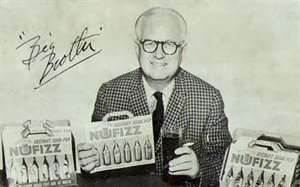
Bib Brotha Bob
Bozo the Clown and Big Brother Bob Emery were there too. Big Brother Bob had his well loved theme song: "The grass is always greenah in the othah fellas yaaaaahrd". Bozo-oh, and Miss Jean's Romper Room-("who's been a good doobie?") were mainstays but they couldn't sing and they didn't have a horse, much less guns. Rex was cool. He was the dad many wished they'd had-we change our minds on this as we age.

Withal, he was a good guy with a long career.
I didn't know old cowboys went to Florida, but that's where he died a few days ago, at 84.

I don't know what happened to Pablo. And you gotta wonder about Miss Jean and her doobies.

Friday, January 04, 2013

When a Bastard is a Bitch or Vice Versa

Maria Stuarda at the Met: Eliza van den Hever as Elizabeth; Joyce DiDonato as Mary

Donizetti's opera Maria Stuarda received its Metropolitan Opera premiere last week, 170 years after it was first performed. New York certainly has not been without this dramatic opera about Mary Queen of Scots. Beverly Sills sang the unhappy queen (to the delight of legions of other...queens) in the 1970s. Montserrat Caballe and Shirley Verrett played Mary and Elisabeth (Elisabetta thank you very much) at Carnegie Hall in the 60s.

Beverly Sills comments on Maria Stuarda


The Met brings us the wonderful Joyce Di Donato and a soprano from South Africa called Eliza van Hevel.
The source for Donizetti's opera is not history by Friedrich Schiller's drama Maria Stuart. Any dramatist who eschews a confrontation scene between Mary and her cosing, Elizabeth I is a fool. No fool Schiller.In fact, the two ladies never came within 100 miles of one another.  History tells us that the Catholic Mary, Queen of Scots, the widowed Queen of France,was the heir to Elizabeth-who was considered by the Catholic world a 'usuperer'. Elizabeth was the daughter of Anne Boleyn, for whom Henry VIII has abandoned Roman Catholicism.

Mary, Queen of Scots (1542-1587)

Elizabeth I (1533-1603)

Gaetano Donizetti (1797-1848) and his librettist Cesare Bardari agreed with Schiller. Mary and Elizabeth had to meet and get into a vocal/vernal bitchfest.And so they do-in the park near Fotheringay-where Mary has been imprisoned for years. The meeting begins with biting courtesies but deteriorates quickly. Elizabeth calls Mary "shameless." And finally,the Scottish Queen snaps-in Italian no less:

Figlia impura di bolena, parli tu di disonore           
Memetrice indegna oscena!                                          
In te cada il mio rossor!
Profanta, e il trono inglese
Vil bastarda, dal tuo pie!

Beverly Sills, New York City Opera, 1972
Impious daughter of Anne Boleyn                                                                          
Do you speak of dishonor?
Lying, guilty obscene woman!
I blush for you.
The English throne is profaned
Vile bastard, by your foot!

Here's the scene sung in English, with Dame Janet Baker and Rosalind Plowright:


Montserrat Caballe (Maria) and Bianca Berini


At the New York City Opera, Ashley Putnam and Marisa Galvany


And the greatest voice of all, Joan Sutherland, with Huguette Tourangeau, Amsterdam
(with horrible production quality--sorry)


Alas, I'm aware of no video with Beverly Sills: I think she takes this scene hands down. Here's the audio at least:


Thursday, January 03, 2013

A Rose is a Rose is a Rosenkavalier

Okay, I know its a cute headline. It's a new year, so you gotta give me one.

I've been doing some prep work for this weekend's Columbus Symphony concerts and pre-perforamce talks. The Waltzes form Der Rosenkavalier conclude the program. Pavlov's dogs slobbered ovber steak. I love the way music can take one back or provide a vitamin pill of memory.

The Knight of the Rose was first performed in 1911. In the Vienna of Maria Theresa-Mozart's Vienna-we meet a lovely princess, considered old at 32, and her handsome, dashing 17 year old lover, Count Octavian Rofanpo. The role of Octavian is played by a woman in male drag. Yes it contributes to a naughtiness inherent in the music. It was common in Mozart's day for young men to be portrayed by women. Strauss and his librettist, Hugo von Hofmansthal, recreated Mozart' era and Mozart's ethos. Strauss and Hofmansthal hoped that Scottish soprano Mary Garden (1874-1967) would play Octavian, but she-no fool-told the press "It would bore me to make love to a woman." You gotta love her.

Mary Garden (1897-1967) Bored
The Waltz was new in the 1770s , and considered a peasant dance. It was fine to boff a 17 year old when your husband's out of town -but dancing cheek to cheek as it were was considered scandalous, or at least low class. The Princess has a country bumpkin cousin, Baron Ochs (yes, OX-you got it). Count Octavian and the Baron's young, dewy and rich fiance, Sophie fall in love. Ochs is furious and after a few belts of tokay, challenges Octavian to a duel. He is thus pricked in the arm, and falls screaming "murder"-and rather than dying, he grumbles to a waltz tune:


"Ohne mich, jeder Tag  dir zu dang; Mit mir, mit mir keine nacht wir so lang":
Without me, every day is a misery...With me, no night is too long."

If that's not a pickup line....They must have been pretty randy in 1911.

What there was of a waltz in the 1770s was nasty but had turned elegant and sexy by 1911.
Hofmansthak (l) and Strauss
I wish I could say the guy gets the girl at the end of this opera-he does, except remember he is played by a she even tho she is meant to be a he in the opera so no, they aren't lesbians. Get it? As with any opera plot, you might need to write this down. I understood this better 20 years ago before I joined AA. Twenty- five years ago I found myself having to explain this opera in detail to a room full of nuns. Still drinking then, thank God.

Withal, Rosenkavalier can always get me out of the blues. Not only the above quoted waltz, but especially the brilliant hustle bustle of Act 2-as we meet the precocious and spitfire young Sophie,


No, they aren't doing the entire opera this weekend. just the Waltzes, along with Mozart and Johann Strauss
Columbus Symphony Fri-Sat 8 PM Ohio Theater. I give pre -concert talks both nights at 7. You don't get to skip the yak just because you've read this far..

Wednesday, January 02, 2013

My Daughter Kerry Advocates for the Disabled, PT. 2


A while ago, I composed a speech for advocacy for the disabled, listing several grievances about how people with “disabilities” are treated in society, “special ed” programs, etc. I did not go into too much detail about the “vocational” program I attended, and so now I am writing this essay about what I saw in that building.
            While I knew I wanted to pursue the Army or firefighting, I decided to enroll in this new “vocational” program, assuming that my tasks would fall to mostly helping out with the low-functioning classes-that was what I was so informed. I was also informed that the “vocational” program had moved from the main high school building into a smaller building nearby that had for a while housed the middle school students but didn’t work out for them. I assumed that it would consist of the “grad” students and maybe the high school students and that we would, for the most part be helping out with other classes, given career preparation skills, possibly internships at sports centers, day cares, fire stations, etc. This ended up being the biggest mistake I have ever made. I entered this so-called “vocational” building to find that they had moved all the nonverbal, low-functioning and remediation students into it, and put the “grad” students in with them. I truly regret not just collecting my diploma and enrolling in the Fire Academy or going to an Army recruiter that first day. The building was extremely small and cramped; it stank, and they NEVER cleaned it. Several of the teachers were snappish and rude, and had superior, know-it-all manners. It became apparent right away that they would NOT be encouraging or supportive in any way for our future. We were taken to grocery stores to perform “internships”, i.e. unpaid labor there. We were expected to do rudimentary first-grade level work. If I tried to speak up, they would yell at me to shut up and do my school work. All the books in the “library” were at a fourth grade or below reading level. (I entered the first grade reading at a fifth grade level.) In no time at all, the teachers were targeting especially me. Not just because I was definitely one of the more outspoken students; but because I was, hands down, the most “capable” in the whole building. I was borderline “neurotypical.” I was, as far as society was concerned, everything I was NOT supposed to be. I wanted to enlist in the Army with a backup plan for firefighting, instead of being content with bagging groceries for a living. I knew that I was lesbian and attracted to other women, instead of being asexual. I was clean and cared about my appearance. I was athletic and coordinated. I-GASP!-drove. I knew that I, no question, intimidated the teachers, with their strict low expectations and stereotypes for “disabled” people. This is why they had it out especially for me. One instance would be right before the winter break. A teacher asked me to write a paper on my holiday of Yule, or the Midwinter Solstice. She told me that I only needed to make it three pages long-and then pointed out that an ordinary college level paper would require several more pages and extensive research. When I offered to do a regular college-level paper for her, she stared and me and snapped, “No…I know you CANNOT do that.” No. That is not it. The truth is, she knew I COULD do it. She was fearful that I would bring her back a perfect, detailed, college-level paper, and completely dumb down her and the rest of these rigid, holier-than-thou teachers.
            After the new year, they set up “Fun Fridays” for the students who had had “good behavior” and gotten no “strikes” during the week. Students would get to choose from several different activities to partake in on Friday afternoons. The “grad” student were expected to partake as well-sitting quietly in the classroom with our Ipods, not bothering anyone, was “not an option.” Students who had made the slightest slip-up during the week, however, were sent to “Focus Fridays,” in a separate room where they were expected to complete worksheet after worksheet on proper behavior until the end of the day. One day, they decided to send me to “Focus Friday” for no apparent reason. They claimed that I had been “teasing” another student. This I had no recollection of. When I asked them to please refresh my memory, I was simply met with blank stares and “Well…uh…you did.” What they were doing was trying to make me feel dumbed down, and assert themselves over the big, bad, “most capable, borderline-neurotypical” student that they so feared.
            That was the message at this building. Don’t ask questions. Be quiet. Sink into oblivion. This was not a “vocational” building-this was a place set up to intentionally dumb us down, make us feel degraded and humiliated, and show that “disabled” people have NO place in society. There was nothing “vocational” about this building. I am hoping that others can see my side of the story. It, frankly, makes me angry that I need to do this. This is a sad truth, that society still looks at any and all “disabled” people this way. This is no different than the way a person of mixed European and Native American blood would have been treated a hundred years ago-no differently than if they had been a full-blooded Native American. Society obviously has not been educated to our needs, thoughts, and feelings-many obviously bhow people with “disabilities” are treated in society, “special ed” programs, etc. I did not go into too much detail about the “vocational” program I attended, and so now I am writing this essay about what I saw in that building.
            While I knew I wanted to pursue the Army or firefighting, I decided to enroll in this new “vocational” program, assuming that my tasks would fall to mostly helping out with the low-functioning classes-that was what I was so informed. I was also informed that the “vocational” program had moved from the main high school building into a smaller building nearby that had for a while housed the middle school students but didn’t work out for them. I assumed that it would consist of the “grad” students and maybe the high school students and that we would, for the most part be helping out with other classes, given career preparation skills, possibly internships at sports centers, day cares, fire stations, etc. This ended up being the biggest mistake I have ever made. I entered this so-called “vocational” building to find that they had moved all the nonverbal, low-functioning and remediation students into it, and put the “grad” students in with them. I truly regret not just collecting my diploma and enrolling in the Fire Academy or going to an Army recruiter that first day. The building was extremely small and cramped; it stank, and they NEVER cleaned it. Several of the teachers were snappish and rude, and had superior, know-it-all manners. It became apparent right away that they would NOT be encouraging or supportive in any way for our future. We were taken to grocery stores to perform “internships”, i.e. unpaid labor there. We were expected to do rudimentary first-grade level work. If I tried to speak up, they would yell at me to shut up and do my school work. All the books in the “library” were at a fourth grade or below reading level. (I entered the first grade reading at a fifth grade level.) In no time at all, the teachers were targeting especially me. Not just because I was definitely one of the more outspoken students; but because I was, hands down, the most “capable” in the whole building. I was borderline “neurotypical.” I was, as far as society was concerned, everything I was NOT supposed to be. I wanted to enlist in the Army with a backup plan for firefighting, instead of being content with bagging groceries for a living. I knew that I was lesbian and attracted to other women, instead of being asexual. I was clean and cared about my appearance. I was athletic and coordinated. I-GASP!-drove. I knew that I, no question, intimidated the teachers, with their strict low expectations and stereotypes for “disabled” people. This is why they had it out especially for me. One instance would be right before the winter break. A teacher asked me to write a paper on my holiday of Yule, or the Midwinter Solstice. She told me that I only needed to make it three pages long-and then pointed out that an ordinary college level paper would require several more pages and extensive research. When I offered to do a regular college-level paper for her, she stared and me and snapped, “No…I know you CANNOT do that.” No. That is not it. The truth is, she knew I COULD do it. She was fearful that I would bring her back a perfect, detailed, college-level paper, and completely dumb down her and the rest of these rigid, holier-than-thou teachers.
            After the new year, they set up “Fun Fridays” for the students who had had “good behavior” and gotten no “strikes” during the week. Students would get to choose from several different activities to partake in on Friday afternoons. The “grad” student were expected to partake as well-sitting quietly in the classroom with our Ipods, not bothering anyone, was “not an option.” Students who had made the slightest slip-up during the week, however, were sent to “Focus Fridays,” in a separate room where they were expected to complete worksheet after worksheet on proper behavior until the end of the day. One day, they decided to send me to “Focus Friday” for no apparent reason. They claimed that I had been “teasing” another student. This I had no recollection of. When I asked them to please refresh my memory, I was simply met with blank stares and “Well…uh…you did.” What they were doing was trying to make me feel dumbed down, and assert themselves over the big, bad, “most capable, borderline-neurotypical” student that they so feared.
            That was the message at this building. Don’t ask questions. Be quiet. Sink into oblivion. This was not a “vocational” building-this was a place set up to intentionally dumb us down, make us feel degraded and humiliated, and show that “disabled” people have NO place in society. There was nothing “vocational” about this building. I am hoping that others can see my side of the story. It, frankly, makes me angry that I need to do this. This is a sad truth, that society still looks at any and all “disabled” people this way. This is no different than the way a person of mixed European and Native American blood would have been treated a hundred years ago-no differently than if they had been a full-blooded Native American. Society obviously has not been educated to our needs, thoughts, and feelings-many obviously be “vocational” program I attended, and so now I am writing this essay about what I saw in that building.
            While I knew I wanted to pursue the Army or firefighting, I decided to enroll in this new “vocational” program, assuming that my tasks would fall to mostly helping out with the low-functioning classes-that was what I was so informed. I was also informed that the “vocational” program had moved from the main high school building into a smaller building nearby that had for a while housed the middle school students but didn’t work out for them. I assumed that it would consist of the “grad” students and maybe the high school students and that we would, for the most part be helping out with other classes, given career preparation skills, possibly internships at sports centers, day cares, fire stations, etc. This ended up being the biggest mistake I have ever made. I entered this so-called “vocational” building to find that they had moved all the nonverbal, low-functioning and remediation students into it, and put the “grad” students in with them. I truly regret not just collecting my diploma and enrolling in the Fire Academy or going to an Army recruiter that first day. The building was extremely small and cramped; it stank, and they NEVER cleaned it. Several of the teachers were snappish and rude, and had superior, know-it-all manners. It became apparent right away that they would NOT be encouraging or supportive in any way for our future. We were taken to grocery stores to perform “internships”, i.e. unpaid labor there. We were expected to do rudimentary first-grade level work. If I tried to speak up, they would yell at me to shut up and do my school work. All the books in the “library” were at a fourth grade or below reading level. (I entered the first grade reading at a fifth grade level.) In no time at all, the teachers were targeting especially me. Not just because I was definitely one of the more outspoken students; but because I was, hands down, the most “capable” in the whole building. I was borderline “neurotypical.” I was, as far as society was concerned, everything I was NOT supposed to be. I wanted to enlist in the Army with a backup plan for firefighting, instead of being content with bagging groceries for a living. I knew that I was lesbian and attracted to other women, instead of being asexual. I was clean and cared about my appearance. I was athletic and coordinated. I-GASP!-drove. I knew that I, no question, intimidated the teachers, with their strict low expectations and stereotypes for “disabled” people. This is why they had it out especially for me. One instance would be right before the winter break. A teacher asked me to write a paper on my holiday of Yule, or the Midwinter Solstice. She told me that I only needed to make it three pages long-and then pointed out that an ordinary college level paper would require several more pages and extensive research. When I offered to do a regular college-level paper for her, she stared and me and snapped, “No…I know you CANNOT do that.” No. That is not it. The truth is, she knew I COULD do it. She was fearful that I would bring her back a perfect, detailed, college-level paper, and completely dumb down her and the rest of these rigid, holier-than-thou teachers.
            After the new year, they set up “Fun Fridays” for the students who had had “good behavior” and gotten no “strikes” during the week. Students would get to choose from several different activities to partake in on Friday afternoons. The “grad” student were expected to partake as well-sitting quietly in the classroom with our Ipods, not bothering anyone, was “not an option.” Students who had made the slightest slip-up during the week, however, were sent to “Focus Fridays,” in a separate room where they were expected to complete worksheet after worksheet on proper behavior until the end of the day. One day, they decided to send me to “Focus Friday” for no apparent reason. They claimed that I had been “teasing” another student. This I had no recollection of. When I asked them to please refresh my memory, I was simply met with blank stares and “Well…uh…you did.” What they were doing was trying to make me feel dumbed down, and assert themselves over the big, bad, “most capable, borderline-neurotypical” student that they so feared.
            That was the message at this building. Don’t ask questions. Be quiet. Sink into oblivion. This was not a “vocational” building-this was a place set up to intentionally dumb us down, make us feel degraded and humiliated, and show that “disabled” people have NO place in society. There was nothing “vocational” about this building. I am hoping that others can see my side of the story. It, frankly, makes me angry that I need to do this. This is a sad truth, that society still looks at any and all “disabled” people this way. This is no different than the way a person of mixed European and Native American blood would have been treated a hundred years ago-no differently than if they had been a full-blooded Native American. Society obviously has not been educated to our needs, thoughts, and feelings-many obviously b
            While I knew I wanted to pursue the Army or firefighting, I decided to enroll in this new “vocational” program, assuming that my tasks would fall to mostly helping out with the low-functioning classes-that was what I was so informed. I was also informed that the “vocational” program had moved from the main high school building into a smaller building nearby that had for a while housed the middle school students but didn’t work out for them. I assumed that it would consist of the “grad” students and maybe the high school students and that we would, for the most part be helping out with other classes, given career preparation skills, possibly internships at sports centers, day cares, fire stations, etc. This ended up being the biggest mistake I have ever made. I entered this so-called “vocational” building to find that they had moved all the nonverbal, low-functioning and remediation students into it, and put the “grad” students in with them. I truly regret not just collecting my diploma and enrolling in the Fire Academy or going to an Army recruiter that first day. The building was extremely small and cramped; it stank, and they NEVER cleaned it. Several of the teachers were snappish and rude, and had superior, know-it-all manners. It became apparent right away that they would NOT be encouraging or supportive in any way for our future. We were taken to grocery stores to perform “internships”, i.e. unpaid labor there. We were expected to do rudimentary first-grade level work. If I tried to speak up, they would yell at me to shut up and do my school work. All the books in the “library” were at a fourth grade or below reading level. (I entered the first grade reading at a fifth grade level.) In no time at all, the teachers were targeting especially me. Not just because I was definitely one of the more outspoken students; but because I was, hands down, the most “capable” in the whole building. I was borderline “neurotypical.” I was, as far as society was concerned, everything I was NOT supposed to be. I wanted to enlist in the Army with a backup plan for firefighting, instead of being content with bagging groceries for a living. I knew that I was lesbian and attracted to other women, instead of being asexual. I was clean and cared about my appearance. I was athletic and coordinated. I-GASP!-drove. I knew that I, no question, intimidated the teachers, with their strict low expectations and stereotypes for “disabled” people. This is why they had it out especially for me. One instance would be right before the winter break. A teacher asked me to write a paper on my holiday of Yule, or the Midwinter Solstice. She told me that I only needed to make it three pages long-and then pointed out that an ordinary college level paper would require several more pages and extensive research. When I offered to do a regular college-level paper for her, she stared and me and snapped, “No…I know you CANNOT do that.” No. That is not it. The truth is, she knew I COULD do it. She was fearful that I would bring her back a perfect, detailed, college-level paper, and completely dumb down her and the rest of these rigid, holier-than-thou teachers.
            After the new year, they set up “Fun Fridays” for the students who had had “good behavior” and gotten no “strikes” during the week. Students would get to choose from several different activities to partake in on Friday afternoons. The “grad” student were expected to partake as well-sitting quietly in the classroom with our Ipods, not bothering anyone, was “not an option.” Students who had made the slightest slip-up during the week, however, were sent to “Focus Fridays,” in a separate room where they were expected to complete worksheet after worksheet on proper behavior until the end of the day. One day, they decided to send me to “Focus Friday” for no apparent reason. They claimed that I had been “teasing” another student. This I had no recollection of. When I asked them to please refresh my memory, I was simply met with blank stares and “Well…uh…you did.” What they were doing was trying to make me feel dumbed down, and assert themselves over the big, bad, “most capable, borderline-neurotypical” student that they so feared.
            That was the message at this building. Don’t ask questions. Be quiet. Sink into oblivion. This was not a “vocational” building-this was a place set up to intentionally dumb us down, make us feel degraded and humiliated, and show that “disabled” people have NO place in society. There was nothing “vocational” about this building. I am hoping that others can see my side of the story. It, frankly, makes me angry that I need to do this. This is a sad truth, that society still looks at any and all “disabled” people this way. This is no different than the way a person of mixed European and Native American blood would have been treated a hundred years ago-no differently than if they had been a full-blooded Native American. Society obviously has not been educated to our needs, thoughts, and feelings-many obviously believe we don’t have any at all. Thank you if you have read this far. We need to stand up.

--Kerry Perdy