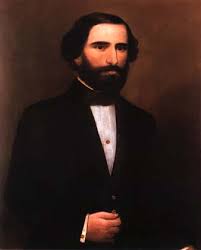
Monday, September 23, 2013

One Verdi Opera a Day: Don Carlo(s)

Don Carlos  Joseph Mery, Camille du Locle  Paris Opera 1867

Don Carlo   Achille du Lauzieres   Naples 1872/ Bologna 1872/Milan 1884/Modena 1886

Neil Shicoff, Pilar Lorengar, Alan Titus, Stefania Toczyska, Robert Lloyd, Joseph Rouleau/John Pritchard. San Francisco Opera, September 5, 1986 

Don Carlo  Placido Domingo, Margaret Price, Piero Capuccilli, Elena Obrasztova, Yegeni Nesterenko/Claudio Abbado  La Sacla, January 7, 1978


If you put a gun to my head and made me choose between the original French language Don Carlos or its several Italian cousins, Don Carlo, I'd probably end up dead. Like many Don Carlo in its five act version is the one I now best. I'm a devotee of the French original (is there an original Don Carlo(s)? Do we know exactly what was performed at the premiere?)

To start with these facts. Don Carlos is a French language opera based on Schiller, composed for the Opera de Paris.  The opera premiered with an elaborate ballet in 1867. The librettists would return to Verdi's life to greater affect in Aida: Joseph Mery and Camille du Locle.

Phillip II
Would you kiss this face? He's not as bad as some. This is King Phillip II of Spain (1527-1598). The King's second marriage, to the French princess Elisabet de Valois (1545-1568). Phillip is at the heart of Don Carlo. So why isn't the opera called Phillip or Phillipp and Elizabeth? Because the King's son, Don Carlos, the Infante of Spain was Elizabeth's first intended, until the King chose the young princess for himself. This example of Oedipal splendor is only one of the strands of Verdi's opera, magnificent in its five act incarnation in French, and bloodcurdling in Italian.

History tells us that the marriage Phillip and Elizabeth was happy, ended by her premature death at the age of 23. We also know that Don Carlos was suffered a devastating head injury in a fall in 1862. The remained of his short life was plagued by violence and delusion. He was nobody's first choice for the altar. He was offered to every available noble lady in Europe, including Mary, Queen of Scots. Nothing doing. Don Carlo was an exact contemporary of his step mother Elizabeth and he died unmarried.

Like most operas based on historical subject, Don Carlos plays with history.  It is a glorious pageant of an opera, in any language. The elegance and danger of the Spanish court is played again the doomed (and fake)
Elisabeth de Valois
love story of Carol and Elisabeth and Carlos and Rodrigue. The latter is mirrored in Verdi;s relationship with his one time pupil, the conductor Angelo Mariani, passionate without a discernible sexual nature.

The horrid chanting of monks at an auto da fe; the flirtatiousness of the Princess Eboli, Elisabeth's resignation and despair, Don Carlo's passion and madness, Rodrigo's love, Phillipp's loneliness: Verdi has a musical signature for each


Princess Eboli, the King's mistress, in love with Don Carlo


Don Carlo and Elisabeth, alone in their misery:


The love of Carlo and Rodrigo


My problem with this opera is that I can't stop.

Here's the Auto-da-Fe scene in French:


Friday, September 13, 2013

One Verdi Opera a Day: Aroldo, Un ballo in maschera, La forza del Destino

Verdi looking Russian
Continuing with my listening to one Verdi opera a day, in chronological order, in honor of the composer's bi
Caruso in Un ballo inmaschera
centennial

Aroldo Frncesco Maria Piave  1857  Rimini

Montserrat Caballe, Gianfranco Cecchele, Juan Pons, Vincenzo LaScola, Luis Lehbrez; Opera Orchestra of New York/Eve Queler


Verdi was disgusted with the Franco-Austrian censors and disappointed that some of the public disapproved of Stiffelio. A Protestant pastor and a German no less! The music was too good to waste, thus Aroldo. Aroldo moves the action to medieval England and Scotland-medieval British more tolerated than 19th century German protestants?-The music is not the same, the plot is very similar. If you know and like Stiffelio, Aroldo is well worth a spin. I've never heard Aroldo performed live. The above cited recording is great, but cut. Seek out Fabio Luisi's more recent recording on Philips.


Un ballo in maschera  Antonio Somma 1859 Rome

Maria Callas, Giuseppe DiStefano, Tito Gobbi, Eugenia Ratti, Fedora Barbieri. La Scala/Antonino Votto 

First of all, where are you? Late 18th century Sweden or Colonial Boston (God bless us and spare us). The assassination of King Gustav III of Sweden at a Masked Ball is the basis for this opera. So far, we've met a lot of great Verdi women: Elena/Helene, Giselda, Abigaille, Lady Macbeth, with a lot more to come. Ballo for me is the tenor's opera. Go ahead, laugh. Gustavo is written to well display a strong lyric tenor voice. I always loved Pavarotti in this opera.


 And this sparkling bit for Oscar is effective against the dark plotting of Renato and the assassini


La forza del destino  Francesco Maria Piave  1862 St. Petersburg

Renata Tebaldi, Mario delMonaco, Ettore Bastianini, Cesare Siepi,

Imperial Theater, St. Petersburg
Oh, the singers ho used to perform this opera and oh, the paucity of them today! I hadn't listened carefully to Forza in a long time. It's sprawling, yes and there are a fee moments of crowd painting you could miss-but the tenor/baritone duets!


Leonora's three arias-the scene with Guardiano, and the final trio! If you listen to this closely it will stay with
you for days. I'm not familiar with the score as given at the premiere, only the changed version now performed. This is a heavyweight big/boy big girl opera. Thrilling.


Thursday, August 29, 2013

One Verdi Opera a Day: La traviata, I vespri Siciliani, Simon Boccanegra

Renata Scotto as Elena in I Vespri Siciliani


I'm continuing to listen to one Verdi opera a day, not on consecutive days but in
order, in partial celebration of the Verdi Bicentennial. I'm also making use of Mary Jane Philips Matz's magisterial biography of the composer, along with books by Julian Budden and Francis Toye. Mostly I'm just listening for my own enjoyment, as I hope my comments reflect


Maria Callas in La Traviata
La traviata   Francesco Maria Piave, based on Dumas fils "La dame aux camellias"  Venice 1853
Inspired by the courtesan Marie DuPlessis (1824-1847)

Maria Callas, Giuseppe DiStefano, Ettore Bastianini/Carlo Maria Giulini La Scala 1955

 
La traviata is an easy opera to take for granted. The story had notoriety before Verdi/Piave got to it, mostly via Sarah Bernhardt and Eleanora Duse. What begins in a brittle and cynical manner becomes an exercise in sincerity that dares you to mock. Violetta may be to sopranos as Hamlet is to actors. Again, Verdi is a great tune smith


We go from hedonism to pathos to deeply moving drama


The role of Alfredo is misleading. He has less to do emotionally in the opera. The heart of the piece is the Violetta-Germont scene in Act II. But Alfredo is no easy sing. He's worth doing for the Act III scene at Flora's if for nothing else


 Don't miss the new biography of Marie DuPlessis, whose life inspired Dumas fils and Verdi 

The Girl Who Loved Camellias by Julie Kavanaugh


Les vepres Siciliennes   Eugene Scribe/Charles Duveyrier  Paris 1855

Alexandrina Pendatchanska, Gregory Kunde, Dario Solari, Orlin Anastassov/Gianluigi Gelmetti Naples 2011

I vespri Siciliani  Ettore Ciami  Perugia 1855

Renata Scotto, Placido Domingo, Sherrill Milnes, Paul Plishka/James Levine
Metropolitan Opera November 4, 1974

 
These are two different operas with the same music and plot. Verdi wrote a French opera, to a French text for the Paris Opera.

In Verdi's day opera was sung in the language of the audience, thus necessitating an Italian translation, which
Salle Le Pelletier, Paris c. 1850
the composer hated.  Most of know I vespri Siciliani better than Les vepres Sicilienne. I don't know the French text very well. Even so I can tell the words fit the music perfectly. The French language gives this opera dignity the Italian lacks, the latter becoming more of a pot boiler. I would love to see a staged French language production of Verdi's original. I imagine Vepres/Vespri is a bitch to cast. The duets for Henri/Montfort and Henri/Helene are highlights for me. But my favorite moment in this opera is at the very beginning. The Duchess Helene demands her fellow Sicilians rise up against the French: Some of what I mean is at 4:00. But this is a wonderful clip surrounding the Verpres production from Naples cited above


Verdi knew that the Italian Vespri would run afoul of the censors. The Italian libretto was refashioned and called Giovanna di Guzman.  Whatever.
 
For I vespri Siciliani, here's a recent production from Verdi's own Parma:


 BTW: Verdi was also working on the French edition of Il trovatore--Le trouvere


Tito Gobbi as Simon Boccanegra

Simon Boccanegra   Francesco Maria Piave   Venice 1857  Music revised with new text by Arrigo Boito Milan 1881

 Tito Gobbi, Giorgio Tozzi, Leyla Gencer, Giuseppe Zampieri, Rolando PaneraiGianandrea Gavazzeni  Vienna Opera Orch and Chorus at the Salzburg Festival August 9, 1961

Sometimes I think this opera gets lost between Traviata and the impending, Ballo, Forza and Don Carlo. I've never paid it enough attention. The tenor and soprano take a back seat to the baritone and bass. Well, I'm here to tell ya, this is one powerful opera. If you don't know, invest 2 hours in a listen. Verdi's music captures both the image of the sea and the grandeur of the Venice of the Doges. There are moments of great intimacy, notably the soft 'Figlia' sung by SB after meeting his adult daughter. The Council Chamber Scene, added in 1881 (I don't know the 1857 version, as far as I know it is rarely performed) I've seen Simon Boccanegra and it plays like the grand opera it is. The last thirty seconds are especially thrilling. Boccanegra dies of poison. The crowd outside is calling for him. Fiesco says Greet Gabriele Adorno, your new Doge. No! Boccanegra! He is dead. Pray for his immortal soul". "


Verdi was apparently discouraged and annoyed with thew opera's failure in 1857. He had written it off until Boito convinced  the composer to accept the revisions, giving us the opera as performed today. Don't miss Simon Boccanegra


Monday, August 19, 2013

One Verdi Opera a day: Stiffelio, Rigoletto, Il trovatore

Now it gets intense. The challenge is to say something new about Rigoletto and Trovatore. The hits just keep on coming.

But  Stiffelio is not well known. There's a story to be told:
 
If you write an opera called Stiffelio,  you'd better be sure it's a good opera.
Giuseppe Verdi wrote a three act tragedy based on the play Stiffelius back in 1850. The story is  the tale of a Protestant pastor who forgives his wife her adultery. There is a very effective closing scene, as Stiffelio preaches the gospel of the woman taken in adultery and proclaims that Christ pardoned her. "Perdonate! Perdonate!" he cries as his wife makes her way toward him down the church aisle.  Handled right,  this is a simple and moving scene.


 Stiffelio has been called Verdi's forgotten opera. Until very recently it was  never performed. The 1850 premiere was ruined by the Austrian censors active in Trieste. They demanded so many changes (a minister with a cheating wife, indeed!) that Verdi lost interest and moved on.


Verdi's estate at Sant'Agata, near Milan

I'm here to tell you however, that Stiffelio is not forgotten,  silly title and all. This writer sang in the chorus of the American staged premiere. Sarah Caldwell directed and conducted Stiffelio with her Opera Co. of Boston in 1976. Sarah was one of those people who could make a cheese souffle out of peanut butter, graham crackers and a turnip. She never paid the bills. Her theater was a movie house in a bad part of Boston. Porno on Tuesday, Opera on Wednesday. The dress rooms were the stinking back alley. Never mind.

Such was Sarah's creativity that she attracted big name singers. Stiffelio was to star the Canadian tenor Jon Vickers. He was still at the height of his powers in 1976. Soprano Anna Moffo would sing Lina. In 1976 she remained the most beautiful and glamorous figure in opera. She had lost her voice at least five years earlier, due to over work and poor training. Stiffelio was meant to be her big comeback.

Jon Vickers never came to Boston. He sent word from his estate in the Bahamas that having studied the score he was convinced the part was too difficult.  No Vickers, no opera. NOBODY sang this opera in 1976. Moffo arrived and everybody else began  to rehearse without the title character. She was on every talk show and this production had enormous pre-publicity.


Long story short. Glamorous and diva like in public, Anna Moffo was warm and kind and professional in rehearsal. It was clear to all of us she was still in vocal difficulty. Remember there was no leading man. Eventually, Sarah forced the role on a young tenor and he valiantly went on. He did himself nor the audience any favors, poor guy. Miss Moffo sang one performance. Her voice quit completely mid way of performance 2. A chorister sang from the wings. Moffo went home to Fifth Avenue and RCA, and Stiffelio limped on the understudies.

With all of that, it was clear this was a wonderful opera. It's hard to cast. Still unfamiliar, it demands accomplished singers-and they are expensive and you can't bounce their cheeks as Sarah did to the rest of us. Nevertheless it was a good-looking, well costumed production. The media who came for Moffo stayed for Verdi. Bad luck with casting also plagued Verdi himself but in 1976 it was okay for a pastor to have  cheating wife onstage.

The Opera Co. of Boston closed its doors in 1991. Stiffelio arrived at the Metropolitan in 1993. I remember being annoyed that all the press coverage ignored the 1976 Boston production. Phooey. We got there first.


Rigoletto  Venice 1851
Francesco Maria Piave, after Hugo's Le roi s'amuse

Tito Gobbi, Maria Callas, Giuseppe Di Stefano. La Scala/Tullio Serafin
 
The censorship that crippled the inital run of Stiffelio wreaked havoc with Rigoletto. Victor Hugo was anathema to conservatives. Regicide on stage? Impossible. If the King (Duke of Mantua) has to live he'd better have terrific tunes:


Rigoletto endears itself to the public for the tenor's tunes. The scenes with Gilda and her father are gorgeous and heartbreaking. And the jester himself is a glorious acting role. And what a sing!


Verdi knew what he had. He didn't let a note of this score out of his sight until after the first perforamnce. He eknew every organ grinder in Venice would take up thersr melodies. Where ios there such a balance of tunes and true drama. The beautiful father-daughter dynamic is simple. That it is memorable here is due to Verdi's passion.


Il trovatore Rome 1853 

Salvatore Cammarano and Leone Emmanuelle Bardare after El Trobabor by Guiterrez

Jussi Bjorling, Zinka Milanov, Fedora Barbieri, Leonard Warren/Renato Cellini


 Get in there and fight! Get in there and sing! The Marx brothers made fun of Il trovatore and do many others. It is a stand up and sing (or get in there and fight) opera. You need superlative voices. If the singers aren't well matched the balance can annihilate those lest....sonorous. In Trovatore,  the forward momentum Verdi first demonstrated in Nabucco is perfected. This is a swift moving show. One of the gems for me is the offstage nun's chorus in Act 2 sc. 2. The set up toward the battle between Manrico and di Luna and Leonora's rescue ("Donna, mi segui!") is thrilling.
Azucena becomes the pivotal character. A woman who murdered a child and becomes a craezd, pathetic figure has the most dramatic music.


The monks chanting the Miserere, Manrico sings from his prison and Leonora, hearing all this...di te scordarmi!


Monday, August 12, 2013

One Verdi Opera a Day: Il corsaro, La battaglia di Legnano, Luisa Miller

There is nothing at all boring about this essay of the Verdi operas. I am listening to one, complete, no interruptions each day. Herewith just a few gut reaction comments. so far, I Lombardi, I due Foscari and Alzira have been exciting surprises. Giovanna d'Arco and Un giorno di regno not so much.


Giuseppina Strepponi, Verdi's wife after 1859
Il corsaro    libretto Francesco Maria Piave after Lord Byron     Trieste  1848

Carlo Bergonzi, Darah Reese/David LAwton Stony Brook NY 1981

Is this the second least known Verdi opera after Alzira? I liked Alzira. I like Il corsaro, too. It's another Il corsaro. It's an opera worth doing if you have a strong tenor.
Lord Byron hyper romantic impossible situation with a Pasha, two women, a harem and a tenor pirate. This is the tenor's opera, though each soprano has a fine aria. The finale is quite beautiful, as Medora dies after poisoning herself. The love music isn't memorable. Verdi was still in his noisy more-is-better period-But there's lots of stirring music. Forget the story. Michael Fabiano would be great in


La battaglia di Legnano   libretto Salvatore Cammarano after Joseph Mery   Rome 1849

Jose Carerras, Katia Riciarelli, Matteo Manuguerra/Lamberto Gardelli


Verdi had been chided for no longer turning out his patriotic operas. Perhaps La battaglia was his response. The political struggles here are clothed in the occupation of Milan by a German emperor. Verdi achievers a synthesis here of political rabble rousing and heart. This is a terrific opera, worthy of revival. The finale, with the death of Arrigo on the steps of the Milan cathedral, is a melodramatic treat. I'd like to see this done on stage-Michael Fabiano, Angela Meade, Rene Pape, --and for the big Verdi baritone Rolando---??? well, only Delavan comes to immediate mind.


Luisa Miller  libretto Salvatore Cammarano after Schiller's Kabale und Liebe   Naples 1849

Montserrat Caballe, Luciano Pavarotti, Piero Cappuccilli/Gianandrea Gavazzeni La Scala 1976


It was Anna Moffo's photo on the cover of her recording of Luisa that got me to listen to this opera forty years ago. I've always enjoyed it. We get the first deeply moving father-daughter scenes, especially in Luisa's last act. The tenor had a great extended scene. If the situations are not quite believable well, that's opera folks. Two good bass roles, with Count Walther given some lovely music in Act I. Likewise the Act I finale on paper has a keystone cops quality saved by dramatic music. This is an opera for a Trovatore like cast of soprano, tenor and baritone. If Verdi were alive today he'd cast Zajik or Blythe as Frederica.


Friday, August 02, 2013

One Verdi Opera a Day: Macbeth, I Masnadieri, Jerusalem

Verdi circa 1848
Jenny Lind


I'm listening to one Verdi opera a day in honor of his bicentennial.
My comments are just a bit of 'gut reaction'
This continues to be a wonderful journey!
Listening to and reading about these works beats any vitamins for me, although chocolate could run anything a close race.

Macbeth  1847 Florence   revised 1865 Paris
Francesco Maria Piave

Peter Glossop, Rita Hunter, Joh Tomlinson, Kenneth Collins/John Matheson BBC Broadcast   1847 version

Piero Cappucilli, Shirley Verrett, Nicolai Ghiaurov, Franco Tagliavini/Claudio Abbado  La Scala 1976      1865 version


"He is the poet I revere above all others" wrote Verdi about Shakespeare. The composer knew the plays inMacbeth needs a formidable conductor, who is not tempted to play the witches for comedy. I'm riveted  by the Act 1 duet, 'Fatal mia donna!' and by the Brindisi in Act II...the entire scene with the vision of Banquo's Ghost. Once past Act 1, Macbeth 's grows in power. The third act vision scene and duet for the Macbeths, and the sleepwalking scene are first class Verdi.
translations, first made available in 1838.


Emmanuele Muzio
I masnadieri  1848  London
Andrea Maffei

Carlo Bergonzi, Montserrat Caballe, Piero Cappucilli, Ruggero Raimondi/Lambero Gardelli


Based on Schiller's Die Rauber , written for London and soprano Jenny Lind. Ernani.  No problem with that certainly, but we are absent any convincing love music. My least favorite Verdi thus far. But I'd rather sit through my least favorite Verdi than the best of many another composer.
Her voice according toVerdi's amanuensis Emmanuele Muzio, was "like tinsel, with great coloratura, appropriate to an earlier time but not to 1848." The plot is inane, and that's saying something. I find most of the music undistinguished. The baritone's vengeance scene in Act  1 sounds like G and S. The Act IV duet between Carlo and his father is wonderful. Amalia does not become the lead in spite of Jenny-it's another baritone opera, likeErnani. No problem there but it leaves Jerusalem without love music-and characters who seem irrelevant

Jersualem   1847 Paris  in French
Alphonse Royer, Gustave Vaez

Marina Mescheriakova, Marcello Giordani, Roberto Scandiuzzi/Fabio Luisi  Geneva


I love I Lombardi. Jersualem is a French language revision done for Paris. The Paris Opera had money, stagecraft, orchestra, set designers and an audience demanding huge spectacles with lots of pretty girls. Verdi was plodded by Ricordi to get on board. Jersualem is dramatically tighter and musically more polite. The French language gives the score an elegance lacking in  I Lombardi. I think Jersualem  is still considered a  revision rather than a separate opera. It plays faster,  and I enjoyed it.


Thursday, July 25, 2013

One Verdi Opera a Day: Giovanna d'arco, Alzira, Attila

To celebrate Giuseppe Verdi's 200th birthday I am listening to one of his operas every day, in chronological order. This is becoming a fascinating journey! Not every opera is a masterpiece, but Verdi was already different than his peers and immediate predecessors with his first opera, Oberto. He had a forward momentum mixed with drama that made a long opera blaze on. Later his characters became more reflective and more interesting.

Continuing in chronological order:

Giovanna d'Arco  Joan of Arc   1845  La Scala, Milan
 Temitocle Solera

 Susan Dunn, Vincenzo LoScola, Renato Bruson/Riccardo Chailly  Bologna 1989

This opera is neglected for a reason. It is minor-league Verdi. It would be a hit had it been written by a minor
league composer. This is not history's Maid of Orleans but Schiller's. No bad thing that, but Joan's flirtation with the dauphin and death in battle are unconvincing. Verdi was probably attracted by a battle field demise  in Austria controlled Milan., rather than the historical burning at the stake. The duet between Joan and her father-one of the most annoying characters in any opera-sounds downright jolly, totally divorced from the words. The aria Sempre all' alba is gorgeous. The rest sounds pasted together in a hurry.


Alzira    Salvatore Cammarano  1845  Naples

Marina Mescheriakova, Ramon Vargas, Paolo Gavanelli.  Fabio Luisi.  Geneve 2001

Teatro San Carlo Naples
Verdi in his old age called Alzira "really ugly". I don't agree. There are sillier opera plots than this one: wars between the Incas and the invading Spanish in Peru. Alzira herself is not an compelling character and has dull music. So does the tenor. The baritone role is terrific if there are any real Verdi baritones around (Cornell MacNeil sang it) The first act has a magnificent sextet. Alzira's not great but is by no means "ugly" 


Attila    1846  Venice
Salvatore Cammarano  Francesco Maria Piave

Samuel Ramey, Cheryl Studer, Neil Schicoff, Giogio Zancanaro. Riccardo Muti. La Scala 1989


This is an old fashioned thrilling Italian opera. There's no subtlety. All of the music is "in your face". There's
even  quasi mad scene for the title character.  Odabella is a fiery dramatic soprano-a sister to Nabucco's Abigaille. There's lovely 'dawn' music in the prologue and a great duet for bass and baritone in Act I. The tenor role is dull but Attila is a vocal joy ride for the bass and for the audience. My generation is completely spoiled by Samuel Ramey in this role. Bravo.


Friday, July 19, 2013

One Verdi Opera a Day: Lombardi, Ernani, Foscari


Continuing the One a Day thread honoring Giuseppe Verdi's bi
La Scala, Milan
centennial. I listened to these operas over the past ten days. I'm hoping to go through all of them in chronological order. I'm, only offering a few gut reaction comments. I'm not a musicologist. Join in!

I Lombardi all prima crociata The Lombards in the First Crusade  1843
Temistocle Solera  La Scala, Milan 1843

Aprile Millo, Carlo Bergonzi, Paul Plishka. Opera Orch of New York/Eve Queler, January 1986

Another hit on the heels of Nabucco, I've always enjoyed I Lombardi without being moved my much of it. The plot is so convoluted, I have to close my eyes and listen. Lombardi has Verdi's first wonderful tenor aria, Le mie letizie infondere. The great trio Qual volutta trascorere had an extended violin solo, an innovation for such a young composer. The finale withs its musical glimpses of Jerusalem is theatrical and effective. Verdi was quickly becoming a real theater geek. I Lombardi is an opera for artists, not only singers.


Ernani  1844

Francesco Maria Piave  Teatro Fenice Veince 1844

Leontyne Price, Carlo Bergonzi, Cornell MacNeil, Giorgio Tozzi/Thomas Schippers. Metropolitan Opera broadcast, April 1962

It's taken me a while to savor Ernani. The distillation of Victor Hugo's massive Hernani seems clumsy. Verdi himself admonished librettist Piave: "Brevity!" Listening again and paying attention I realize Ernani is the first Verdi opera to create believable characters. The situations may be bizzare, but Carlo's torment is convincing, as is Ernani's nobility and Elvira's grandeur. Don Silva actually moves  us with Infelice! E tu credevi? Who is the real villain in this piece? Not easy to say. Rosa Ponselle called this "the baritone's opera". He is absent for the Act IV trio which to me is the most exciting part of the score.


I due Foscari  The Two Foscari    
Francesco Maria Piave  Teatro Argentina, Rome  1844

Katia Ricciarelli, Jose Carreras, Piero Cappucilli, Samuel Ramey/Lamberto Gardelli

Francesco Maria Piave
When this recording was released over thirty years ago it was the first time most people  had heard of I due Foscari. It's a compact opera, meaning a lot happens in a brief performance time (less than 2 hours) The bel canto model of aria/cabaletta is followed. There is less distinguished music than Lombardi or Ernani. But there's a momentum that's hard to resist. The characters are opaque, but the rum tum clang is fun and exciting. 


Thursday, July 18, 2013

Deadly Audit: A Buckeye Barrister Mystery. An Interview with David Selcer


David Selcer practised law in Columbus, OH for thirty-five years. In his second career as an author of mysteries, he's produced the engaging   Buckeye Audit and Dead But Still Ticking.
Protagonist Winston Barchrist has seen better days. Now back home in Columbus, he's a morbidly obese private eye who is nonetheless a babe magnet-and someone trouble has no problem finding.. Selcer plans a series of Buckeye Barrister Mysteries-set in and out of Columbus.

Here's an interview with David Selcer. Portions of this will be included on All Sides Weekend/Books.

CP: You've had a long and distinguished legal career. All those years you spent being an attorney, did you know then you'd end up writing mysteries with a legal background.

DS: No, I didn't. I didn't know that at all. I knew I loved to write because that was the part of practising law I liked best. I loved writing the briefs. But I didn't know that I was going to write legal mysteries!

CP: How did you get started?

DS:: I did want to try writing. I tried my hand at writing other types of fiction. I wrote a very serious piece of fiction, which my son, who's now 42, said "Y'know dad, maybe you ought to make this character a
humorous character a mystery."  I thought, oh well, why not try that.

CP: Your hero, Winston Barchrist, has a lot of physical characteristics. First of all he's grossly overweight. Why?

DS: I wanted Winston to be the antithesis of the corporate lawyer. I spent 35 practising management labor law, corporate law, and I knew a lot of corporate lawyers, but they were just quite different from corporate law.

CP: Winston wears a wrinkled suit, his idea of personal hygiene doesn't jib with the corporate mentality. He's thoroughly likable, because he's more like the rest of us than he is not. Was that deliberate?

DS: Yes. I like him. I wanted to write about somebody I liked.

CP: You are from Columbus originally. Was your legal career here in town?

DS: Yes, it was. I was with a large national law firm in the Columbus office.

CP: People are told to write about what they know and you know the law, and you know Columbus. did you find Columbus a good locale for you r books?

DS: Yes, a very good goldmine of ideas. There's a lot going in in Columbus. It's a very diversified city. When I first came here, Columbus was a small town. I've watched it grow up and I've grown up with it. I think now it deserves to be a venue of a mystery series or a series of books.

CP: Deadly Audit is the first of the series. Now tell me about the new one?

DS: The new one is called Dead But Still Ticking. It's also set in Colum,bus but it also covers all over the state. It covers a wide pantheon of things going on in Columbus. But Columbus is the focus. First example, our Somali population is now about thirty- five thousand. We have the second largest Somali population in the United States. They play a role in the book. It's not about them but the Somalis play a role. They came here because of the abundance of packing jobs, jobs that they could do.  Only seven percent could speak English when they arrived here . There are other characters. I won't say where they came from!

CP: I enjoyed Deadly Audit. It was great fun and part of the fun was trying to figure out who was who in real life. I made a couple of connections. I'll say no more! Were you dropping hints to people who are from Columbus who read your books about identities?

DS: I hope not!

CP: There are fascinating people in your books, so why not?!

DS: Practicing law here for thirty -five years, I met a lot of fascinating people. I'm not going to sit here and say some of the people in this book aren't  "take-offs"  or combination of people I've met. I had a lot of people tell me they enjoyed the book because they're from Columbus

CP: But you don't have to be from Columbus to enjoy these books....
DS: No, I don't think so. But I wanted to accomplish that because I just like Columbus!

CP: What's your writing process? How do you do this? Do you sit in front of the computer and wait?

DS: No. Thank heavens I've developed a process! I think up a concept, what I'd like the book to be about. I figure out how I'd like ti to start, and what should happen in the book. Then I sit down and start writing out of nowhere..

CP:: Does it take over?

DS: Yes. Absolutely. I write myself into a corner and then the question is how to get out and have it all make sense

CP: How many more books are you planning? Are we going to met more characters?

DS: Yes, we'll continue with the characters we've met but I will be introducing new ones as I go along
I envision five or six books in the bucket barrister series. I

I like to pattern myself after an author I don't think any people know about. His name is Stuart Kaminsky. He wrote over sixty mysteries. He was a professor at Northwestern. I like the way he writes so I pattern myself after him.

CP: You can find these books on Amazon, or Barnes and Noble. Deadly Audit is the first in the Buckeye Barrister Series and Dead But Still Ticking  is just out. You do spend enough time on buckeye football  That'll hook people in. If you have the passion and the anger for buckeye football,  you are going to enjoy these books.

We'll forward to more. Thank you very much, David Selcer. 
 :  

Wednesday, July 17, 2013

One Verdi Opera a Day Oberto, Un giorno di regno, Nabucco

Verdi c. 1845

Giuseppe Verdi was born October 11, 1813. For his bicentennial year, I'm hoping to listen to one Verdi opera per day, in chronological order. I'll leave a few words about each on this blog, along with the recording I used. This is not meant to be musicological document. Just some impressions. I'd welcome your comments.


If you love Verdi, you should know the masterful biography by the late Mary Jane Philips-Matz.
What a pleasure to immerse oneself in this great composer.

Here are the first three:

Oberto, Conte di San Bonifacio (1839)
Temistocle Solera, Antonio Piazza
La Scala, Milan 1839
 
Carlo Bergonzi, Ruza Baldani, Rolando Panerai, Ghena Dimitrova/Lamberto Gardelli

A mash up of a plot, but an auspicious debut. Bartolomeo Merelli signed the young Verdi to a contract for three operas for La Scala, Milan. Oberto has a respectable success for a first-timer. Already it has some of the drama and the bite that differentiates the early Verdi form Donizetti, tho he as yet lacks Bellini's gift for melody and Rossini's sophistication. Still, this opera deserves an occasional revival. Wonderful tenor role.


Un giorno di regno ("A One-Day Reign") 1840
Felice Romani   La Scala, Milan  1840

Jose Carerras, Jessye Norman, Fiorenza Cossotto, Ingvar Wixell/Lamberto Gardelli

A comic opera and a flop. It sounds half-hearted, like a first draft that was never revised. This would be a good doctoral project, fixing it up and producing the opera at the College/Conservatory level. Verdi's wife and two children died of diphtheria while he worked on Un giorno. Verdi couldn't have been in the mood for this bubble of mistaken identity. The opera was finished  to complete a contract. It failed at La Scala and has been seldom revived. 


Nabucco
Temistocle Solera  La Scala, Milan 1842
Jan Dirksen, Pauline Tinsley, Jan Blinkhof, Hent Smit/Hans Vonk  The Netherlands, 1972

Now we're talking. Impresario Merelli used some tough love on the despairing Verdi. The result was the composer's first bona fide hit. The story of Nebuchadnezzar as told in the Old Testament. Verdi was tempted by the text of a chorus of displaced slaves. Va pensiero is to this day an unofficial national anthem. The vocal writing for Abigaille is deadly: up down, she enters on a low A, she goes up to a b flat. Nearly impossible to sing, the role derailed Giuseppina Strepponi in the first performances. Never mind. Verdi eventually married her. We begin to hear the energy that was the hallmark of Verdi's early operas. Try the Act I finale. Verdi has arrived.


Wednesday, July 10, 2013

Sam Savage is an Author Worth Knowing Better

Sam Savage


Sam Savage is the author of the novels Glass, The Cry of the Sloth, Firmin and The Way of the Dog.
Savage was born in South Carolina, studied at Yale and now lives in Madison, Wisconsin. His books are published by Coffee House Press, a small publisher-and a fine one-based in Minneapolis. The quality of Savage's work makes a strong case for a boutique publisher like Coffee House.

Savage's novels are tragicomic, funny, outrageous, unlikely, fantastic (as in fantasy) and eminently readable.The title character in Firmin iis a rat who finds himself captive in a Boston bookstore about to be town down. Paper is edible to a rat, so we know he won't starve. What we didn't know was Firmin would become wonderfully self-educated, and if you ate James Joyce, Austen and Dostoevsky all day, you'd be pretty smart, too.
 
The Cry of the Sloth and The Way of the Dog both concern reclusive old men who are railing against something. Andrew Whittaker is a failed novelist living amongst the debris of failed novels and rejection slips, who lives to write letters to real and imaginary enemies. In Way of the Dog, Harold Nivenson is an art collector and minor artist jealous of those who went before him, and engaging in some neighborhood voyeurism.

I spoke with Mr. Savage from his home in Wisconsin.

CP:  One of your characters is a rat and others are reclusive and unhappy. Yet all of your characters have a great deal of dignity.

SS: Dignity? I suppose they do. They have a certain self-regard. I don't know if I'd call it dignity. They're willing to be clowns. Both the rat and the others are willing to become ridiculous.

CP: does Andrew Whittaker in The Cry of the Sloth know he's ridiculous?

SS: I think he does.I think he's performing. You're welcome to your interpretation. I'm always impressed by the many different interpretations readers give my books, and of course you're as good a reader as I am. If you see dignity, then dignity is there.

CP: Where do these ideas come from? What is your process?

SS: They all have a similar process.  I begin with the first line of the book...usually I hear a voice. Not a physical voice, but a manner of talking. And this voice carries a character with it. I listen to that voice. In most of the books, I've known the last line. I don't know anything else but I know the last line. I know the kind of things they're going to say, and then I know where it ends. I have to get from the beginning point to the ending point! I follow the voice. I take a lot of wrong paths. I back up. I waste a lot of paper. I know I should outline and that sort of thing, but I can't. I go ahead and run down blind alleys and back up and go down another one and eventually I do reach that ending.

CP: When you say a voice-do you hear a tone, or an accent, or a type of diction?

SS:  A type of diction. It'd sort of a set of rules of speaking, or things they will  say, or can say. I don't
know what they are going to say but I have a feeling of the box in which it is going to be said. That's what I guess we call character. Everything they say has to be in character. That's completely a gut feeling. I can't tell you what those characters are like. It's not like in creative writing classes where they say, "Give your characters three traits". I think of them as having souls. They speak out of their depths. That's a very vague thing conceptually, but the feeling of it is definitive. I reach a blind alley and say "Whittaker wouldn't say that. It's out of character. Now back up!"
   
CP: Your characters live amidst hoarding or clutter or clutter. Are they hoarders? Are they trying to hang on to something?

SS: I don't know if I'd call them hoarders. They fortify themselves. They are withdrawing . This clutter around them is not a hoarding of objects, its a building of barriers,

CP: Its a hoarding of themselves, maybe

SS: It's a hoarding of themselves, a withdrawal like the squirrel who gets all these nuts. He gets in there and now he's safe. He has all that stuff around him, and of course they become overwhelmed by this stuff, because often this stuff represents their past lives . They are all overwhelmed by their past.

CP: But a squirrel saves nuts to eat, so he can live. I don't find that your characters have given up. Andrew Whittaker keeps writing letters. He won't stop. That's not somebody whose given up.

SS:  No he has not given up. But he's overwhelmed by his possessions, by his boxes of stuff. He feels burdened by his past. This is also true of Harold Nivenson (in The Way of the Dog) and even of Edna in Glass.  There's too much stuff, and its symbolic of the past.. There's too much life, too much that
has gone before. And they can't get out form under that.Each one tries first to understand what it all meant, but also to achieve a kind of opening with which they can be free.

CP: What do you think these gentlemen would have done if they had woken up one morning in a beautiful, clean house?

SS: (laughs) They would have moved into a dingy old hovel!

CP: I'm an a Bostonian and here you are  writing Firmin, set in a Boston bookstore about to be torn down. There's a lot of debris. Discarded books. The one creature who appreciates these books is a rat, named Firmin. Where did this rat come from?

SS: I'm a semi-Bostonian. I lived there for a number of years, and I actually knew the old Scollay Square, where the bookstores were.

CP: Scollay Square doesn't exit any more.
Scollay Sq., Boston circa 1950

SS: There was a famous bookstore back then,the Square was a sailor's hang -out. They'd come over form the Charlestown naval base . Sails in uniform with bell bottom  pants . But there were a lot of used bookstores in the area, too.

I wrote the first couple of pages not knowing he was a rat! I was trying to tell his life and failing, and couldn't right that first sentence, . I wrote these pages and then I went to bed! The next morning I realized the speaker was a rat. It just came to me. It was he perfect metaphor because the rat is the  ultimate outcast. They're member's of our society. They're everywhere. I have one in my back yard now, .Yet they're the most rejected, despised. The rat became a metaphor for exclusion.  He wants to be human and to belong. He wants to be human. The metaphor for humanization is of course, reading. He becomes human, in spite of his person.

CP: The rat starts reading for food and immediately becomes well educated. I was convinced that all of this could happen. I know better. But Firmin is very, very convincing.

SS: That's the wonder of the imagination. All of my books depend a great deal...they leave a lot out, my books. They require a level of engagement. You begin to tell the story yourself. Imagination is important.

CP: Is it fair to say there's  thread of the life of the outcast in your work?

SS: Absolutely. They're all in some place, a house, a bookstore, an apartment. They're all closed up. They're all looking at the past and they're all trying to complete some kind of work. Sometimes the one they want tot complete is the one you're reading. They're trying to complete the same work I'm tying to complete, namely this novel you're now reading. I don't know why I always put them in this isolation. I think in some sense the house is a metaphor for the mind. They are all solipsistic my characters. They want to get out. They want to make contact. Literature is the way out. I  think the book itself, the one you're reading, is their way out of the house. I think that's why this image keeps coming back. I don't seem to ba able to escape from it.

CP: I've read all of your books. They're marvelous reads. They are not depressing ! They are so rich you can read several times..

SS: Thank you so much. I'm glad you are reading them and you value them. Thank you.

Sunday, July 07, 2013

I Worry for the Catholic Church

The New York Times would be enough to give many of my forebears a stroke, and its credibility would at the very least be questioned. I'm a devotee, and have been since college. Living in Boston in the 70s it was a big deal for me on Fridays to walk to a pharmacy a mile away from my student digs to by the newspaper of record...for 25cents. Said pharmacy was the only store around carrying the Times and you'd better get there wicked early.

Today's paper had two mentions of the Catholic Church that got me thinking. The first tells us that Pope Francis now actively discourages clergy from driving flashy cars, using smartphones and being chained to today's expensive electronic paraphernalia. The second is Frank Bruni's column expanding on the news of Cardinal Dolan's (Archbishop of New York)  correspondence recommending hiding assets from creditors, specifically those winning lawsuits against the church.

It's a mess, isn't it? The 21st century Catholic church seems to have self -destructed. The sins of the fathers-literally-were rampant for decades,  perhaps longer. I believe its only that prosecution and lawsuits are now insisted upon the the Church remains in business. They are too busy in court and too committed against their will to litigation to shut the whole place down.

(And if you think I'm anti-Catholic, think again. I'm pro-choice, pro-children, anti-abuse and pro respecting everybody.)

Why would a church dating itself back two thousand years (chump change to many other faiths) self-destruct. People not raised Catholic would have a devil of a time understanding this. (Sorry)
Here's some context.

I'm 56 years old, just old enough to remember pre Vatican II Catholicism. Pope John XXIII desired reforms in the early 1960s to bring the church closer to the laity. Mass in the vernacular and a relaxation of rules (meatless Fridays.) Sisters left schools and nursing for more active social work. No more habits. Priests had more opportunities for education. What did not change was the status given to the clergy by the faithful. I was raised to stand up whenever a priest entered the room. My mother's cousin was a Dominican and even after she left the Church it was all I could do to call her Helen instead of Sister.

This 'regalization' of the clergy I believe has to do with the immigrants who came here with nothing and made lives for themselves. To see a young Catholic man or woman in a habit elevated them and their communities. It was a mark of a better life. It seems also to have robbed the process of true discernment. Vocations were all about quantity. IT wasn't done to closely ask young people why they wanted to be priests or nuns.  In fact, you didn't ever ask questions. Being too bright marked you as an intellectual and a probable troublemaker. It was fine to be adept at Latin and be a good scholar, but you were trained to follow orders blindly and do everything to grow the church and the collection plate.

Were there good clergy? You bet. Thousands of them. Schools and hospitals served many a neighborhood in good times and bad. The educational requirements were rigorous and rote but you by God could diagram a sentence and work through a math problem . Vatican II began a shift in the Church because for the first time questions were tolerated and encouraged. I was in college when I told a classmate-a middle aged nun-that I still thought it sinful to touch the host. She said, "You put it in your mouth don't you?" Bingo. I was plastered into the dogma very, very young and not able to use my common sense. I believe, I hope, I am the last generation to be so chained.

I love the liturgy. I love the mass. I even accept the Virgin birth, or at least haven't the nerve for rockery. What I abhor is the backlash against Vatican II which has given us horrible degrees of intolerance and a breathtaking arrogance.

It  was easier to be Catholic when everybody believed the same thing. Now,  accepting such beliefs is not a sign of piety but stupidity, and blind obedience is dangerous. We should think. We should be critical and questioning. No organization survives on blind obedience.

But people need to understated a few things. For the Catholic church to flourish the old model has to be stamped out once and for all.  Giving lip service to the laity and parish councils doesn't cut it. The Catholic Church has never been a democracy. An apostolic church takes its orders from the Pope channeled down through the College of Cardinals into the bishoprics all the way to the parish priest. You don't get a vote.  The old edicts kept the public ignorant and poor. It was no joke, those homes with ten kids and insufficient income to care for them. It was no joke, discouraging bright young people out of secular universities. I doubt that happens much today, but happen it did, in my day. Boston  College rather than Harvard (and BC is a superb school) Power is the name of the game. Its little different than Stalin and the North Koreans starving their people.

If the Church would be truly open to all, if gender, color, wallet size and sexuality were all irrelevant I'm guessing the churches would be packed. If children were truly cherished and loved, there would be an endorsement of birth control. What does forbidding condoms in Africa do but further condemn a continent to AIDS? You don't want a lot of clergy.  You want the best clergy: mature, unselfish, ready for long ours and not a lotta reward, married men, straight men, gay men, gay women, married women, straight women...What a tragic waste of resources for the current church to be so limiting.

And finally, the very idea of power should be reorganized. Power belongs to the individual who should have every ability needed to join the community and help others. The pope in Rome, the flashy cars, the arrogance,  the silence, the ignorance of reproduction rights, the demonization of gay people, all of that is designed to keep the power base compact. And its ruining the Church. Remember, in terms of the sex abuse scandals, the image of the Catholic church has always been far more important the putting pedophiles away and protecting kids. "I'm sorry" from Rome isn't enough. Making an all inclusive church with a transparent leadership would be a beginning.

But the Catholic church won't be here in 100 years. I think that's sad. The Church insists on its old models that may have worked in the pre-information age. And there's nothing to be said about an organization that allows children to be abused except GO AWAY.

Tuesday, July 02, 2013

The Queen Visits Boston, July 4, 1976

If you do a web search queen in boston you'll get endless pictures of Freddie Mercury in full regalia. You won't get Her Majesty Queen Elizabeth II. But I'm hear to tell you, the Queen of England, pre-Diana, came to Boston on July 4, 1976. She stopped long enough to review a parade, be received by Mayor White and Governor and Mrs. Dukakis ("loved her....him not so much)


Faneuil Hall, Boston
 I was working for the city in 1976. Boston 200 came out of the Mayor's office the year before to promote Boston as a tourist destination and to insure international coverage of the the area.  In 1976 Boston was still being ripped apart by the busing crisis. IT was thought necessary to do a lot of image rebuilding.President Ford had given a speech on the Battle Green in Lexington on April 19, 1975-200 years to the day of the start of the American Revolution on that spot. Ford probably had few friends in the People's Republic of Lexington. Still, he was President even if the Secret Service and assorted hangers on f-ed up the morning pancake breakfast.


Quincy Market


The next year as I recall Lexington was quieter-but crowded. (I wonder if it is still?). Faneuil hall market was meant to be the centerpiece of Boston's 200. This noble hall was kept in good condition. It was the location of the first meeting of the Continental Congress. Here the American government took hold as the revolution began. It was a beautiful building yes, but the water frornt area back of it had become a decrepit mess. Those of you used to the $5 million dollar condos need to trust me. It was a shit hole.

The Quincy market buildings were to be renovated and become downtown  arcades near the harbor. All the tourist crap we all love would be available, along with chowdah, Regina's pizza (be still my heart) and the legendary Durgin Park, home of Johnny-cake and abusive waitresses.

Boston 200 had installed an interactive exhibit (not a word in use then) on the construction site. It involved several stations where a visitor was presented with a number of choices and by the end you were deemed either patriot or Tory. It was not air-conditioned. It was filled with construction sight sounds and smells.  It was fun.

As a tour guide I was part of the team chosen for crowd control during the Queen's visit. Who am I kidding? I was a fubsy nineteen year old, arranged with other such, either from the tony suburbs or the hood. There was a mob of people at the back side of city hall, awaiting Herself's motorcade. There was a large contingent of IRA supporters who were loud and loudly cheered by the crowd. "Bitch go home" was the least of it.

Kitty Dukakis. We all liked her bettah.
Finally The Queen arrived, with the Duke of Edinburgh . Just like his pictures today, walking three steps behind the royal missus hands clasped behind his back,. The Queen was shown to a reviewing stand, as the endless lines of school bands, paunchy guys in battle reenact garb (how many minute men does it take to change a light bulb?) little girls in mop caps and the cub scouts paraded by.

Boston City Hall
I was fairly close to the reviewing stand. The Queen wore a red straw hat and a flowered dress and she frowned the entire time. She didn't look blank or bored, she actually frowned. Could it be the Friendly Sons of St. Patrick's  refusal to march pissed her off? Who knows?


There was a lunch in City Hall. If you've never seen Boston's City Hall here's a story told me by a friend who was working the Royal luncheon. Prince Phillip needed to go to the men's room. He was walked to the nearest loo and commented, This is an interesting building" to which his guide replied "Ah you kiddin'? Whoeveah fuckin' designed it was on drugs!" (I.M. Pei and I agree, whoever designed it was on drugs)

There was a speech in Fanueil Hall and dinner with the Fords that night. I hope The Queen stopped frowning (who makes mean faces at little kids marching past and smiling up at you?) It could be she wanted lobstah or at least a clam role and tickets to the Sox that night. Instead she got Gerald Ford and the cub scouts. But I can't say the Queen made a good impression. Mrs. Dukakis, in a fetching straw hat herself, carried the fashion day. And she smiled at the kids.