Monday, July 13, 2015

Remembering Jon Vickers

Jon Vickers as Florestan in Beethoven's Fidelio
I've never seen such a dark stage in my life. The blackness was so intense that being in the wings was a hazard. You could step on a mouse, or knock over a light board,  or knock down a beefy stage hand and you didn't want to to do that. I doubt safety rules would allow such a Stygian environment today, but oh my it was dark. The curtain went up on nothing. Utter darkness. I remember hearing a nervous rustling in the capacity audience. It was midnight dark in the theater, too. Had the Boston Edison bill gone unpaid yet again?

There were lights coming from the musicians stands in the pit, but they did nothing to relive the
blackness. I'm here to tell you, it was terrifying being in that theater  that day. You were waiting for an apocalypse.

Then it came. There was a large, tragic chord and a voice cried out from the gloom. "Gott!" To my dying day I won't forget that sound, that word coming out of nothing. It was a tragic sound, huge, strangled, desperate and beautiful. "Gott!" God! "Gott! Welch' dunkel hier"! God! How dark it is! It was one note, this Gott! and it was nothing but despair.

The voice belonged to Jon Vickers. He was singing the tortured Florestan in Beethoven's Fidelio, in Boston around 1976. Florestan only sings in Act II. His release from prison is engineered by his wife, who works in the prison disguised as a boy the better to find her husband and bust him out. Which is what happens. But 'Gott!' shook the walls and left the theater long after the happy ending.,


Jon Vickers died on July 10 at 88. He'd had Alzheimer's disease for several years. His, to me was not a beautiful, loving, friendly voice although he could paint in those colors. His was the voice of despair, the voice of the outsider, the voice of long, of hope, of anger and of love. He was known to be a contradictory and a difficult man. He may have been hard to live with. But if you loved words and music, if if you responded to power and sincerity on the stage, Jon Vickers was your man. I was lucky to hear his Otello, his Peter Grimes, shattering, and his Parsifal. To my dying day though, no other artist, not even Callas, punched me in the guts and broke my heart as Vickers did with that one word in Fidelio: Gott! God.


http://www.roh.org.uk/news/canadian-born-tenor-jon-vickers-dies

Friday, June 26, 2015

Opera Project Columbus Cavalleria Rusticana Rehearsal Diary Sixth Entry


I didn't drop dead last night. At least I think I didn't.

I can't take comfort in the hackneyed nonsense "Bad dress rehearsal good performance" because last night we had a very good dress rehearsal. Likewise I'm confident of stellar performances. Last night there were a lot of stops but these 'patching' sessions, while horribly nerve wracking, resulted in musical glory. The detail and love given bar to bar for this 200 plus page score can be excruciating to watch and glorious to hear.


Alessandro Siciliani, conductor of Cavalleria Rusticana this weekend. Devastating devotion

Those of us doing this work at a periphery, without the years of total absorption in music and drama, hear the clock ticking and breaks approaching and mental lists of all that will be left unattended and undone, find it easy to lose respect for the score of Cavalleria Rusticana and its drama. I doubt Mascagni himself had such painstaking musical preparation for the opera's premiere in 1890. I wonder what he thought, over the rest of his long life, when it became clear that none of his subsequent works would enjoy the success of Cavalleria, his first opera, written in his twenties. If worked all his life with the intensity, with the drama and the love I have seen over the past few weeks,  he must have been tormented by a few successes d'estimes and a few more downright flops.


I have a new respect for the work-akin to ditch digging, which I've done-involved in preparing a
performance like Opera Project Columbus will present tonight and Sunday. There are people who torment themselves out of respect for the music and the words. I don't have that talent. OPC has been privy to such dedication. You wills see and hear the results beginning tonight.

Visually, I am so proud of this company. They looked splendid. We have a lighting designer who had colored in the pictures with glory.Our thirty plus chorus still sounds like a fine eighty plus chorus. The orchestra is digging in, and singing. I am running around accomplishing little, and sucking down bite size Milky Way bars like they are Vicodin. Where are the guys for the procession? Where's the light cue? Is this the rope for the curtain? What to do about the two principals who showed up last night late and didn't give a shit? Can the people on stage remove their glasses? Can the chorus remember to get in the light?

Yes, I worked hard to establish some sort of vision for the piece. I was disappointed that musical values presented me from a lot of moves on which I had high hopes. Never mind. The point is the score and the point is the audience and both points are and will be wonderfully served.

Here's another artist whose devotion is like what I've been experiencing these past few weeks:


Tuesday, June 23, 2015

Opera Project Columbus Cavalleria Rusticana Rehearsal Diary Fifth Entry

Laura Pederson (Santuzza) Jesus Daniel Hernandez (Turiddu) Susan Millard Schwartz (Mama Lucia) Jamie Hartzell (Lola) Robert Kerr (Alfio)  photo: Ken Snow


Last night was our first rehearsal in the performance space, the gorgeous McCoy Performing Arts Ct., in New Albany. Watching the piano stage run through with on stage furniture,  it really happened. Oh my but our chorus sounds splendid. Santuzza marked and was more powerful than most artists at full throttle. Out tenor is a hunkmeister a l'italianita and he sounded great. Everyone was great. What a blessed production.


Chorus moves were simplified. It had been my intent to avoid choral stand up and sing at all costs. We've worked around that be harping on each chorister playing their own character. Write a back story. Who are you? Are yo married? Employed? How many children? Are you widowed? Do you screw around?  Do you love your children? Do you hate your mother? Und so weiter. That and encouraging focal points for the chorus, which inevitably keeps he audience's eyes on them.

When  I began staging opera scenes I had people running around and moving all. the. time. Now I've learned the best lesson. Less really is more. If the opera is strong the music will do most of the work.

If you keep people running around and you ignore the music you risk running over into Christopher knowing better than Mascagni/Verdi/Mozart/Puccini/Wagner/Strauss. From there its a short walk to ignoring the opera and staging what you want the piece to be, instead of what it is.

Yeah I know, you are euphoric the morning after. Tonight is the orchestra sitzprobe. We heard the orchestra last night for the first time. They rehearsed in a separate space. I looked in. It seemed like a small band but they played big. Not loud. Loud is easy. Anyone can play loud. Look up 'loud' in the dictionary and damned if you don't see my picture. This orchestra played, big and played with meaning. It's as if each played had internalized the beauty of the music and the brutality of this opera's plot.

Out conductor had a wonderful newspaper profile last Sunday. There is unending interest in him in this community, and the paper will fan these flames.

I despair  of people in my own life who insist "Opera is not for me." Yes it is. Opera is for the world. It's a tough stereotype to crack, this fat people screaming nonsense. Has it ever been true? I don't think so. I've been going to the opera since 1968. Yes, there have been large people-but do we need Sutherland, Pavarotti and Horne to be skinny? I heard e'm all and will never, but never forget them. The great 'legends' really were great in person. Their voice has all the presence, power and warmth only hinted at in recording. Sutherland in Norma would knock your tits off. You can listen to the recording and marvel and the great singing, but live in the theater you'd marvel and be knocked back just by the sound.

Here's an example of fat people who never move screaming at one another: Not.


Maria Callas and Tito Gobbi in Tosca, Royal Opera, London, 1964.


Our stage manager, who has worked in the theater for 40 years said to me last night "These people are really actors who sing." That's a nice compliment. Just what an opera like Cavalleria needs. Our principals and our chorus really believe this story, and it shows to the eye and to the ear.

Cavalleria rusticana began life as a sort story by Giovanni Verga. Verga adapted his tale into a play. All of this before Mascagni wrote his opera. It is the opera that lives on today. Over 100 years ago, the play stayed in the repertoire along side the opera.

I want you to look at this face:

Eleanora Duse

Duse as Santuzza
The actress Eleanora Duse Duse (1858-1924). She was the first Santuzza-in the play. To Mascagni's public, this title meant Eleanora Duse, a great actress, not an opera singer. Many people had probably seen her in this play. If you look at  the photo on the right, don't you SEE Santuzza on her face?  That face is what Mascagni strove to capture in his music. He did, while creating a character with another  dimension, music.

Get your fannies to Cavalleria Rusticana..THE OPERA!-June 26 and June 28 McCoy Ctr., New Albany.

Thursday, June 18, 2015

Opera Project Columbus Cavalleria Rusticana Rehearsal Diary Fourth Entry


The first Santuzza and Turiddu were soprano Gemma Bellincioni and her husband Roberto Stagno. Both were huge stars in late 19th century Italy. Bellincioni had become Verdi's favorite Violetta in La traviata. Stagno, who died young, was a very handsome tenor with a huge following. Recordings nearly 120 years old do neither justice. Remember they were singing brand new music in a new medium nobody trusted. It was a fluke, a joke. Recording wasn't yet taken seriously.


Roberto Stagno and Gemma Bellincioni, the first Turiddu and Santuzza

June 18, 2015

At the end of last night's rehearsal we were all exhausted. We've had a very intense few days of work. The last two rehearsal were productive, difficulty-for the right reasons-and rewarding as the show visually and aurally takes shape. Our conductor can transform a fine chorus into a world class ensemble in five minutes. He's done it more than once over the past week, whether rehearsing the opening "Gli ranci olezzano sui verdi margibni" or the Easter Hymn.

I don't mind telling you that I love this chorus, and several of its members are becoming increasingly dear to me. Great work and good spirits,in spite...

We've done a lot of work really delineating the Santuzza-Turiddu relationship. I see her as a bit more evil than does our leading lady. I think Santuzza transitions fast as Turiddu leaves and Alfio enters from scorned victim to vengeful spirit. OK not a malevolent harpy, but I think she knows what shes doing to Turiddu when she spills her guts to Alfio. One of the things I love about our Santuzza is the guts with which she sings and inhabits her role. It's good to disagree a bit in a friendly fashion. I learn from this. It's wonderful to have a handsome Turiddu who sings well and who last night began to show some vulnerability and variety in his performance. I believe Santuzza has her share of cruelty and Turiddu his share of conscience.


As I watched our rehearsal last night I saw Cavalleria rusticana begin to take shape as Opera Project Columbus's music drama. We won't have the the physical space for the chorus until we move into the theater next week. By then, when they can move a bit and show themselves tot he public, I'll be help to help flesh out individual characters. Musically the show is already a knock-out.


Mascagni (center) with his librettists Targioni-Tozzetti (r) and Mesaci


Our Alfio is making the cuckolded carter a leading role. He asks me, who else sings Alfio. A lot of the 'names' avoided this part. I wonder why? He gets a great entrance, and vengeance seen to curl your tits. Robert Merrill recorded the role and said he hated it. I don't think Sherrill Milnes ever performed Alfio. Lawrence Tibbett and Cornell MacNeil refused the role. It may not be an accident that two great performances of Alfio were done by Italian baritones-Tito Gobbi and Ettore Bastianini. Bastianini was a very handsome man with a huge, beautiful voice. Gobbi was not handsome and his voice was undistinguished. But-there was no greater singing actor in his day. His Scarpia in Tosca was sexy and terrifying. All you need to make anything a leading role is talent.

TITO GOBBI (!916-1984)


ETTORE BASTIANINI (1922-1967)

https://www.youtube.com/watch?v=ZqyjWB6flds


Tuesday, June 16, 2015

Opera Project Columbus Cavalleria Rusticana Rehearsal Diary Third Entry

June 16, 2015

The wide world of opera lived up to its old time reputation for torrents of emotion and hissy fits at last nights rehearsal. Not even a bag of Snickers bars supplied to me by the wonderful choral director prepared us all for Vesuvius and a tantrum rivaling any three year old you'd care to name. There was a walk out, screaming and gnashing of teeth, and apparently relentless phone calls. Even I raised my voice. Yes, I know that's hard to believe.

Once resumed, the rehearsal was doomed by a power failure. Lights out all the way to Weber Rd. In short, nobody rehearsed last night. That's not to say there wasn't a show. But Cavalleria, indeed any opera, has better tunes.

Tonight I've asked for an early half hour top lock in the Turiddu-Santuzza duet. Since its just the two of them on stage it's important to let them flow physically with the music. EXCEPT one can't use hand signals that direct traffic.  I like a ballsy, angry Santuzza with nothing apologetic about her. Even the the "No, no Turiddu" is lovely music and instant pathos, I find myself tiring of her if she seems to whine. It's entirely possible to perform any words and music combo as written and still put on your own 'spin'. For me, Santuzza is a woman very much trying NOT to be a victim. She keeps banging on the door demanding to be admitted.

Likewise Turiddu, who seems to have no guilt vis a vis Santa, is living in hysteria. He is caught in a matriarchy he knows will punish him for putting his cazzo where he will. Turiddu changes the minute Alfio comes on stage. In his last half-hour, he grows up.

Listen to this blistering performance from 1932. Beniamino Gigli and the American soprano Dusolina Gianini:


Astrid Varnay
Many years ago I was doing the poor student tour of Europe. I was in Munich. I tried my luck for tickets to Cavalleria Rusticana at the National Theater. Placido Domingo and Leonie Rysanek. I managed a student ticket and tipped an usher for a better seat. I didn't have time to study the program. I noticed the Mama Lucia, a plump older lady, looking every bit the stereotypical Italian Nonna. She peeled potatoes for most of the opera. And I mean SHE PEELED POTATOES. She listened, completely in character, totally in the moment. You have to be pretty tough to divert attention from Domingo and Rysanek, who were both sensational. But I had to know the name of the comprimaria doing Mama. The voice sounded old. And there it was. Astrid Varnay was one of the world's great singing actresses, Bayreuth's Isolde and Brunnhilde, a fabulous Elketra, now doing character parts in Munich. If her name had been Susie Schmidt I would still remember her performance. I never heard Varnay in her prime. But I sure as hell SAW her.


Monday, June 15, 2015

Opera Project Columbus Cavalleria Rusticana Rehearsal Diary Second Entry

June 15, 2015

Saturday I met the chorus for the first time. Thirty people sounded like eighty. After a couple of rehearsals these good people made a terrific sound. Their singing got my juices going. Good thing too, because the choral conductor thinks I'm nasty and it got very hot indeed-weather wise-in the rehearsal room., The choral director is a sweet guy and very talented. I told the assembled, Don't listen to him. I'm the nicest goddamn SOB that ever lived.

photo: Ken Snow
The rehearsal space hampered completely spreading
 the chorus out enough to do proper entrances and exits. They were game, and we approximated as best we could. I soaked up their sound with joy.
The principals had a photo shoot in the sanctuary of the large church where we were rehearsing. I had a peek upstairs. What a beautiful sanctuary! All old wood. Linda told me her grandmother used to take her to this church. It's a beauty.


Back to the staging. I assigned 'spouses'. I sounded like Judge Judy. YOU ahhhr married to HUH! I said The fellas don't want to go to church. They want to sit in Mama's Cafe, play cards, drink and gossip. Most of all the want to be senza spose. Just for a bit. Remember Sunday is the only day of rest. And yes, I will work on the chorus having specific identities. I gave them motivations they seemed to enjoy. The aforesaid for the men. For the women, though they are in church, its a "morning off" for them as well. Remember the church and the plaza are the two meeting places for neighbors who live miles from one another. For six and a half days every week you work dawn to dusk, you take care of children,you take care of men and nobody has much to say to anyone else. Save it for the piazza. Thus a sense of freedom. Libera me!

A note about church. The sense of religion is based more on superstition than true piety. We pray , we go to church, we try to believe because it is necessary culturally. Its like praying for rain. You do it when you need it, but would rather do it than be sorry you didn't.

We tried the choral staging in the sanctuary. I had my heart set on a procession that didn't work. It's musically tricky and the chorus couldn't see the maestro. The chorus is the center of this show.  This is a big ass choral opera. Le gente. The people. Everything that happens to the principals depends on a reaction from the chorus. Even the pivotal Santuzza-Turiddu duet, alone on stage, can be at least sensed by the chorus. Santuzza is an outcast for being pregnant. Turiddu dies for breaking the social codes. Alfio may be seen as a brute, but to his neighbors, he's right.

But I want to avoid oratorio for this!I don't want stand up and sing! You know what, he asked with too many exclamation points??!!?! The Regina coeli at least, IS stand up and sing.

You may ask, does the stage director feel like low man? Sometimes. I tell young singers you need to be pay careful attention to the words. They do. But in a big ensemble, the music must have pride of place. The music is the first element to touch an audience.

Tuesday, June 09, 2015

Opera Project Columbus: Cavalleria Rusticana Diary First Entry


Opera Project Columbus presents Mascagni's Cavalleria rusticana at the McCoy
Center for the Arts in new Albany, June 26 and 28th .

Alessandro Siciliani conducts

Your humble servant-that would be me-directs.


Here's a welcome from the composer, Pietro Mascagni, from the his recording of the complete opera made in  1940:


Dear Ladies and Gentlemen of the audience. I am Pietro Mascagni.  I would like to tell you about my Cavalleria which is now fifty years old.  As memories of it are closely linked with many gestures of appreciation, I was unable to resist the offer I received from 'His Master's Voice'  thus I decided to present the complete work, which appears for the first time in recorded form under my personal direction.  My work, brought to life by the most celebrated artists, collaborating with orchestral and choral talents unrivaled in the world today, will perpetuate my memory better than any signed portrait.  I have signed many autographs, but none with greater pleasure than this, the most vivid of them all, representing me a it does in the double role of conductor and composer.  I great you warmly before raising my baton.  


The conductor is responsible for what you hear
The director for that you see.
Ideally the two work well together.
AS and I DO

Or eventually do, as this diary please God will attest

But the drama of tale this tale of adultery and vengeance on a  Easter Sunday morning in Sicily is nothing compared to the machinations just far.

Rustic chivalry, my ass.

I have had one staging rehearsal. The cast is quite attractive, with excellent voices. I liked to going around pouting that  Opera Project Columbus should stay away from these Italian potboilers. Guess what? I love these Italian potboilers. Mascagni in Cavalleria has written not a short opera but a concentrated opera. There's not a wasted word or note. Musical scene painting begins immediately with Turiddu's arrogant and lovely off stage Siciliana..O Lola...if I ever get to heaven , and find you are not there, I would not stay.

There's Santuzza, the wronged woman, pregnant and abandoned in favor of the now married Lola.
Giovanni Verga, author of the short story, Cavalleria rusticana, upon which Mascagni based his opera
This is a piss lot earthier than Charles-Diana and Camilla. In this society, Santuzza is an outcast and Turiddu thinks he can get by on charm and sex. And he very nearly does. It's Santuzza who gives up Turiddu to a jealous husband. In the off stage knife fight, sealed not with the mafioso kiss of death but with one man biting the other on the ear, we lead to a crushing finale. A woman screams offstage, and then runs on to cry Hanno ammazzato compare Turiddu! They have killed neighbor Turiddu.

The director will underline Mascagni's music depicting the every Sunday, Easter celebrations with a sense of foreboding, that something terrible is about to happen. Nobody quite knows what. The chorus is oblivious until a splendid moment toward the end. It's clear that Alfio and Turiddu will fight til the death. Lola, who has been flippant up til this moment, is ushered off stage by a group of women. 'Comare Lola, andiamo, via di qua. Lots of E flat., The line is simple and very tragic. Neighbor Lola, let's get away from here. This while the sun shines on Easter morning.

Soprano Lina Bruna Rasa became Mascagni's favorite Santuzza later in his life. She was schizophrenic, and would be signed out of an asylum to perform. Her bloodcurdling style puts the words and the tragedy first.


Oh yeah, the rehearsals. The chorus is learning lustily. Nice people singing beautifully who will become earthy peasants in a menacing, closed society. My handsome tenor poses a bit a la Jose Cura. He does not emulate that worthy to the extent of singing with his back turned, thus to display a splendid gluteus maximus (maximii?) We have a fine looking Santuzza with a big voice, a sexy Lola and a scary Alfio. Mama Lucia to me is the glue in this opera. She has the fewest line and needs to be the unifying presence of the entire piece. That's the first thing I've learned about directing Cavalleria

So, as of today, Mama Lucia's father has died, Turiddu is off singing a concert for a week, the understudy Turiddu bailed, and we are switching rehearsal pianists.
I've already staged as much a I can in a church basement. The singers walked into walls , walked into each other and walked into me, while singing passionately the while.  Yet to come are pacing out the musical bridges in something approximating theater space We are two weeks from performances.

Pietro Mascagni (1863-1945) wrote many more operas after Cavalleria. You never hear most of them. I've been listening to Iris. It's a Japanese setting pre-Madama Butterfly. Sensational music. Th opening chorus alone is splendid.  I asked Alessandro why this opera is never done. He pointed out some fine music and a ridiculous book. Iris jumps into a sewer and lingers there, transformed...a shitty liebestod...literally!

MORE TO COME. STAY TUNED.

Friday, May 29, 2015

Opera Columbus and The Human Voice

Opera Columbus presents a double bill of Leoncavallo's Pagliacci and Poulenc's La voix humaine at the Southern Theater. Public preview performance Wednesday June 3 at 7:30, further performances Friday June 5  at 8:00 and Sunday June 7 at 2:00.

Pagliacci is sung in Italian and La voix humaine in French. English titles are projected above the stage. Just come. Allow yourself to be seduced.

Tenor Enrico Caruso self caricature as Pagliacci. H
e's not singing in Columbus
You know Pagliacci. Heart broken clown betrayed by his young wife. Everything ends badly. "No more rice krispies."


Opera Columbus and The Human Voice? Is that a tacky play on words, or what?

La voix humaine is a one act monodrama by Jean Cocteau, set to music by Francis Poulenc and first performed as a one woman opera in 1959. There may be a rolling of eyes among those who "hate opera" in the first place. It's bad enough with all the tenors screaming and the elephants doing on stage what elephants have to do. But at least there's some crowd and some color. What's to enjoy with one lady alone on stage even if she's just wearing a slip, and she's on the phone yet, all the while.
Francis Poulenc

These days couples break up via e mail and texts (wimps) over a lunch break. Fifty years ago you
could break up over the telephone, but you were in a two way conversation making it harder to bail. Believe it or not, it's hard to hang up on someone, be they former lovers or bill collectors.

A woman alone is on the phone with her lover who is clearly leaving her. The table is set for dinner for two. The bed is turned down. Elle (she, her) is being stood up. She realizes this slowly, as it becomes clear the voice on the other end of the phone is humoring her, leading her and hanging up. In the midst of her threats and her pleas, she rails at the operator for dropping "His" call. She orders the party line to empty.


Here's the soprano Camille Zamora, who sings La voix humaine next week in Columbus:


Composer Francis Poulenc (1899-1963) was a devout Catholic who liked rough trade. He was a devotee of the Madonna of Rocamadour, where his nephew was a monk.  Poulenc wrote in every genre. His sacred choral music is exquisite. His opera Les dialogues des Carmelites tells the true story of an order of nuns destroyed by the French Revolution. He wrote a ballet called La biches and another opera called Les mamelles de Tiresias where a man gives birth to 55,000 children. This was a composer of creativity and wit, with a deep spiritual bent.

Poulenc's music, combined with the bite of Cocteau's text that makes La voix humaine a lot more than just some dame being dumped. In the forty minutes it takes from the first dial tone, the audience is damned near wiped out. Cocteau's play has been a vehicle for Ingrid Bergman and Anna Magnani.


Last year, Sohpia Loren returned to the screen for a thirty minute adaptation directed by her son Edoardo Ponti. Both Cocteau and Poulenc insisted that Elle must be a beautiful young girl. Never mind. Since when has Sophia Loren at 80 ceased to be the world's sexiest woman?


Thursday, May 28, 2015

The Windsors: Were the Duke and Duchess Nazi Friendly? A Visit with Andrew Morton

Andrew Morton is best known for his biography of Princess Diana, on which that unhappy lady collaborated secretly, causing an uproar in the British press and the Queen's orders for Prince Charles and the Princess to divorce. Morton has written biographies of Tom Cruise, Angela Jolie and the Queen herself.

Morton's new book is a study of the Duke and Duchess of Windsor. 17 Carnations, The Royals, The Nazis and the Biggest Cover-up in History.

 King Edward VIII abdicated the British throne in December, 1936 in order to marry a twice-divorced American woman, Mrs. Wallis Simpson. As the Duke and Duchess of Windsor, the couple lived an international life style among the jet set, a life increasingly meaningless as the years went by. The Duke of Windsor died in 1972, the Duchess in 1986.

I spoke to Andrew Morton from his home in Los Angeles.

CP:
 What does the title mean, 17 Carnations?

AM: That's the number of roses Joachim von Ribbentrop sent to Mrs. Simpson during their affair in London, while he was the German ambassador to Great Britain. The number supposedly is the times they were together.

CP: How active was Mrs. Simpson in the abdication? Could she have stopped it?

AM:  Mrs. Simpson tried to stop it. She issued a statement saying Don't do it! But she realized that, and so did Edward VIII's friends that he was very obstinate. He set his heart on marrying Wallis and she was stuck in a corner. She even considered sailing to China to get away from him. She realized he would follow her, and it would be a more undignified situation than that which eventuated.

CP: Shortly after their marriage in 1937 they toured Germany and were photographed with Hitler.  What do  you think the duke was trying to accomplish with this visit?

AM:  Supposedly he was going to look at housing project. Beneath that it was really to show Wallis
what it was like to be treated like a royal.  To be given  the royal treatment, to be treated as Her Royal Highness. That was a title the duke's younger brother, King George VI refused ever to give the Duchess of Windsor. She was always just known as Her Grace . The visit also politically gave suck-up to Hitler and it dismayed Hitler's critics.

CP: Do you think, the duke  found anything admirable in Nazi Germany?

AM:  Yes, he very much admired Nazi Germany. He thought Hitler was  doing a very good job in restoring stability to a country under the Wiemar  regime of the 1920s , which was when inflation was rampant, unemployment was high, there was fighting in the streets  between Communists and right wing organizations like the Nazis,  The duke felt that Hitler restored stability and order to Germany.

CP:  You write that there was plot to put Edward back on the throne as King of a German conquered Great Britain. Was the duke aware of this plot?


AM:  At the time he wasn't aware of this secret plot, hatched by Hitler and his right hand man Joachim von Ribbentrop.   Ribbentrop allegedly had an affair with Wallis Simpson , hence the tile of the book 17 Carnations.  At the time  Hitler, under Operation Willi as it was known, planned to seduce Windsor back to Spain -they were then staying in Lisbon-where they could be kept in a castle and held in abeyance waiting for the Nazis to invade Britain . Then he would be restored as the King. In Norway, Holland and  in all the monarchies the Nazi invaded, they desperately tried to capture the King or the Queen in order to use them as pawns.

CP: You make the point that in 1937 the duke was not alone in his sympathy for Nazi Germany

AM:  Not just the British people but the Americans too. Hitler in Mein Kampf  gave Henry Ford a  special honorary mention .  Many American companies did business with the Nazis and wanted that business to continue during the war. In Britain, Hitler was known by Lloyd George as the George Washington of  Germany!  Hitler had a tremendous following both in America and in Britain.

CP: The Windsors were stashed out of the way in the Bahamas during the war, where the duke was made Governor general. Was he rehabilitated after the war for his pro German views?

AM:  No, he was never really rehabilitated. Quite frankly, after the war when the full horrors of the Third Reich were exposed, when the films of the camps were made known, anybody remotely supportive of  Nazi Germany in the 1930s  was looked upon with disdain.   The duke's right wing views and his friendship with Hitler were seen as very badly judged.  Particularity once people became aware of what the Germans had been doing before and during the war.

One of the  positions of this book is to show how the British and the Americans tried to destroy papers relating to the Duke of Windsor and his views held during the war. They felt these could be extremely embarrassing for the British monarchy.

CP: There were huge files hidden away in a schloss in German  under the pretext of letters from Queen Victoria to her eldest daughter .

AM: In fact there were two operations going on.  King George VI was sending  some of his courtiers out to Germany to a German castle to pick up letters from Queen Victoria . They were also told, keep an eye out  for any correspondence between the Duke of Windsor and Hitler.

But also far more damning, there was a metal canister hidden in the grounds of a German estate, uncovered by a British officer.   Those files exposed all the inner working  workings of the Third Reich. There were conversations between Hitler and Mussolini for example. Between Hitler and the Japanese, there was correspondence with Franco. Among these papers was the Duke of Windsor file. This was incendiary. It showed the duke has contempt for his family, his brother King George VI and sister in law Queen Elizabeth, He had derision for his own nation. He considered that  Britain should have been subject to heavy bombing  to bring her to heel.  He had respect for Hitler.,t the time this would have been very damning,to the duke and to the Royal Family


CP:  But to what extent are those sentiments because the duchess was so totally rejected by everybody in Britain Certainly the Royal Family

AM:  Very much so. Wallis Simpson was seen as a Nazi spy.  She was seen as one notch up from a whore . She was seen by Queen Mary, the duke's mother,  as a sexual hypnotist and those sentiments drove the Duke of Windsor wild. He had utter contempt for his brother the king.  And for his sister in law and the whole court . It really altered his thinking toward Britain and the Royal family.

CP: Does the evidence really portray the duchess as a selfish and unpleasant woman ?

AM:  She was born into penury. She was always worried that the trap door was always open and that she would fall back in , so she was quite grasping.  There are a couple of incidents that showed that. When she was in Lisbon about to go to the Bahamas during the war, she insisted that her green bathing suit, which she had left behind in their rented villa in the south of France, in Vichy-enemy control, be retrieved by the American consul.  He duly did that. Went to the house which was all boarded up  in enemy territory and got the swimsuit!

Secondly, she insisted through the duke that he contact the Germans  in France about looking after the security  of their two rented properties, and for their possessions. Their silverware, and for their very fine bed linen. She was very, very self absorbed.

CP: While children were being blown up she was worried about her bathing suit .Finally, you are no stranger to controversy with books about the Royal family. Have you had any push back  from 17 Carnations?

AM:  Yes. The feeling in Britain is that you shouldn't re open these issues. But we live in  the age of Wikileaks . For once though, the controversy gets it right: There was a conspiracy to protect the duke and duchess of Windsor by the British Establishment  from embarrassment and from their behavior harming the monarchy.   It's a fascinating story


Tuesday, May 05, 2015

Peter Gelb

Peter Gelb has been General Manager of the Metropolitan Opera since 2005. He has especially in recent years been the target of criticism in the press, on line and in social media. Seldom is a good word said about this gentleman who inhabits a job most opera lovers think they can do better. Maybe they can. I admire a manager who brought the  Met to the world live in HD. I love the crowds in Times square and in front of Lincoln Center watching performances together. A community of people who don't go to the Met focused on opera. The message is one the Met neglected for years: "This is for you, too." (The New York City Opera did this message masterfully. Don't get me started.)


Opera is an emotional art.
At its best it calls up a visceral reaction from the audience. It is difficult to view a beloved work with objectivity and an ear toward the box office. The General Manager of the  Metropolitan Opera is not hired to love opera. not on company time. Save that for his I-pod on the elliptical in the gym. He's hired to put butts in seats, to maintain a healthy box office and a balanced budget. If he shows a profit at the end of the season, he'll be canonized by whatever God(s) a board of directors can invoke. AS with the U.S. presidency, I can't image who would want this job.

I'm sure it helps if the GM loves opera. The criticism on line comes from persons emotionally in vested in the art form. It comes from people who weep at the end of La boheme and who stay awake through the Ring cycle. There are people who believe opera performance stopped with the retirement of Maria Callas, the death of Luciano Pavarotti or when Placido Domingo decided to become a Verdi baritone.

I have never met Peter Gelb. My name means nothing to him. I have no knowledge of the day to day operations of the Metropolitan Opera. Once I lived in standing room. At this writing I have not been inside the  Met in nearly ten years. What performances I've seen since then have been in movie theaters. I don't need to be told that seeing the Met in the opera house is different from HD or any other D in a movie house, popcorn or not. Back in the day we snuck popcorn, beer, and worse into the Met for the standing room munchies. My point being that as of today I write from several degrees of separation.

I still love opera. I love the stage craft and dramaturgy. I love imagining what Parsifal's relationship was with Herzeleide. Did he bounce baby Lohengrin on his knee? I love wondering if Norma's 'Sediziose voci' is delivered in defiance or fear. I don't need a tree to be a tree. I need singers who can communicate the text. Stage craft that makes sense. I want to be moved, uplifted and changed in a positive way. It don't have to be happy and giddy leaving the opera house. But I do want to know that I have experienced something special.

Gelb is charged with providing the visceral thrills. There's a core repertoire Mozart-Verdi-Wagner-Puccni that must be maintained. I'm the first to admit that the Luc Bondy Tosca helped nobody. But the Luc Bondy Tosca was part of the point.


Gelb's passion seems to be re- energizing the audience. Forget the core audience. I'm not getting any younger. If I'm the target market then money's being wasted. I'm the choir. Don't preach to me. I'm not the young choir. I think Gelb's mandate is bring "downtown" opera. He wants to rough it up. That's not bad. It's an honest attempt to bring in audiences  who thought Lincoln Center was a president of the United States. A dead president. The person who successfully reinvigorates the opera audience is smarter than I'll ever be. So far, it seemed that juicy productions have been the rule. I liked the Vegas Rigoletto. The person responsible for the recent Parsifal has my devotion forever. I love  having From the House of the Dead and Doctor Atomic available.


The Ring. Ah, the Ring. That would have been any GM's largest gamble. Do we all remember when people came from all over the world any Ring cycle? The four music dramas were ......(fill it in)--proof. Not anymore. The Robert Lapage Ring was relentlessly promoted. Millions spent to reinforce the Met stage were widely resented in days of post crash austerity. Enfin, the Lapage staging gave some visual thrills. Th Ring became about The Machine. The Machine malfunctioned. People laughed at the Machine. The Machine became the show at Wagner's expense. Who could imagine such a thing happen? The problem with many of these new stagings is that they do not wear well. Once seen, okay. Even I'm not sure I want to live with a Vegas Rigoletto.  The Lepage Ring began as an attempt to rethink  opera's most iconic work. Opera's most iconic work didn't need Robert Lepage. It needs the magnificent Met orchestra, which must have felt dissed by the expense over runs, and great singing actors.


Which goes to the point of the Met orchestra, chorus and everybody backstage. Where are their betters? Thy don't have any. I'm not here to say anyone's salary is inappropriate. I'm not paid what I'm worth. Are you?  But you neglect one group at the expense of another, then you got a problem. Orchestra, chorus and backstage are fixed asserts. Opera productions need to be built around them, not vice versa. Front of house spectacle doesn't work without reinforcements.

I would ease up the relentless pre-promotion. You are setting up a disaster if your product doesn't live up to the hype/ I would realize that your new target audience may have the money but wold rather spend it elsewhere. Lights cameras and machines will not bring in the crowds. The Met management and boardrooms are still tone-deaf (!) as to the paying customers. Yeah I know you are dealing with an expensive art form and that ticket sales don't cover costs. Opera began as a popular art but soon needed to be supported by the nobility. I'm sure there are noble hedge fund managers in the 21st century. Gelb, who comes from the New York  intelligentsia lacks an approachable touch in public. Who didn't love Mr. Volpe's capo di tutti capi persona? My way or the highway. Volpe made that fearful and fun. Gelb can't bring that off. He comes across as cold.

One thing opera never is is cold. It's not cynical either. Hard to put a price tag on love but that's what opera comes from. Go ahead, laugh. Opera is about that, too.

Friday, April 17, 2015

Thinking About Patriot's Day

There seems to be confusion between Patriot's Day (April 19) which is a localized New-England holiday, and Patriot Day (September 11) which is national commemoration. I want to talk with you about Patriot's Day.

I've lived in Ohio for over twenty years. The April 19 holiday is unknown here. It's one of the few days of the year I have no one to play with . To all my Buckeye*- and other friends, read on.

The American Revolution began on the town green in Lexington, Massachusetts just after dawn on April 19, 1775. About eighty farmers from Lexington and outlying towns gathered in the pre dawn hours, awaiting a British regiment that was marching to an arsenal in Concord. They British had intended, all 600 of them,  to march right through Lexington unmolested. They were met instead by these Minute-men (ready in a minute). Shots were exchanged and after five minutes 8 of those farmers were dead and many other wounded. The British continued on to their march to Concord. At the Concord bridge they were met by a larger contingent of minute men, and a fierce battle began.


Now then. I've said this before but its worth repeating. The people in Concord Massachusetts will to this day insist that the American Revolution began in Concord. We all know that the American Revolution began with the first shots fired on the town green in Lexington. Concord is a nice place with nice people and its best to let them rave on, God love them.

April 19 was always a holiday. No school. Thee was a battle reenactment on the green at five a.m. The Lion's Club held an all you can eat pancake breakfast. Two dollars a plate. There was a 'young parade' at 8 a.m. The big parade was around noon. High school marching bands, floats, dignitaries usually the town selectmen) horses and all that goes with horses, flags, and a good time was had be all. For a long time standing at the foot of Maple St. and Mass Ave you'd have to pee on a neighbor's yard in those pre-porta potty days. Popcorn, cotton candy the whole bit,

The Boston Marathon was run on April 19. The twenty-six mile race began in Hopkinton, Mass and finished on Boylston Street in Boston, just before Copley Sq.

Things diluted a bit when those loathsome Monday holidays began. Patriot's Day was and is celebrated on the Monday closest to April 19, not on the day itself.

Patriot's Day is forever scarred by the bombing at the Boston Marathon two years ago. Apparently the nut cases from Dakastahn or Fuckastan or wherever learned about Patriot's Day, and how the day is the hear t of thousands of residents.

From that horror came BOSTON STRONG. I wear my T shirt all the time. People ask me about it and I tell them my home town was not about to roll over for two criminals. Nor will a yearly commemoration of the birth of  the United states be ruined. Far from it. So you know the history of Patriot's Day. You know why I wear my shirt to church and to the grocery store. Lexington Mass may as well have a big sign at the town line: Do Not Enter Without a High Six Figure Income. The town may be home to more people who have NEVER heard of Patriot's Day. IT doesn't matter. Enough of us remember in good times and bad. It's a great holiday for a great town. Now stop reading this and go eat pancakes.

*the Buckeye is the local icon. I saw it on buses, on posers everywhere. I thought it was marijuana. Hand to God. Those three green leaves. I remember thinking, hmm. Maybe I CAN live in this place.

Wednesday, April 08, 2015

Culture Crash and the Creative Class

Read this book. It leaves me so filled with ideas, rage and hope that I'm  having difficulty articulating. Just read it.


Thirty five years ago I worked as a record store clerk at a Barnes and Noble on Fifth Avenue. I don't remember the pay. Certainly it was less $5/hr. We had to wear silly blue smocks that stank. The record department was on a mezzanine right at Rockefeller Center. That as the apex of the world in 1980. Barnes and Noble sold "only" (!) classical records, and it was records. Compact discs were being talked about, but it wasn't until two years later the stores saw its first CD.

I thought nothing of telling the customer who wanted Zubin Mehta's  recording of Beethoven's Fifth Symphony, "No, you don't." When the Met revived Berlioz Les troyens we were sent a ship load of the five record Colin Davis set that retailed for a hefty $30. It weighted thirty pounds too. People tried to buy it because someone gave them tickets to the opera. I slapped their hands. Don't pay thirty bucks for an opera you don't know. Here's a highlight recording for five dollars.
In short, I was mouthy and opinionated,. I wanted the very best for the customer. I was passionate about the music we were selling.  The clientele included Adolph Green and Phyllis Newman to Franco Corelli DAvid Stivender, the Met Opera Chorus director who gave us tickets. Vladimir Horowitz himself came in one day. He wanted recordings by the Italian baritone Mattita Battistini. He seemed delighted I knew about Battistini.

There was nothing different about me from any of my similarly impoverished colleagues who loved music. This windy autobiography is by way of discussing a new book by Scott Timberg, "Culture Crash: The Killing of the Creative Class"

Timberg lionizes record store clerks, video store proprietors and funky writers on the arts. All of us greasy and broke people who lived for the art we loved. Today that sounds like a crock of self indulgent nonsense. It sounded wonderful in 1980. We were complimented and respected.
Scott Timberg
We lived on spaghetti and free opera tickets from customers, but we felt the love. Today, record stores, video emporiums and the small magazines and presses that gave us professional meaning are long gone.

Culture Crash argues that the Internet has so democratized the arts that "everyone is doing it", thus de valuing a degree of passion and expertise.  The era of the opinionated sales maven is gone.  Remember Helga, the attractive German woman at the Harvard Coop ?  Who could forget Kenn from J and R records, who was dirty and mean and knew his opera?? Tower records on Broadway at 68th St. was a meeting place after a Lincoln Center performance-that most of us crashed. A community exists only when it can be together. Where would they meet today?

Okay, so we live in a Kardashian worshipping society that offers celebrity to nothing and no one. What do to? That's the problem with books like these. Timberg makes a very convincing case for the decline of taste makers, creators, artist, writers, painters and store clerks. (And stores!). The Internet has over accelerated thought making it to easy to like what an algorithm tells us to like. BUT WHAT DO WE DO? CAN WE EVER GO BACK? Name me a big city where the creative class can afford to thrive? New  York? Boston? San Francisco? Los Angeles? Austin? New Orleans? Chicago? Today the dives and faulty plumbing afforded forty years ago are grabbed by hedge funds. It's no longer chic to pee in the streets. And yet creators do move to Columbus, Minneapolis, Charlotte and Wapakaneta.


Scott Timberg writes, Restore the cultural minute men. Bookstore workers, newspaper arts critics, radio deejays, librarians. Make opinions count. It is not the middle that was elitist, but the very rich and often the very poor artists. (What's wrong with being elitist and why is that a bad word is another blog post)


Could Michelangelo get hired today?
Remember  that the model of most of the arts depended on patronage from the nobility. No Pope no money no Michelangelo. Subsidy creates jobs. You may resent paying more taxes for that  painter upstairs who should get a real job. But what about when the art creates a gallery hat needs workers that opens in a crummy neighborhood bringing with it restaurants and small businesses where your kid can get a part time job.

Timberg goes on to argue the decline of the middle brow. You are either widely avant garde or reactionary. I remember not so long ago a politician was asked if ever went to a play or a concert. He let slip that he and his wife had seen and loved La boheme, but then back tracked, "I wouldn't want this to get out." The homogenization of the arts has made for a prissy land of blah.
"Today if you are bot a superstar a millionaire, you're a loser. A culture of arrogance, hubris and winner take all as established. It wasn't cool to be poor and struggling. The bully was celebrated and cheered. "There are NFL Wives who get more mainstream media coverage than every living jazz artist put together."

One problem is that the arts take time. They don't respond well to a sped up  society. They do not offer instant gratification. Good art makes you want to keep looking and keep listening and keep reading. Repeated use brings new insights. There's always a different perspective. There's always something new to love or infuriate in a painting or a book read over and over. We're wired today to demand instant gratification. Beethoven can offer an instant wow. But often music is heard out of context. You gotta know where you are wow-ing from and to where the wow is leading you.

Wednesday, February 18, 2015

Good Porgy and Bess or Bad Porgy and Bess


The Columbus Symphony is performing selections from Gershwin's Porgy and Bess this weekend. John DeMain conducts. He was in (superb) charge of the Sherwin M Goldman-Houston Grand Opera
production that ran on Broadway thirty years ago. As I recall, this production took the work very seriously as an opera. In New York, Porgy and Bess played in a large theater : the Gershwin, albeit named the Uris in those days, God bless us and spare us.

As I further recall, this massive revival was the first time many people had seen Porgy and Bess. I get the sense that the work was neglected since the early 1950s-when the Breen/Blevins production played Broadway (with Leontyne Price) and toured the world. The troupe's 1953 sojourn to the Soviet Union has been immortalized in Truman Capote's The Muses are Heard Worth reading.

George Gershwin, Ira Gershwin, Dubose Hayward
The Met waited until 1986. The Gershwin Estate demands an all black act. The Met complied.  Most of these Met debutantes were not heard again once Porgy and Bess closed. Simon Estes and Grace Bumbry introduced Porgy and Bess to the Met. Miss Bumbry said, "I don't really like the piece, but they were going to do it anyway, with or without me." Mr. Estes's take shows a resistance to (racial typecast) "I told them I could not come there unless I was given a different opera first."

And So I Sing:African American Divas in Opera and Concert by Rosalyn M. Story, goes into the trap Porgy and Bess can be for the African American artist.

A more recent Broadway revival featured the sublime Audra MacDonald, in a production reportedly heavily cut. No less that Stephen Sondheim wrote the to New York Times claiming desecration. I wasn't there.

Whats the problem? I can't imagine anyone arguing with the dramaturgy or the music. Nobody needed to tell George Gershwin how to write a tune. He may have been new to writing for the unamplified voice. That's a criteria I use to shuttle between opera and musical. Opera does not use mikes (I know, I know.) If you can't project over an orchestra into a big hall, you don't belong in opera. To my knowledge, the operatic experience of the original casts was limited, because they were black. Opportunities were not matching talent.,


Todd Duncan, the first Porgy,  and Anne Brown, who created Bess were classically trained singers. The world should have heard Duncan's Figaro, Escamillo and Rigoletto. He did have a berth at the New York City Opera, God bless them, but not approaching his talents. Ms. Brown settled in Norway, hoping Scandinavia would prove less restrictive to the career she deserved. Plus ca change. Marian Anderson was kept out of opera until the end of her career. It was impossible for anyone to ignore Leontyne Price's gifts, and soon the black artist was admired for voice, personality and presence, color be damned.

That was far from true when Porgy and Bess opened on Broadway in 1935. Would you believe it was a flop? No one knew what to do with the Gullah people of South Carolina and the drugs,sex and violence depicted to Gershwin's music. Dubose Hayward's novel Porgy had been widely admired. But that was a book and you could put it down. The stage was up close and personal,and Gershwin's tunes were haunting and a tad disturbing:


After all, George Gershwin on Broadway meant dancing, sophisticated melodies, gorgeous girls, dapper fellas and stories that got in nobody's way. What they got was drugs and violence, and the only booty on view was the title character's, described as a "no good liquor guzzling slut"

Then  there's the cast problem.  I know many fine singers who make a good living going from Porgy and Bess company to Porgy and Bess tour and back again. They sing in the chorus, they sing the leads. They sing all the time. And the more they stay, the firmer the doors to opera houses remain closed to them. They are typed as Broadway singers. Nobody thinks to ask them for Handel or Verdi. Other singers stay in just long enough. Some like the great Shirley Verrett stayed away. "I don't like what it says to my people" said Verrett.

Porgy and Bess has in the 21st century found a home in the opera house. The Goldman Houston production showed the way. A staging from Glyndebourne was filmed and widely admired. San Francisco and Chicago have staged Porgy and Bess, and the Met did two revivals.
The one great work in music about a black culture shows some spirit but a lot of decadence and suffering. It's a long show is Porgy and Bess.  It can clock in at four hours. And why is it always described as an American folk opera? So the music theater patrons are scared away? Because black artists don't sing opera? I hope all of these views are waaaaaay dated today.Go out and sing Porgy and Bess. It's a magnificent piece, worthy of the best talents. Just like Mozart, Verdi, Handel.....

Tuesday, January 20, 2015

Broadcasters

There's been a nasty thread on a list- serv about the hosts of the Metropolitan Opera radio broadcasts. It got me thinking. Here are some excerpts of my response:


Yes I'm sure everything is scripted. Scripted with the admonition to "sound spontaneous and friendly". 

On a live broadcast I never, ever use a script. If I don't know the material and don't know how to communicate with an audience, I shouldn't be there. That said, I do always write a script and have it handy. We are all human and mental blank outs happen. These shouldn't be at the expense of the listeners.

It is very difficult to find the balance between friendly and informative. I think you are born with this ability. I don't mind telling you I have it. I am not a good script reader but I'm fine talking to the audience about what they are going to hear...briefly and with a touch of humor.

Ms. Juntwait and Mr Siff were hired because they approach this balance. The Met has resolutely moved from the opera -reverence to opera as entertainment. This is not a bad thing. Broadcast media has been around nearly 100 years...it has made everything available and made the previously formal...informal. 

It's been said that the old Metropolitan Opera was a carpenter's theater. The "new" Metropolitan Opera is an electrician's theater. And the  current Metropolitan Opera is a media theater. It's directorate comes from the media, not from opera management. It's marketing and broadcast producer staffs seem to have "new younger cooler audience" audience mandate. Stage directors and designers come from the theater. Robert Lepage's production of The Ring Cycle was nothing like what's ever been seen at the Met. Many people hated it, and the box office reportedly suffered. I wish there was one certain formula to attract this elusive new core audience. There isn't. But the Met is being re-branded as a cool/downtown kind of destination. Sometimes that doesn't translate into quality. The stories and the music are perfect starting points in selling-and they are often neglected.

One thing you can't fake on air is a genuine  love for the material. Ira Siff clearly loves opera and knows a great deal about it. Margaret Juntwait also loves opera and both retain a sense of wonder that is a great way of involving and audience.

I find the current tone of the Met broadcast hosts to be informative and fun. That's my opinion. I find the quiz an absolute disaster. I made one "gong show" reference too many and that's why I'm no longer there. Sour grapes, whatever. 

Alberta Masiello has been invoked. She was a brilliant and very kind woman who did not suffer fools...at all. She'd have no patience with today's broadcasts, but I'm convinced a Masiello hosted Met broadcast series would have a huge audience...and bodies for miles.

The word is Ms Juntwait has battled serious illness for years. That she's does so well is a tribute to her guts and professionalism. Don't blame her or Ira Siff if you dislike the broadcast hosts. They are doing as they are told. Sigh.

Greetings to all. 

PS Edward Downes used to write scripts for Milton Cross. Cross was once asked how much he knew about opera, and he replied, "Not a god damned thing!"

Tuesday, December 09, 2014

Books Read in 2014

These are the books I read during 2014. I've noticed for myself that no non fiction books have been selected for the top five. There were good bios of David Dinkins, Barbara Stanwyck, The Nixons, and Mussolini! But I'm attracted less to facts and more to exquisite writing, and for that my choices were made.

Top favorites for 2014:

All the Light we Cannot See examines the connection between a blind girl and a young Nazi soldier in occupied France.

Redeployment  is a collection of stories of soldiering in the Iraq war. You are there and you are horrified and enthralled

Fourth of July Creek has a very creative premise: a social worker and an abandoned kid in the wild. 

Miriam Toews almost made suicide funny. All My Puny Sorrows has a woman emotionally entangled with her suicidal sister. 

Richard Ford, God love him, continues to make middle aged men moving and important.


Oh, one more, for me, indispensable:  

Virgil Thomson, Music Chronicles 1940-1954
Thomson was a fine composer and is the best writer on music I've encountered.  Funny, dry, nasty, concise and extremely learned.
Thanks to Tim Page for making this available.


THIS IS I SHOW YOU MINE YOU SHOW ME YOURS! 

PLEASE NOTE ON THIS BLOG YOUR 
OWN FAVORITES AND RECOMMENDATIONS! THANKS!

*= a favorite
+=interviewed the author
 ________________________________________________


Richard Ford. He's done it again with Let Me Be Frank With You

____________________________________________________


Russell Banks


*The Death of Santini   Pat Conroy

Exposed: Jodi Arias Jane Velez Mitchell

Mayor   David Dinkins
*My Reading Life Pat Conroy

My Beautiful World Sonia Sotomayor

Still Fooling Them Billy Crystal

Henry David Thoreau...Walden was worth reading.
Walden   Henry David Thoreau
Vicar of Christ Walter F. Murphy

Favorite Sons Robin Yocum

Song of the Spiderman Greg Berg

*The Essay   Robin Yocum
*The Fault in Our Stars John Greene       


Beach Music   Pat Conroy
Gone Girl Gillian Flynn

Barbara Stanwyck   Victoria Wilson

The Great Santini Pat Conroy

Doctor Sleep Stephen King

The Global Vatican Francis Rooney

The Queen’s Gambit Elizabeth Fremantle

This Road Will Take Us Closer to the Moon (stories) Linda McCullough Moore

*A Permanent Member of the Family (stories) Russell Banks+
(esp Big Dog)

Edmund White
Jack Holmes and his Friend Edmund White+

Mad As Hell (Network) Dave Itzikoff

The Soldier and the Spy (Dreyfus) Richard Harris

*David Copperfield Charles Dickens

Mussolini and the Pope David Kertzer

Pat and Dick (Nixon) Will Swift


Civil War Diaries Walt Whitman (in Specimen Days)

Living the Quaker Way Philip Gulley

Little Failure Gary Shteyngart

The Queen’s Bed Anna Whitlock

Fosse Sam Wasson

*The Husband’s Secret Liane Moriarty

The Burglary Betty Medsger

*Redeployment Phil Klay +

Mission at Nuremburg Tim Townsend

*Stoner John Williams

Faith   Jennifer Haigh (Boston, priests)

*Across the Bridge Mavis Gallant (stories rec. by Russell Bank)

Sum it Up Pat Summit

North of Boston Eliz. Elo
Tastemaker Carl Van Vechten and the Beginning of Modern
America --Edward White

*The Sweet Hereafter Russell Banks+

*Orfeo Robert Powers
*The Middle Men (stories) Jim Gavin

Leonardo and the Last Supper Ross King
Henderson the Rain King Saul Bellow

*The Condition Jennifer Haigh
The Days of Anna Madrigal Armistead Maupin

Deception  Phillip Roth
Suspicion Nation Lisa Bloom (Trayvon)

*Bring up the Bodies Hilary Mantel
**The Invention of Wings Sue Monk Kid

Escape From  Auschwitz Joel Rosenberg

*The Adventures of Huckleberry Finn Samuel Clemens

Fatherland Robert Harris
The Windsor Faction D.J. Taylor
To Quell the Terror  William Bush

*Coal Black Horse Robert Olmstead (civil war, local author)

Newtown Matthew Lysiak

Divide: American Injustice in the Era of the Wealth Gap
Matt Taibbi


The Professor and the Housekeeper  Yoko Ogawa

You Should Have Known by Jean Hanff Korelitz

A Time to Keep Silence Patrick Leigh Fermor

Perfectly Miserable, God, Guilt and Real Estate in a Small Town Sarah Payne Stuart

Cut Loose by Leah Vincent (left ultra-orthodox Jews)

Dominion CJ Sansom Nazi victory in WWII


The Hiltons J. Randy Taborirelli

The Good Pope-John XXIII Greg Tobin

What is Visible Kimberly Elkins (Laura Bridgman)

*Famous Writers I have Known Magnuson

                               
Stokely Joseph E. Peniel

**Fourth of July Creek Henderson Smith

I said yes to everything Lee Grant+   
Lee Grant. Loved her.

*Unbroken Lauren Hillebrand

Play it Again Alan Rusbridger

*Blue Eyed Boy  Robert Timken (‘Nam vet, journalist, burns)

Hot Dogs and Cocktails (FDR/Royal Family) Peter Conradi

To Rise Again at a Decent Hour  Joshua Ferris

*Mr. Mercedes  Stephen King

Bleeding Edge Thomas Pynchon

The Long Loneliness Dorothy Day
The Alteration Kingsley Amis

The Good Luck of Right Now Matthew Quick (Richard Gere)
Shooting Straight Piers Morgan

*The Rosie Project (Asperger wife)-Prof Don Tillman

The Romanov Sisters  Helene Rappaport

*Remember Me Like This (Justin Campbell lost boy)
   Brett Anthony Johnston

Olivier  Phillip Ziegler

Book of Ages: The Life and Opinions of Jane Franklin  Jill Lepore

Savage Harvest: The Search for Michael Rockefeller  Carl Hoffman

*The Undertaking  Audrey Magee

A Fighting Chance  Elizabeth Warren

The Chase Janet Evanovich+
1776 Revolutionary Summer  James Ellis

***Hold the Dark by William Giraldi

Big Little Lies  Liane Moriarty

Terrorist’s Son   Zak Efraim

*Barracuda  Christos Tsoikas

Easy Street (The hard way) Ron Perelman
Heft Liz Moore

War and Peace Tolstoy

*The Life and Tragic Death of Robert Peace  Jeff Hobbs
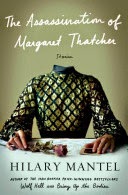
*The Assassination of Margaret Thatcher  Hilary Mantel


You Might Remember Me: Phil Hartman  Mike Rowe

Eve of Eternity  Ken Follett

The Mathematicians Shiva Stuart Rojszstater

The Good Father  Noah Hawley

*We are not Ourselves  Matthew Thomas
*Nora Webster Colm Toibin

The Job Janet Evanovich+ 
The Heist Janet Evanovich+
How I Write Janet Evanovich


Janet Evanovich. Had a blast interviewing her to a sold out house, thanks to The Thurber House


*Hold Tight Gently: Michael Callen and Essex Hemphill  Martin Duberman

Sisters of Treason Elizabeth Fremantle

Village of Silence: Defying the Nazis in Vichy France Caroline Moorehead

On the Edge  Edward St. Aubyn
Lost for Words Edward St Aubyn

City of Lies: Therean Ramita Navai

*****All the Light You Cannot See  Anthon Doerr

(Bob) Hope by Richard Zoglin

Without You There is No Us Suki Kim

*The Goldfinch Donna Tarrt

*The Children’s Act Ian McEwan


*All My Puny Sorrows Miriam Toews